Global Fashion Group: Is Creativity Dependent on Genius, and is Genius Irreplaceable? How Enterprise-Level Intelligent Agents Can Solve the Growth Dilemma of Fashion Brands
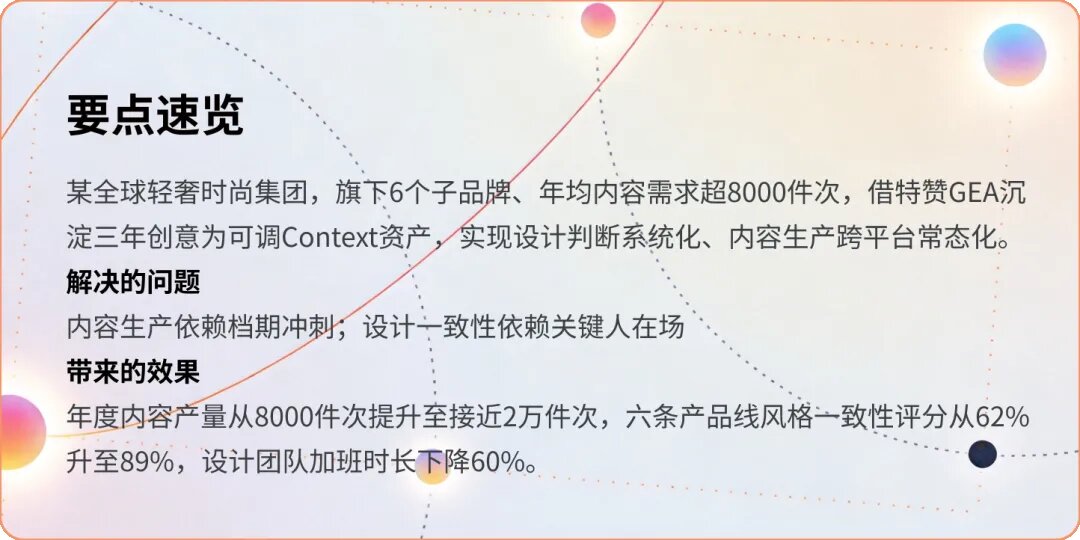
The affordable luxury fashion group is troubled by unstable styles and imbalanced production capacity due to the reliance on creative experience stored in human brains. By building brand memory assets and the Tezign GEA system, they achieve style consistency, enhance production capacity, reduce dependence on talent, and balance content scale and quality.
The content dilemma in the fashion industry is often attributed to insufficient output—hiring more designers, outsourcing more projects, and purchasing more template tools.
A statement made by the creative director of a global fashion group during the review of the 2023 autumn season changed the direction of the entire project: "We are not lacking creativity; what we lack is memory."
Every season, the style direction, target audience judgment, and brand tone calibration have to start from scratch. This is not because the brand lacks accumulation, but because the accumulation exists solely in human brains, scattered among the individual perceptions of a dozen designers, making it impossible to access or pass on. The real issue facing the brand is not the output of creativity, but the inability to solidify and scale judgment.
Case Background
The brand is a fashion group positioned in the boutique affordable luxury sector, covering three product lines: women's clothing, accessories, and home goods, with an average annual content demand exceeding 8,000 pieces and a core creative team of 18 people.
In 2023, the group simultaneously undertook content production for six subsidiary brands, with the team entering a high-intensity sprint mode each quarter, but issues of inconsistent output quality and style drift began to affect the overall brand image. The group's CMO judged that expanding the team would not solve the problem, as newcomers would also be unable to quickly calibrate the brand's tonal memory.
Transforming Brand Intuition into a Sustainable Judgment System
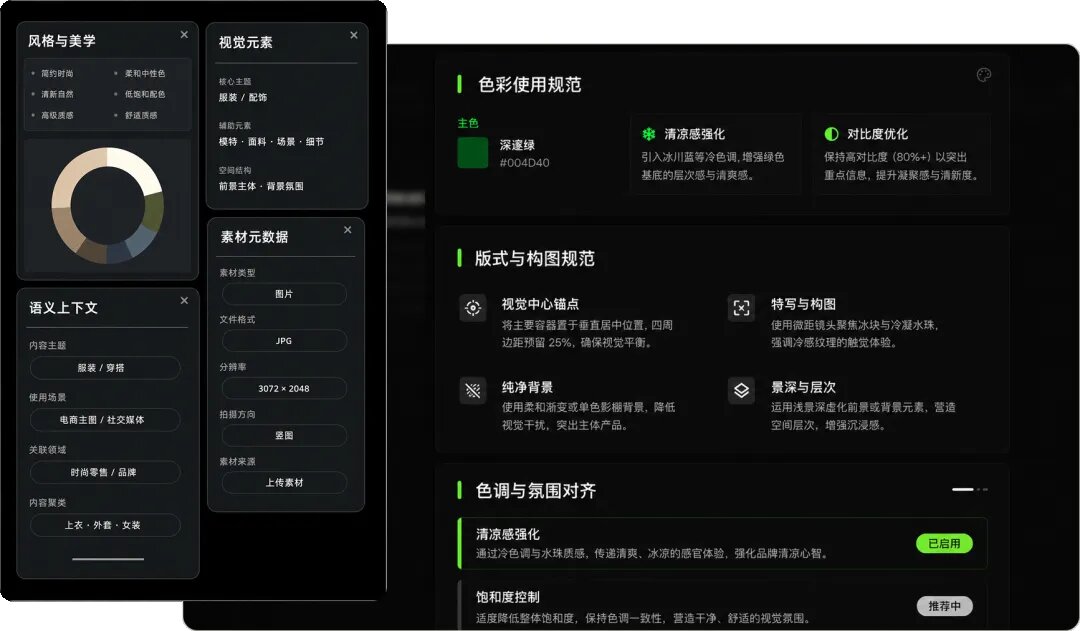
The group's creative accumulation has never been lacking; what is missing is a form that can be understood by machines. At the start of the project, the team did not begin with "increasing output" but instead did something more fundamental: they systematically structured all the approved design drafts, style vocabularies, customer feedback, and quarterly review notes from the past three years into the brand's Context assets.
This process took six weeks, longer than expected. But the result was that the brand finally had a set of "brand memory" that could be accessed—independent of the presence of any specific designer, any new project could quickly calibrate its direction based on this memory.
The first change this brought was that the pre-season topic selection meetings were shortened from an average of 2 days to half a day, as the style direction no longer needed to be regenerated from discussions each time.
Design Consistency Secured Without Reliance on Veteran Designers
Previously, consistent aesthetics across the Group’s six sub-brands relied on a core team of designers working cross-category—they served as the living repository of brand identity. This model bore a critical flaw: brand styling would veer off track without these key personnel on hand. Long-term medical leave taken by two lead designers even triggered a noticeable breakdown of tonal consistency in the Summer 2022 collection.
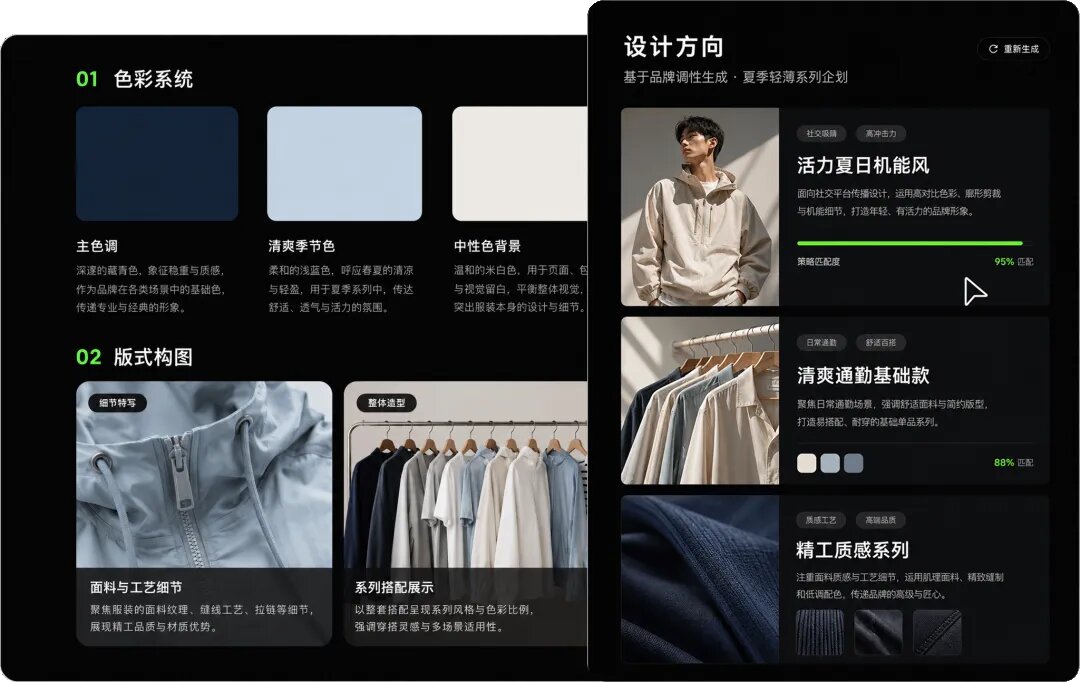
After adopting Tezign GEA System, the brand’s stylistic judgment was externalized into a retrievable structured framework. Drawing on accumulated Context assets, the system can identify which visual language aligns with each sub-brand’s positioning and continuously calibrate outputs during content creation.
This is not a case of “AI replacing designers”. Instead, it translates the stylistic insights once locked inside a handful of individuals into a shared benchmark accessible and aligned by the entire team. Data from the Spring campaign shows the cross-line aesthetic consistency score across all six product lines jumped from 62% to 89%.
From Quarterly Crunch to Sustained Content Creation Cadence
Content production in the fashion industry faces an inherent structural issue: output surges sharply ahead of collection launches before plummeting immediately afterwards. This uneven rhythm creates not only efficiency bottlenecks but also hurdles for brand visibility management. Following concentrated content rollouts, prolonged quiet spells cause the brand to fade fast from algorithm feeds and consumers’ minds.
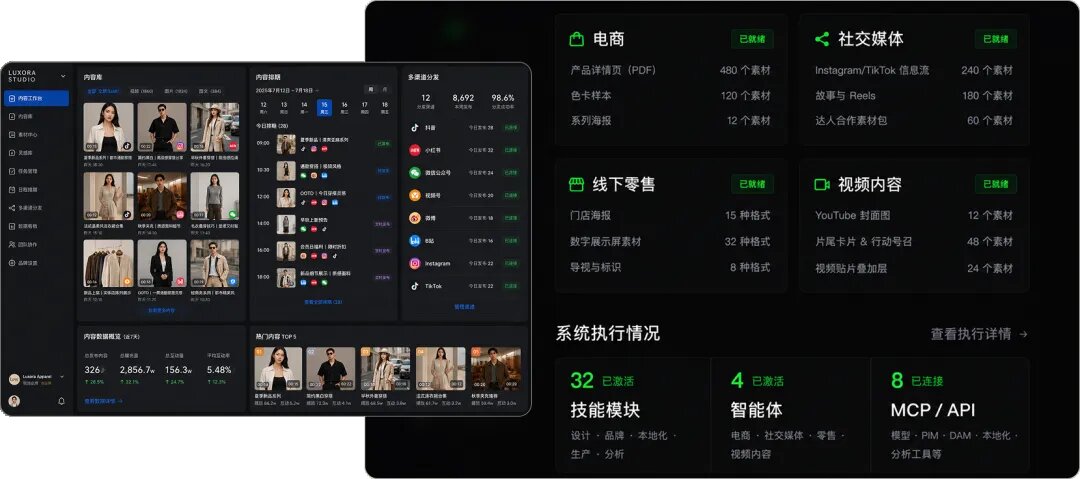
The group completed the shift from "quarterly crunch mode" to "sustained continuous operation" for its Spring/Summer 2024 campaign. Powered by brand Context assets and content release calendars, the Proactive Agent generates steady content during off-peak intervals for three core platforms: Weibo, Xiaohongshu and WeChat. Designers shifted their core focus from mass production to quality calibration, spending roughly four hours weekly on reviews instead of working full weeks under heavy creative pressure.
The average monthly volume of published content rose from 38 to 112 pieces, while overtime hours for the design team dropped by 60% over the same period.
The Brand Gains Compound Returns on Brand Capability, Not Mere Content Volume
This collaboration equipped the brand with operational capabilities that no longer hinge on the presence of specific creative talents for the first time. Even after two core creative staff members departed, there was no drop-off in content quality, as all brand stylistic criteria reside within the system rather than individual minds.
These accumulated insights are not erased upon project completion; instead, they remain as reusable brand Context assets for ongoing retrieval, updates and iterations.
A deep-rooted assumption pervades the fashion industry: creativity relies on irreplaceable creative genius, making large-scale production inherently incompatible with premium quality.
This partnership offers an alternative path. While the tension between scale and quality persists once brand judgment is systematized, it becomes manageable. The pivotal shift lies not in the tools adopted, but in the brand’s fundamental question: can we codify and preserve our creative judgment?
For similar business needs, scan the QR code to reserve your free enterprise assessment.

Category
Fashion
Date
2026-07-13
Read Time
4 min read
Share Page
Related Recommendations
Multinational Food: Innovation in Fast-Moving Consumer Goods is No Longer a 'Goldfish's Memory'

Global Consumer Brands: 28 days of World Cup, just 20 seconds for brands to win user attention.