Consumer Goods Group: No Stars, No Bestsellers? How This Consumer Goods Group Captures Trends with GEA Without Relying on Money and Feel
Abandoning reliance on star power and personal experience, the consumer goods group builds a closed-loop operation system based on Tezan GEA smart monitoring and Context System knowledge accumulation, achieving a leap in the effectiveness of Xiaohongshu content.
Most consumer brands make the same mistake in content operations: exchanging exposure for celebrity collaborations and relying on the personal taste of content creators to determine topics. This approach seems effective in the early stages, but it hides a deeper structural issue.
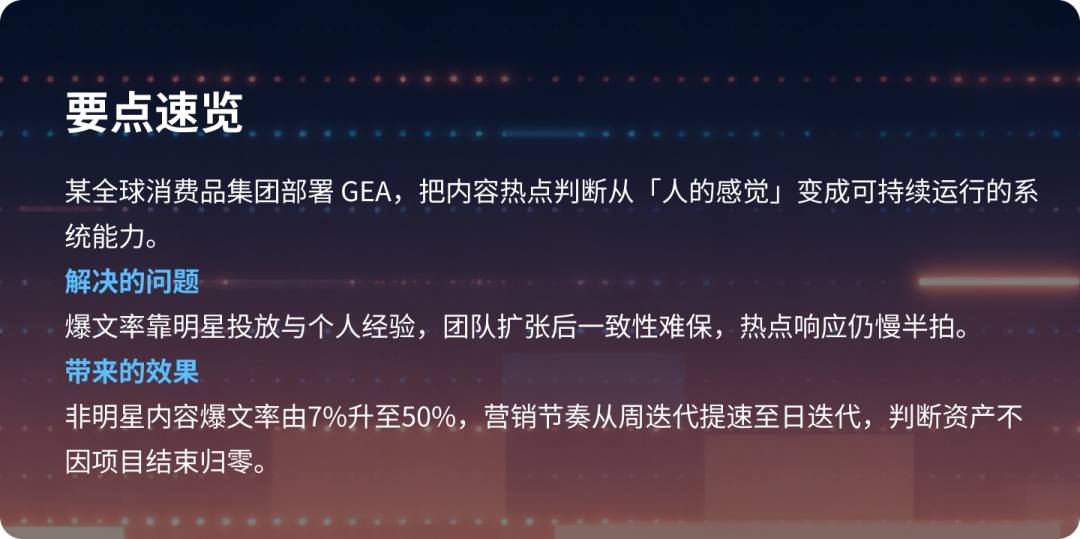
Data from a global consumer goods group's Xiaohongshu reveals this problem. The non-celebrity content viral rate is 7%, with an average interaction of 284. On the surface, it appears that "viral content is too difficult," but peeling back this layer, the real dilemma is: every time a trend arises, the decision of "whether to chase it" relies entirely on intuition; every piece of content's direction and style must be reimagined. Even more frustrating is that the content experience accumulated by the team disappears after the project ends.
This is not an issue of execution efficiency. It is a matter of judgment being locked within individuals, unable to transcend personal fluctuations and replicate within the organization. The essence of the problem is not that "viral content is hard," but that the company lacks a systematic content decision-making process.
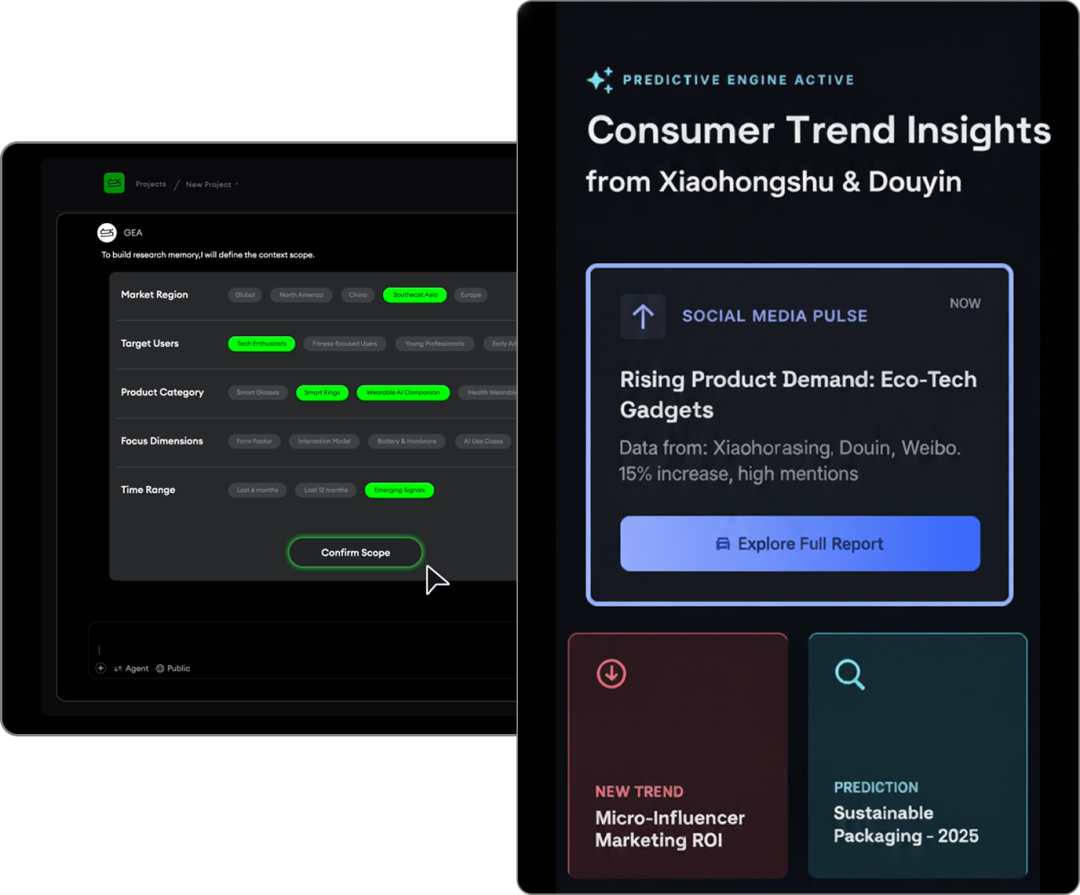
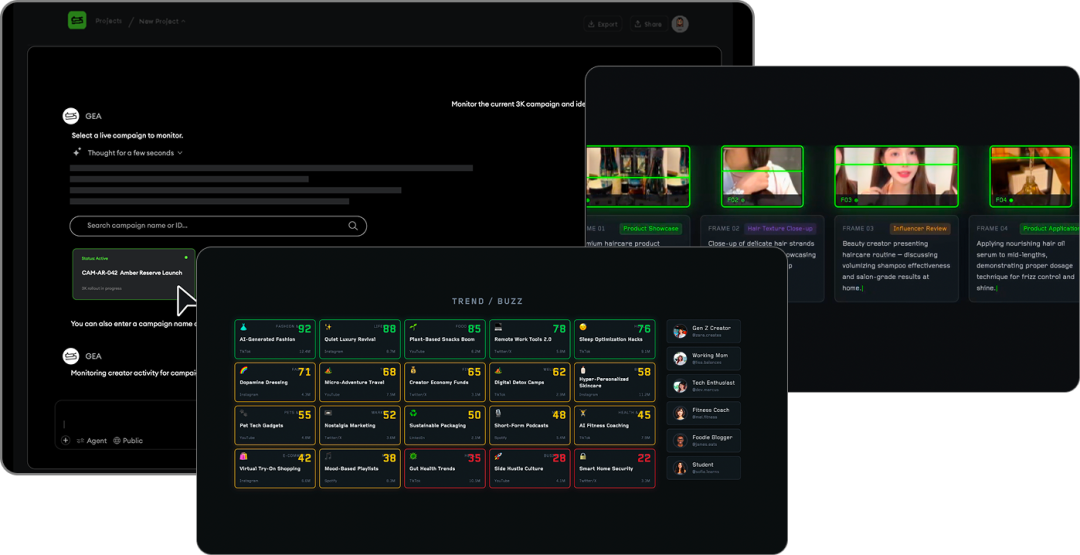
GEA Trend Monitoring Continues to Run, Response Window Changes from "Waiting for Discovery" to System Instant Trigger
In the original process, how was trend discovery conducted? Either someone with a good sense scrolls the platform daily, or it is discussed only during weekly meetings. By the time the review is completed, the trend window has already closed.
This brand made a specific change: turning trend capture into a continuous system operation. The system now monitors real content signals on Xiaohongshu daily—identifying which topics are gaining traffic benefits and which content structures trigger high interaction among specific demographics. When signals appear, the system activates immediately, rather than waiting for someone to discover them.
The direct effect of this approach is that the response window has shortened from "waiting for someone to think of it" to "system instant capture." But this is not the only change.
Context System Continuously Utilized, Content Generation Starts from Accumulation, Not from Scratch
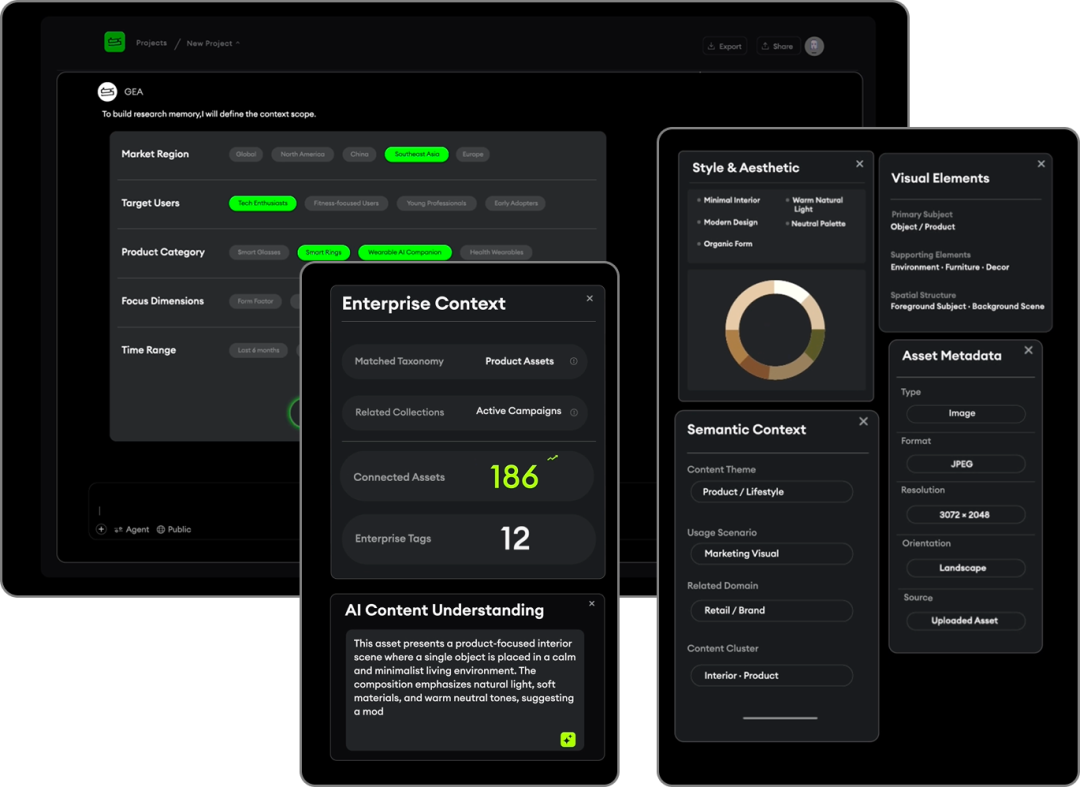
After the system detects a signal, it does not directly generate content but retrieves three types of accumulated knowledge from the Context System.
First is the brand's IP characteristics. What tone does this company use, what visual style, and how does it express its core values? These elements previously existed only in someone's intuition but are now explicitly recorded.
Second is the historical patterns of viral content. What topic structures, timing rhythms, and creative forms have previously led to high user interaction? It is not a general statement of "content needs to be attractive," but rather the specific patterns of this company within this demographic.
Third is user insights. What topics are sensitive to this demographic, what types of content are easily shared, and when are they most active?
Based on these three layers, the system generates content. Each production has a stable starting point rather than starting from scratch.
Feedback Enters the Loop in Real Time, Personal Experience Becomes System Experience
A key distinction lies in what happens to the data after content is published. The original approach: glance at the data, discuss it in a meeting, and then everyone disperses. For the next project, it starts over.
The current approach: data is sent back to the system, which analyzes this time's "what signal → what content generation logic → what results produced." The system establishes a causal model. When a similar signal appears next time, the system regenerates using updated rules. Effective judgments, effective expressions, and effective publishing timing are all recorded back into the Context System.
This means that each content practice does not dissipate but becomes material for the next decision. The operational cycle has also changed from weekly to daily.
When Judgment Becomes a System Asset, the Ceiling of Content Operations Truly Changes
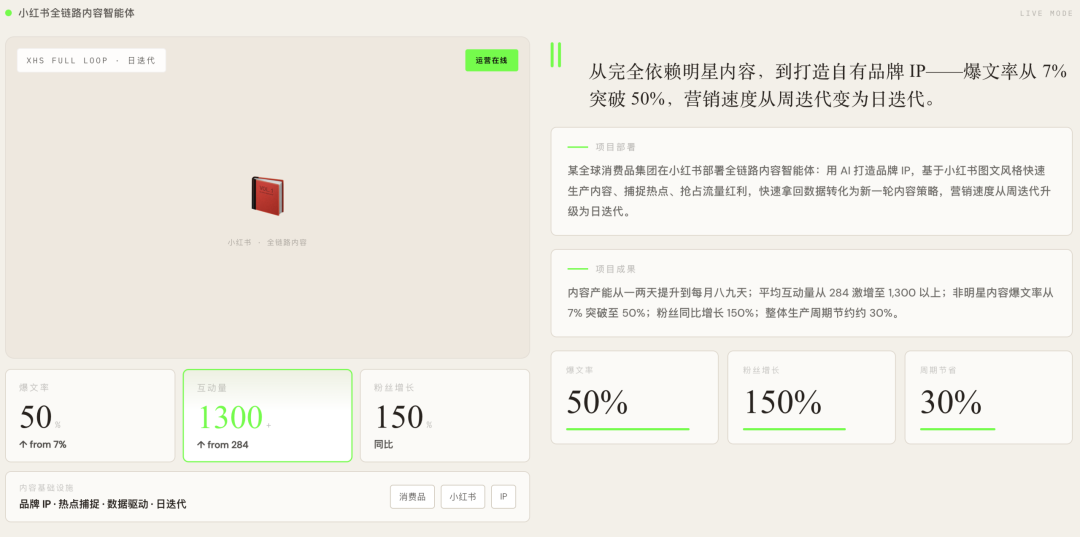
The quantitative results of the project are very intuitive. The viral rate of non-celebrity content jumped from 7% to 50%. The average interaction increased from 284 to over 1300. The number of followers grew by 150% year-on-year. From a content rhythm perspective, the overall production cycle was reduced by about 30%.
What this company has gained is not just a tool, but a continuous evolution of content growth capability. Understanding of Xiaohongshu users will not dissipate at the end of the project. The insights into what topic structures can trigger interaction have been distilled into reusable design ideas. The brand's expression is fine-tuned and optimized with each practice.
In other words, the ceiling of the company's content growth has shifted from "how many excellent content editors are there today" to "how much reusable content judgment has been accumulated in the system."
When the decision-making power of content operations shifts from individual states to system judgments, organizational expansion no longer means a decrease in consistency. New content team members do not need to spend three months accumulating intuition but can directly access the accumulated knowledge of the Context System. When trends arise, judgment no longer depends on encountering the most experienced person.
From this perspective, the issue is not "how to speed up response time," but rather "how to turn judgment itself into an enterprise-level asset, so it no longer fluctuates with individual changes."
Scan to download "Business Evolution Blueprint in the AI Era"
Get more GEA practice cases
Understand the corporate paradigm in the Agentic AI era

Category
Food & Beverage
Date
2026-05-22
Read Time
4 min read
Share Page
Related Recommendations

Multinational Food: Innovation in Fast-Moving Consumer Goods is No Longer a 'Goldfish's Memory'

Global Consumer Brands: 28 days of World Cup, just 20 seconds for brands to win user attention.