Global Power Tool: Jumping Out of Expert Review 'Information Cocoon', Involving Professional Users in New Product Development from the Start
Traditional power tool development relies on expert reviews, making it difficult to align with real construction scenarios. Tezan's Insight Research GEA uses scenario modeling, AI user personas, and decision simulations to integrate professional user logic throughout the development process, creating reusable assets.
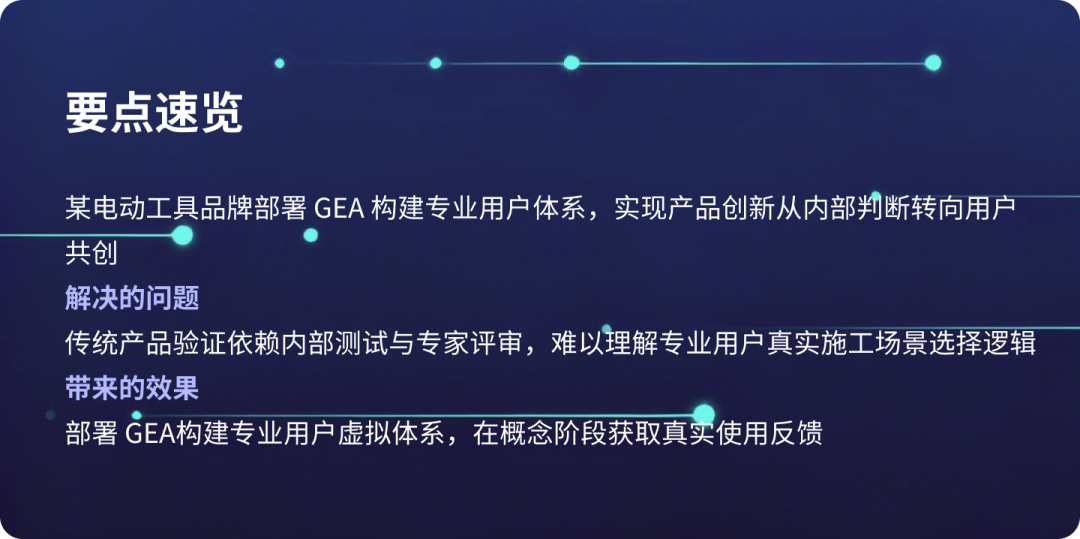
An international power tool brand quickly encountered a familiar problem when planning a new generation of professional-grade drills: the team had plenty of engineering experience and an expert review system, but they struggled to answer a key question—why do some products with stronger performance have lower acceptance in real construction scenarios?
In traditional product development logic, such questions are usually broken down into: Is the torque sufficient? Is the weight reasonable? Has the battery life improved? Is the structure reliable? However, as validation progressed, the team gradually realized that the choice of professional tools is not a simple parameter comparison process, but a judgment structure driven by long-term construction experience. Users do not choose 'more powerful tools', but rather 'tools that better match their construction rhythm.'
Thus, the question changed. What companies need to understand is no longer whether the product parameters are leading, but how professional users determine whether a tool is trustworthy.
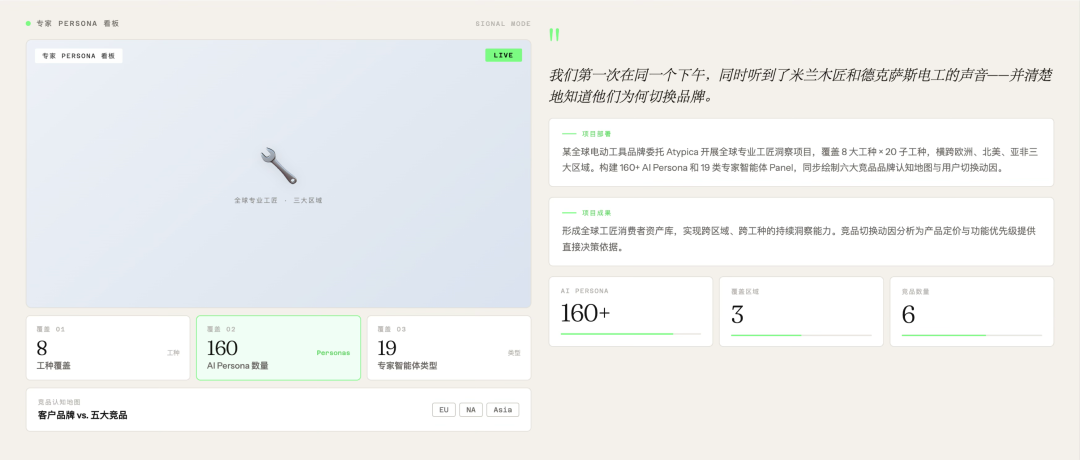
Limitations of Traditional Expert Review Systems: Companies Can Validate Performance, but Struggle to Understand Real Usage Logic
In traditional product validation systems, such questions typically rely on: internal engineering tests, expert review committees, prototype trial feedback, and post-sale issue reviews. These methods can effectively validate technical reliability, but they struggle to explain the selection mechanisms in real construction sites.
Expert reviews often focus on performance indicators, trial feedback is difficult to replicate on a large scale, experiential judgments are hard to crystallize into structured knowledge, and validation results rarely feed into the next round of product design processes. Companies can confirm whether a product is 'stronger', but struggle to understand whether it is 'more suitable for use'.
For professional scenarios like power tools that heavily rely on experiential judgment, this limitation is particularly evident. What truly affects product acceptance is not parameter advantages, but the matching relationship between operational habits and construction context. The introduction of Insight Research GEA fundamentally changes this capability.
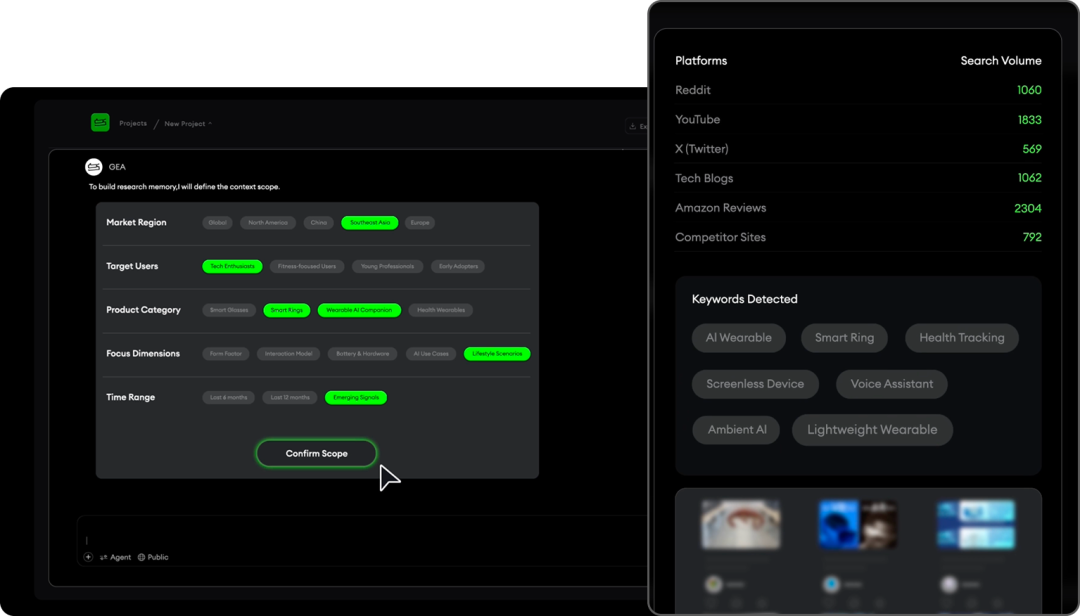
Step 1: Build a Construction Scenario Research Context, Making Historical Trial Experience a Callable Judgment Asset
Once the new product validation task enters the system, Insight Research GEA does not immediately generate optimization suggestions, but first builds a layer of construction context research memory (Usage Context Builder).
The accumulated data from the brand, including professional user interview records, trial test feedback, maintenance records, construction scenario descriptions, and channel sales experiences, are unified into a sustainable callable professional usage context structure.
This information, originally scattered across test reports and interview materials, forms a calculable, inferable, and reusable professional user knowledge system for the first time. Product validation is no longer just a phase of testing, but becomes a foundation for ongoing understanding capability.
Step 2: Professional User AI Persona, Turning 'Labels' into Real 'Decision Makers'
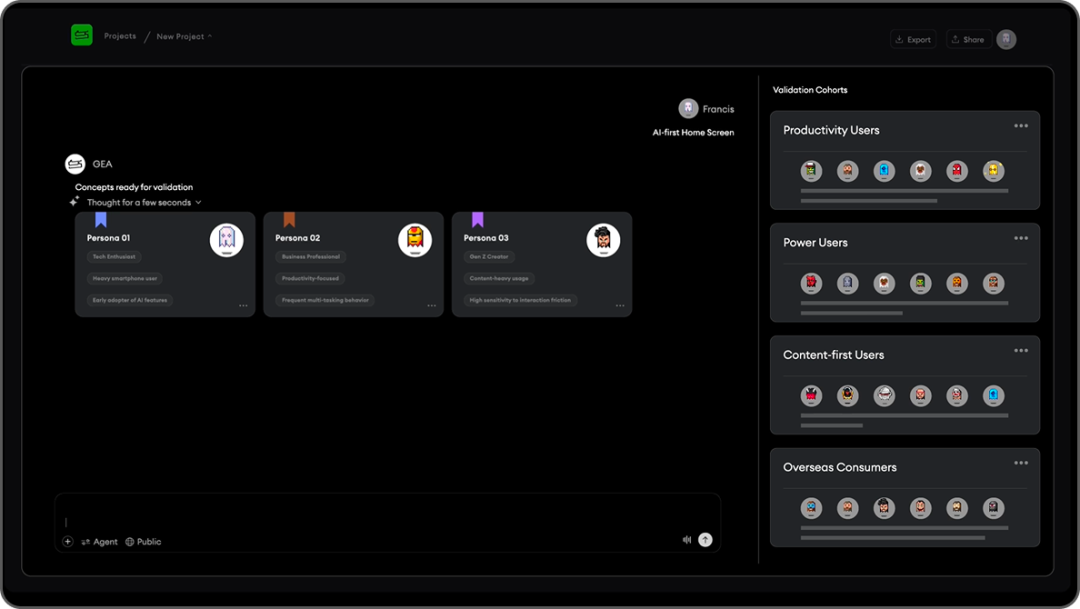
Based on the construction context, the system further generates professional user AI Personas. Unlike traditional user classifications, these Personas are not divided by industry type, job type, or income level, but are complete construction decision-making roles, such as:
High-intensity continuous construction users
Precision installation-oriented users
Mobile operation priority users
Durability and stability priority users
Teams can interact directly with these Personas to understand under what construction conditions they adjust tool selection and which structural changes affect long-term trust. Professional user research thus transitions from label classification to real operational logic modeling capability for the first time.
Step 3: Simulate Real Construction Decision-Making Processes, From Product Performance Testing to Usage Path Simulation
Once the professional user models are established, the system begins to simulate real construction decision-making processes. Insight Research GEA organizes multiple Personas to discuss product solutions and analyzes the judgment differences and trade-off paths between different roles, such as:
Whether to accept a higher weight for stronger torque
Whether to prioritize one-handed operation stability
Whether to consider fatigue levels during prolonged use
Whether to rely on historical brand reliability experience
What the team can see is no longer just parameter feedback, but how professional users form tool selection judgments in real work environments. For example, some users focus more on continuous construction stability, while others prioritize operational flexibility, and still others emphasize equipment durability and maintenance costs. These differences were often only speculated based on experience in the past, but now can be systematically presented and enter the product strategy discussion process. Product validation begins to shift from performance testing to usage path simulation.
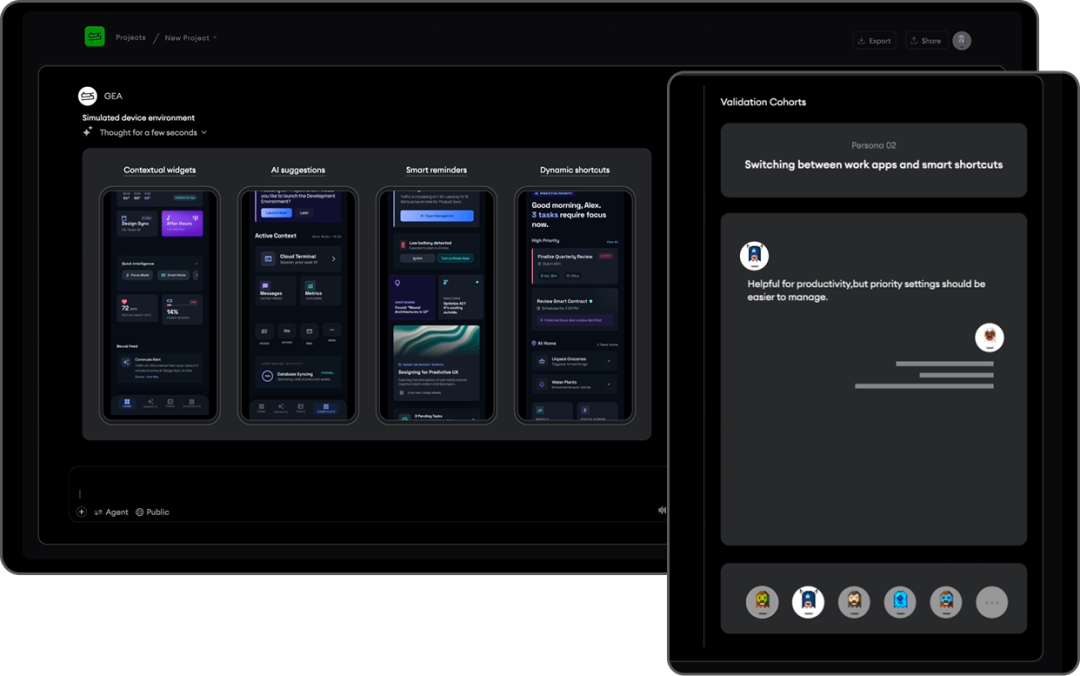
Step 4: Behavioral Prediction, Transitioning Product Optimization from Experiential Adjustments to Strategic Validation
As the research continues, the system can also conduct predictive testing on different product design schemes using the professional user models, such as:
Weight structure adjustment schemes
Battery layout schemes
Grip structure optimization schemes
Accessory interface design schemes
Brands can complete multiple rounds of scheme validation before mass production, predicting the impact of different design strategies on professional user acceptance. Thus, product validation transitions from a one-time testing process to a continuously operating design decision capability chain.
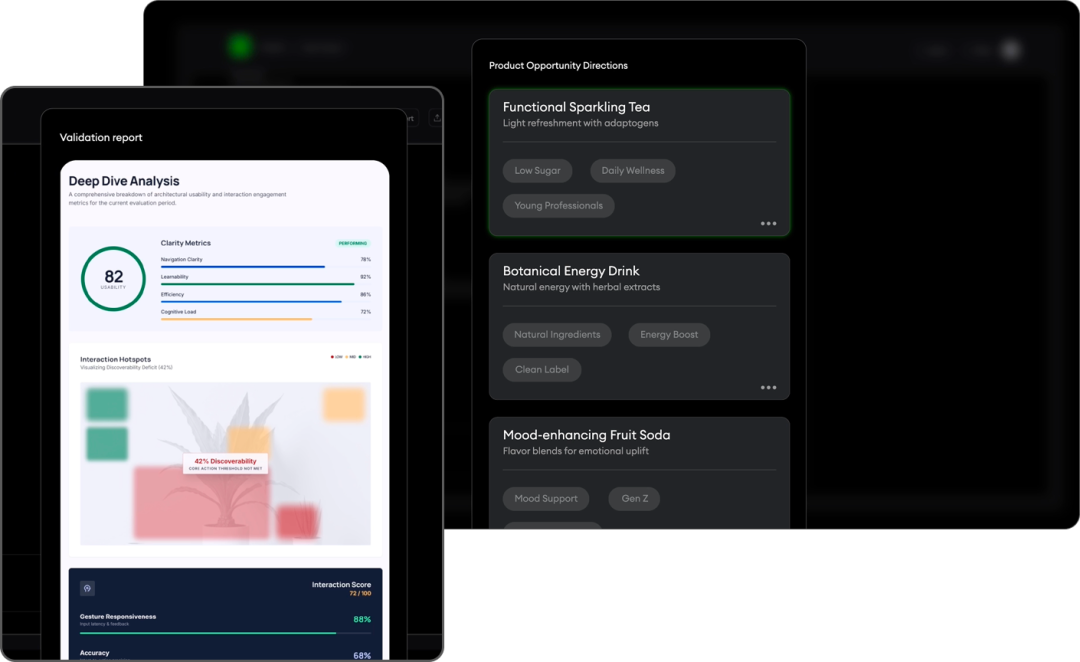
Project Results: Construction Decision Paths Transformed into Product Definition Basis
In this power tool innovation validation project, Insight Research GEA ultimately helped the team identify four core professional user decision paths:
Efficiency priority path
Stability priority path
Flexibility priority path
Durability priority path
These paths not only explain why some products with performance advantages were not prioritized, but also directly influenced subsequent structural design strategies, weight configuration schemes, battery system layouts, and product line classification methods.
More importantly, these judgments did not disappear with the end of the validation project, but were crystallized into professional user model assets that the company can continuously call upon, entering the next round of product innovation processes. Understanding professional users is no longer reliant on one-time testing, but has become part of the company's long-term capabilities.
Transforming Understanding Professional Users into a Continuously Operating System Capability
In the past, expert reviews typically occurred in the later stages of product design, serving as a phase of validation; now, it has become a continuous capability that runs through the entire product definition process.
Teams no longer rely on one-time trial feedback to determine direction but can continuously observe changes in professional user decision structures and adjust product design logic accordingly. This is also the most fundamental difference between Insight Research GEA and traditional expert review systems.
It is not just about helping companies complete a test faster, but about making 'understanding how professional users choose tools' a continuously operating system capability for the first time.
If you have similar scenario needs, feel free to scan the code to schedule a corporate diagnosis.

Scan to download 'Business Evolution Blueprint in the AI Era'
Get more GEA practice cases
Learn about the corporate paradigm in the Agentic AI era
Category
Manufacturing
Date
2026-05-11
Read Time
5 min read
Share Page
Related Recommendations

Global Industrial Manufacturing: Equipping AI with 'Business Sensitivity', How the Enterprise-Level Intelligent Agent GEA Transforms Sales Experience into Corporate Assets

Global Automotive: 80% of Leads Are Not Converting, How This Automotive Brand is Reshaping Lead Growth?