Multinational Food: Innovation in Fast-Moving Consumer Goods is No Longer a 'Goldfish's Memory'
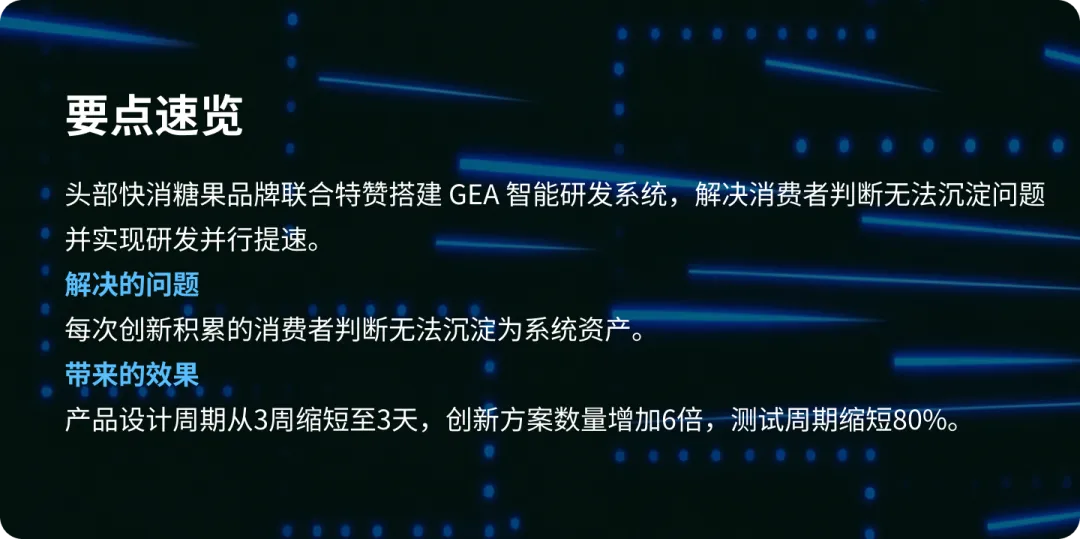
The traditional new product development in fast-moving consumer goods often starts from scratch, making it difficult to accumulate experience. This group collaborates with Tezign to build the GEA intelligent system, significantly compressing cycles and expanding solutions, turning innovation experience into a long-term competitive asset for the company.
Product innovation in fast-moving consumer goods companies typically starts with a list of demands.
Consumer insights come first, concept testing is in the middle, and internal reviews are at the end, ultimately selecting a direction to enter development. Once the entire chain is in motion, it takes at least 3 weeks and up to 3 months. No one thinks there is a problem with this—because everyone does it this way.
But the real issue is not that the process is too long, but that with each new product project, companies start from scratch to perceive the market, generate hypotheses, and validate directions. The consumer judgments left by the previous product do not enter this decision-making process. This is not an efficiency problem—it's a systemic problem.
When a top global fast-moving consumer goods group’s candy brand began to use an enterprise-level intelligent system to reconstruct the product development process, the changes occurred not just in numbers. They occurred in the relationship between the R&D team and innovation itself.
Shortened R&D Cycle: Relying on System Assets, Starting from New Product Concepts
The product development team is not lacking in capability. They understand consumers, are creative, and have execution power. But they face a structural problem: every time a product project is initiated, the insight work starts from scratch; every concept proposal has an independent testing queue; every round of innovation meetings relies on the experience and intuition of a few people, rather than on systematically available accumulations.
In this global fast-moving consumer goods group's product development system, new products take an average of 3 weeks from direction confirmation to completion of testing. This is not an especially slow speed, but it is always like this—because nothing is truly retained. Changes in consumer preferences, consumer concerns that emerged during the testing of the previous product, reactions to a certain formula direction among certain demographics—these judgments remain in reports or in people's memories and cannot be directly referenced in the next project initiation.
This is the real problem: it is not that R&D is too slow, but that the accumulation of R&D has not become a systemic asset.
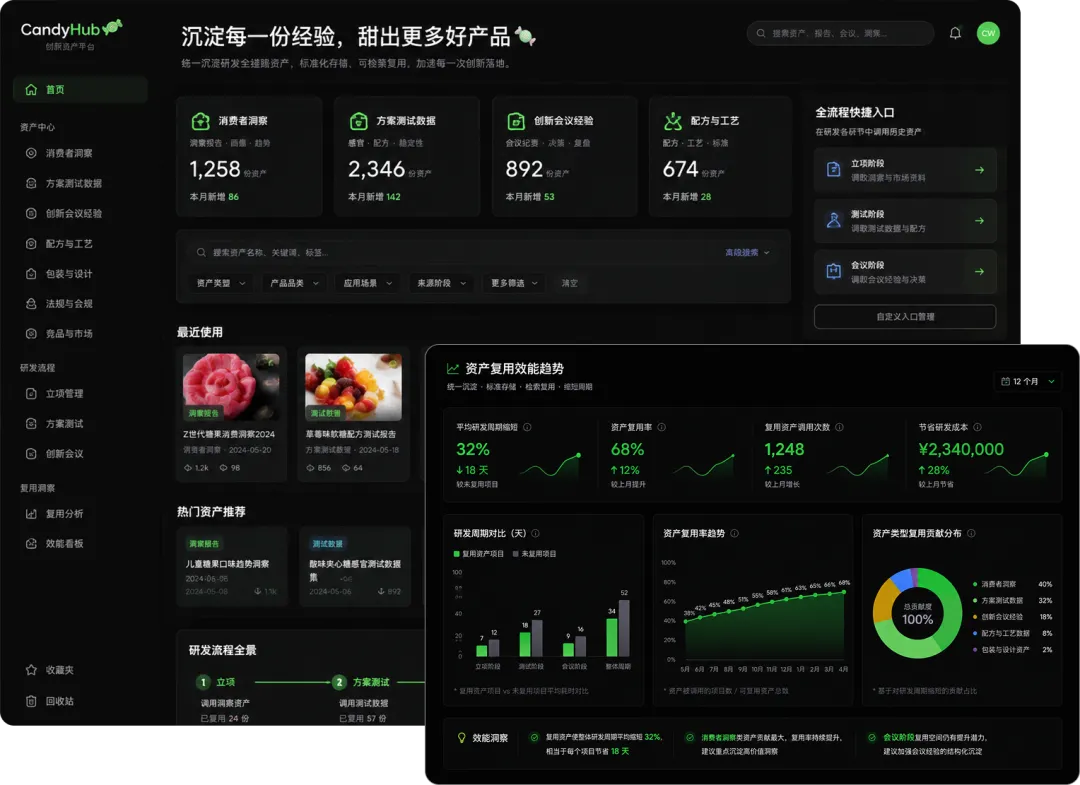
A 24/7 Continuously Operating Product Innovation Agent
After collaborating with Tezign, the group deployed a Product R&D GEA (enterprise-level intelligent system). Its core is not to accelerate a specific step, but to transform the entire innovation chain into a continuously operating system.
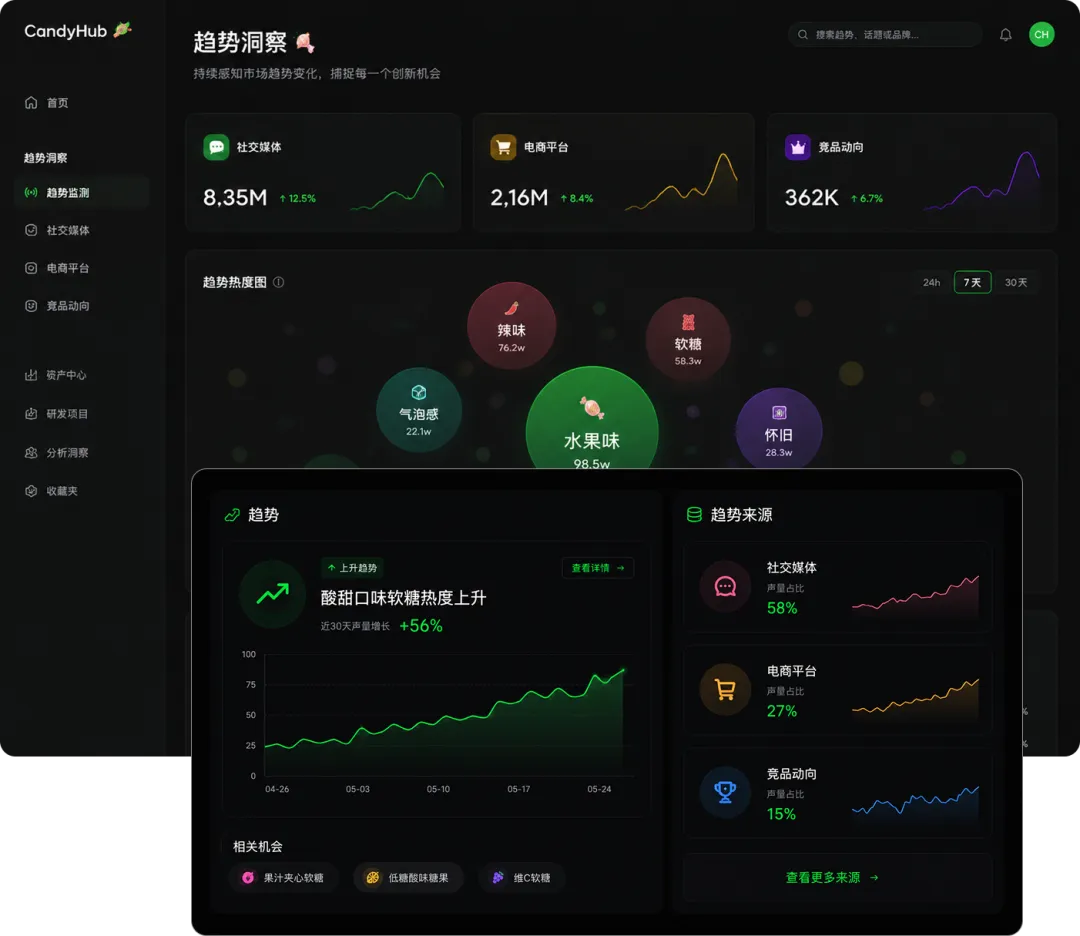
The system works as follows: continuously sensing changes in market trends—from social media, e-commerce platforms, and competitor movements;
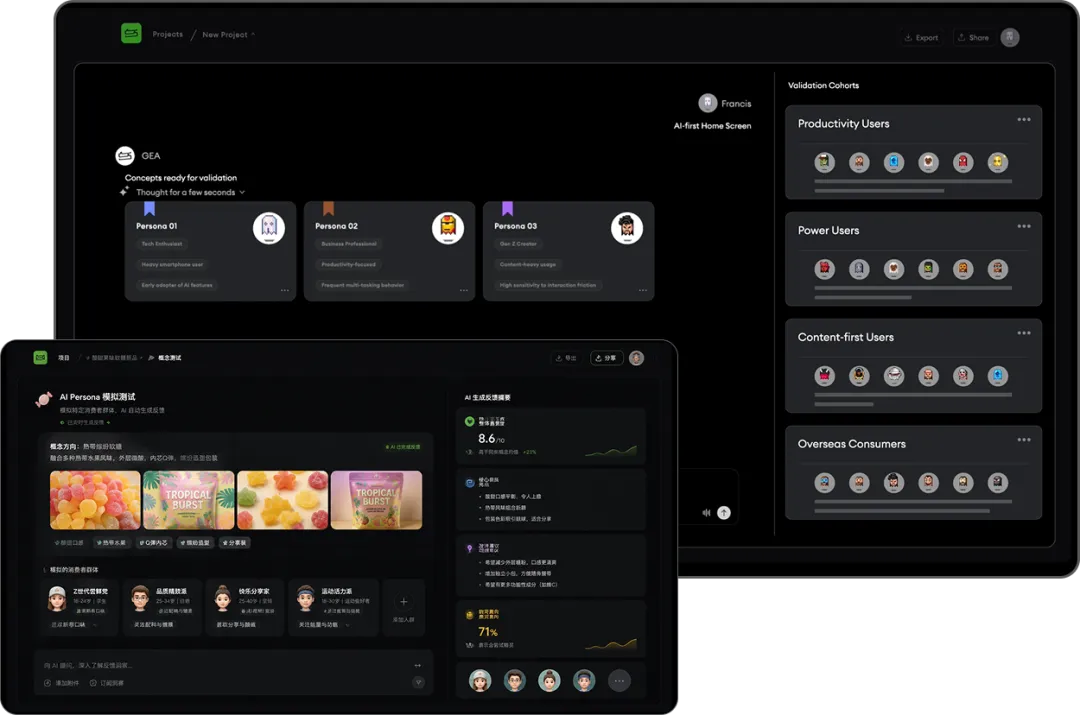
The AI Persona module simulates specific consumer groups, automatically generating testing feedback upon receiving concept directions, rather than waiting to recruit real respondents; the generation of innovative concepts is also parallel, allowing the system to output multiple different prototype directions simultaneously for the team to judge and filter.
The key to this change lies in the '24/7 automatic operation.' In traditional R&D processes, each step waits for manual initiation. The new system operates continuously—market signals enter without interruption, concepts begin AI simulated testing as soon as they are proposed, and the R&D team receives not an idea awaiting validation, but a package of solutions that have already undergone preliminary screening.
Structural Shift from 'Many Solutions' to 'Accurate Directions'
After the system went live, the number of innovative proposals increased sixfold. This number can easily be misinterpreted as 'producing more content,' but it actually signifies something else: the R&D team finally has a genuine choice space.
In the old model, innovation meetings typically selected one from three or four directions. Choices were based on experience, market judgments, and which directions were easier to advance in the existing process. Truly promising directions were often excluded due to insufficient testing time for validation.
When the system can generate more directions in parallel and simultaneously complete preliminary AI Persona testing, the amount of information available to the team during decision-making undergoes a fundamental change. It is no longer about guessing which direction is better, but about looking at the data to see which direction is more worthwhile to explore.
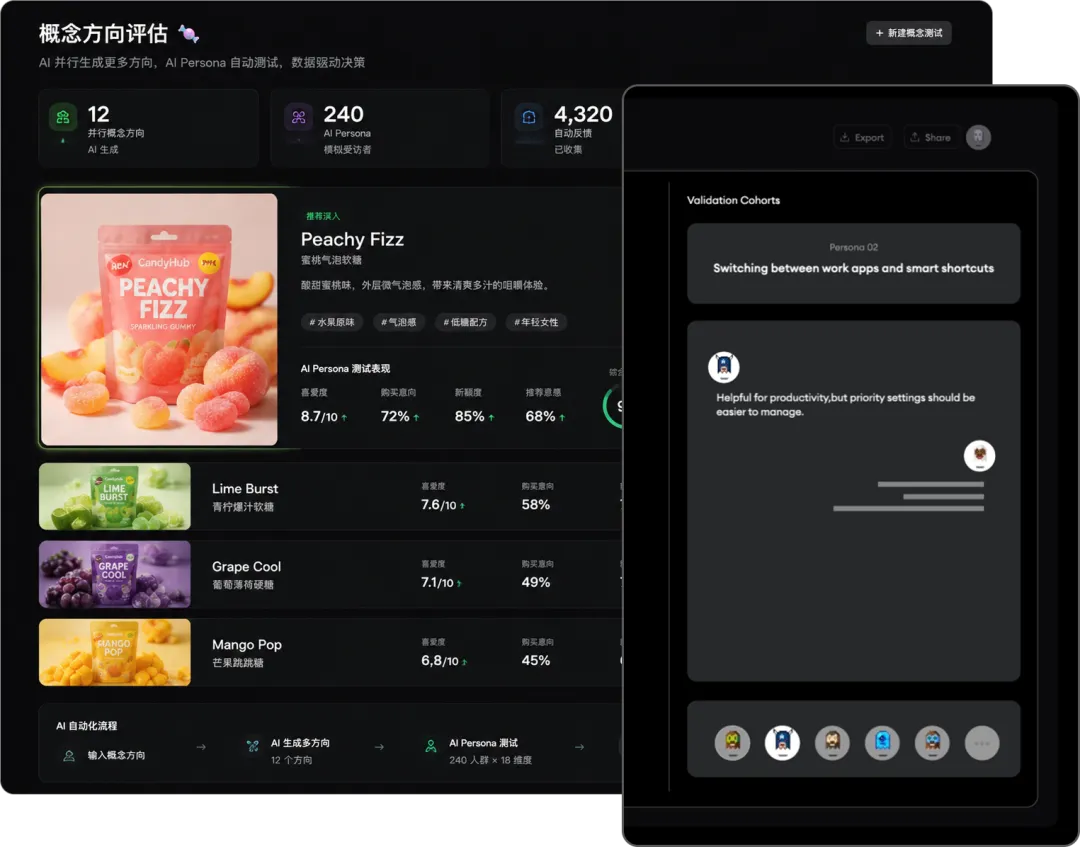
R&D Cycle Reduced from 3 Weeks to 3 Days, No Time Wasted on 'Waiting and Scheduling'
The product design cycle has been shortened from 3 weeks to 3 days, and the testing cycle has been reduced by 80%. Behind these numbers, it is worth questioning: where has the time been saved?
It is not that judgments have become faster, but that waiting has disappeared. In the past, concept testing required recruiting respondents, scheduling time, and waiting for feedback; market insights required special research, and initiation needed budget approval. In the entire chain, the actual time spent making judgments was quite short, with most time spent waiting for the next step to be ready.
The system's intervention has transformed 'waiting time' into 'parallel operating time.' Market trend sensing, AI Persona testing, concept packaging generation—these steps no longer queue but advance simultaneously. The R&D team can propose a direction on Monday and receive multiple versions of proposals that have undergone preliminary testing by Wednesday.
Accumulation Does Not Reset After Each Innovation
Changes that are harder to capture in numbers occur after each project ends.
In the traditional R&D model, when a product completes testing, launches, and operates, the consumer judgments accumulated during this process—such as which demographics are sensitive to which functions, which concept directions are repeatedly accepted in testing, and which product narratives are effective in which channels—mostly remain in the final report. When the next product project is initiated, they do not automatically enter the new decision-making process.
Now, these judgments are embedded in the system's contextual layer. They are no longer just documents but cognitive assets that the system can directly call upon in the next operation. The way a certain type of consumer reacts to a certain flavor, the demand change patterns of a certain market during seasonal transitions—these judgments accumulate, allowing the system's understanding of this brand and category to become increasingly precise.
This is the truly difficult-to-replicate aspect of this system: it accumulates not generic knowledge, but unique consumer judgments and innovation experiences of this enterprise.
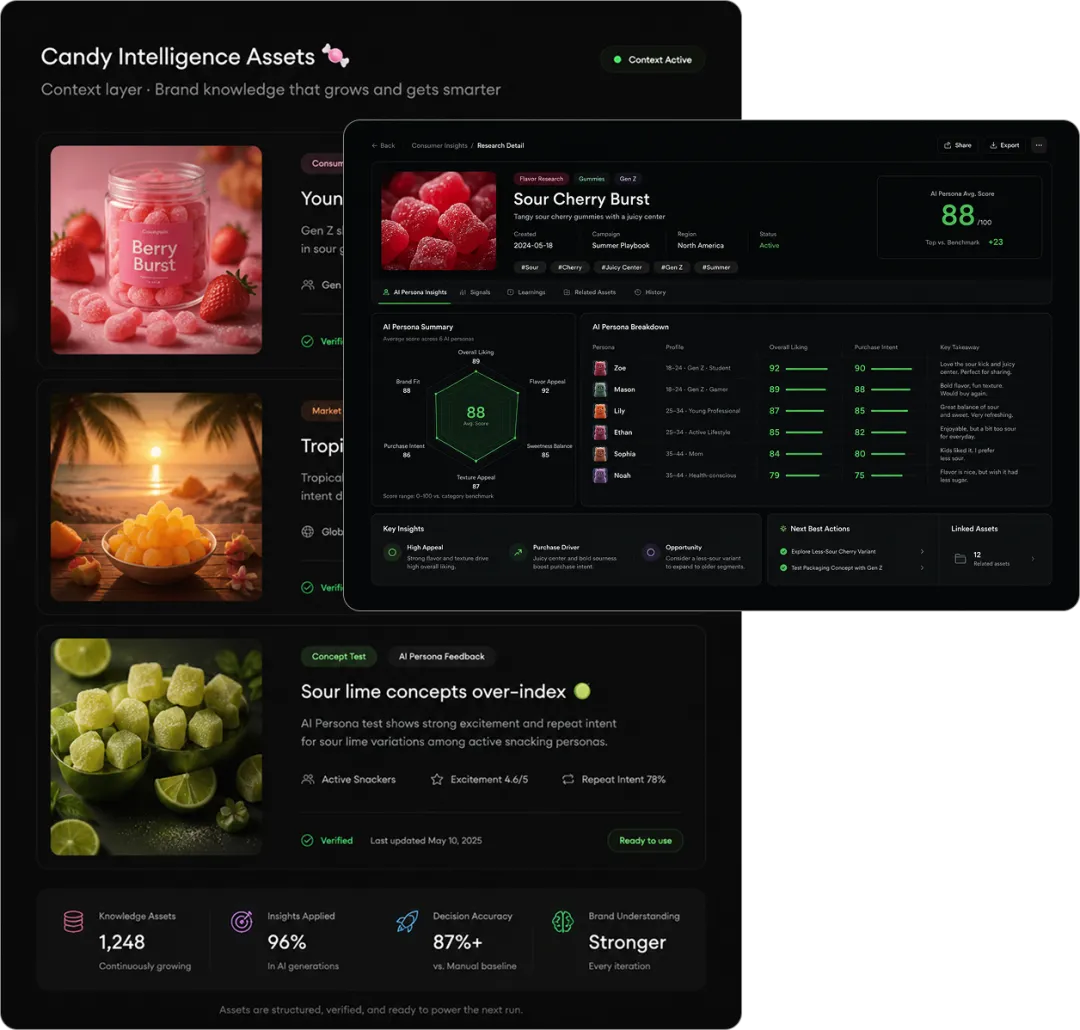
When Accumulation No Longer Resets with Project Completion
The results at the project level are clear: the product design cycle has been shortened from 3 weeks to 3 days, the number of innovative proposals has increased sixfold, and the testing cycle has been reduced by 80%.
But these numbers themselves are not the endpoint. The real accumulation is that the R&D team no longer starts from scratch to perceive the market each time—every round of innovation judgments enters the system, becoming the foundation for the next round of decision-making. This gap may not be obvious with the first product, but with the fifth or tenth product, it will become a real competitive barrier.
Product innovation in the fast-moving consumer goods industry has long been a matter of 'starting from scratch each time.' Not because the team does not want to accumulate, but because there is no system capable of supporting such accumulation. The value of an enterprise-level intelligent system lies not only in making a certain step faster but in transforming the experience of each innovation into an asset that can be called upon next time. When R&D capability no longer relies on individual memory and intuition but is embedded in a continuously operating system, the enterprise truly possesses the ability to innovate sustainably.
If you have similar scenario needs, feel free to scan the code to schedule a corporate diagnosis
Category
Food & Beverage
Date
2026-06-30
Read Time
6 min read
Share Page
Related Recommendations
Global Consumer Brands: 28 days of World Cup, just 20 seconds for brands to win user attention.

Consumer Goods Group: No Stars, No Bestsellers? How This Consumer Goods Group Captures Trends with GEA Without Relying on Money and Feel