Global Consumer Brands: 28 days of World Cup, just 20 seconds for brands to win user attention.
The competition for marketing during the World Cup is fierce. Traditional content production has hit a bottleneck. Tezign relies on GEA to build a structured product library, standardizing product messaging and helping brands complete the standardized production of 5,000 short videos across six countries in two weeks.
In the 28-day marketing window of the World Cup, a brand may need to accomplish the following simultaneously:
Producing thousands of pieces of content
Operating hundreds of accounts
Managing hundreds of offline materials
Launching in N countries/regions simultaneously, each with different languages, cultures, and consumer habits
From the first match, global brands enter a 28-day marketing battle. But the problem is: users only give each piece of content 20 seconds. This is the limit of traditional marketing operations.
In the AI era, things will be different. From several "World Cup" projects in collaboration with Tezign, we observed how GEA helps brands withstand pressure and create opportunities.
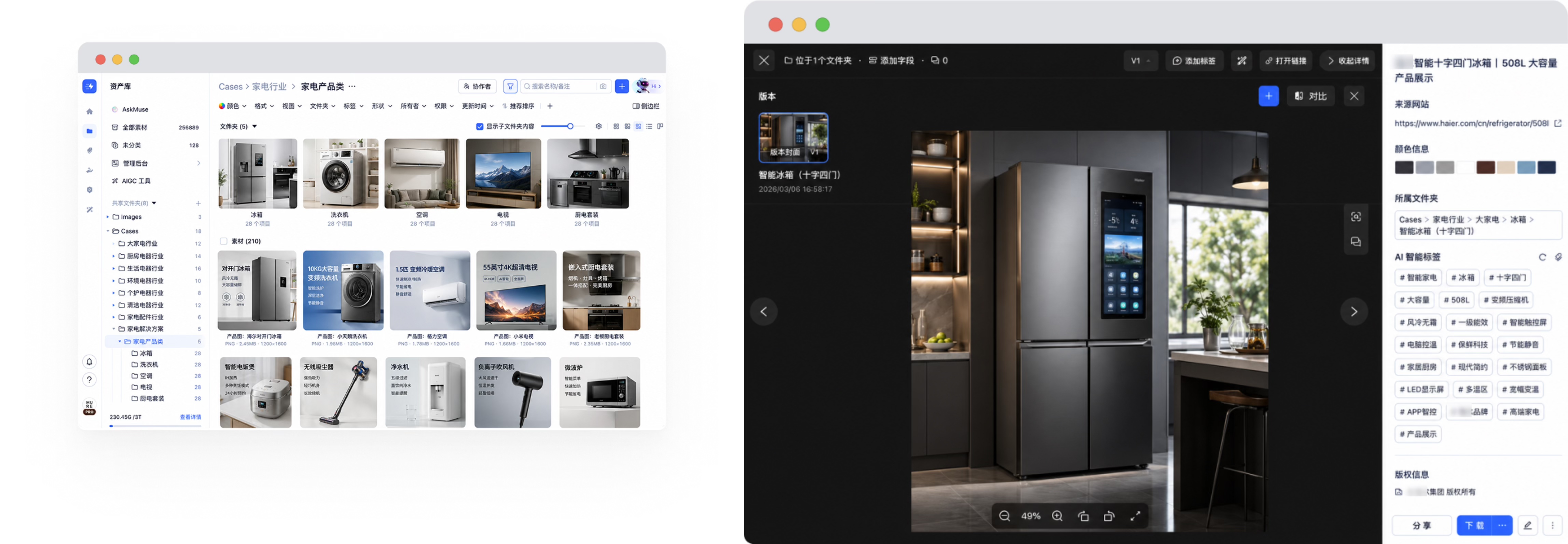
How to turn scattered product information into standardized content language?
Brands involved in this scenario: National home appliance brands, global fast-moving consumer goods brands
Background
This home appliance brand needs to launch World Cup marketing in six countries simultaneously, producing 5,000 TikTok videos in two weeks. However, product information is scattered across various departments.
Problem
Without a unified "product definition," standardized content production is impossible. The result is thousands of videos featuring the same logo, but the messages conveyed are completely chaotic.
GEA's solution
Establish a structured product information system — product positioning house, selling point label table, raw material library — so that each video is produced within a unified framework.
Produce thousands of high-quality videos in two weeks?
Brands involved in this scenario: National home appliance brands, global fast-moving consumer goods brands
Background
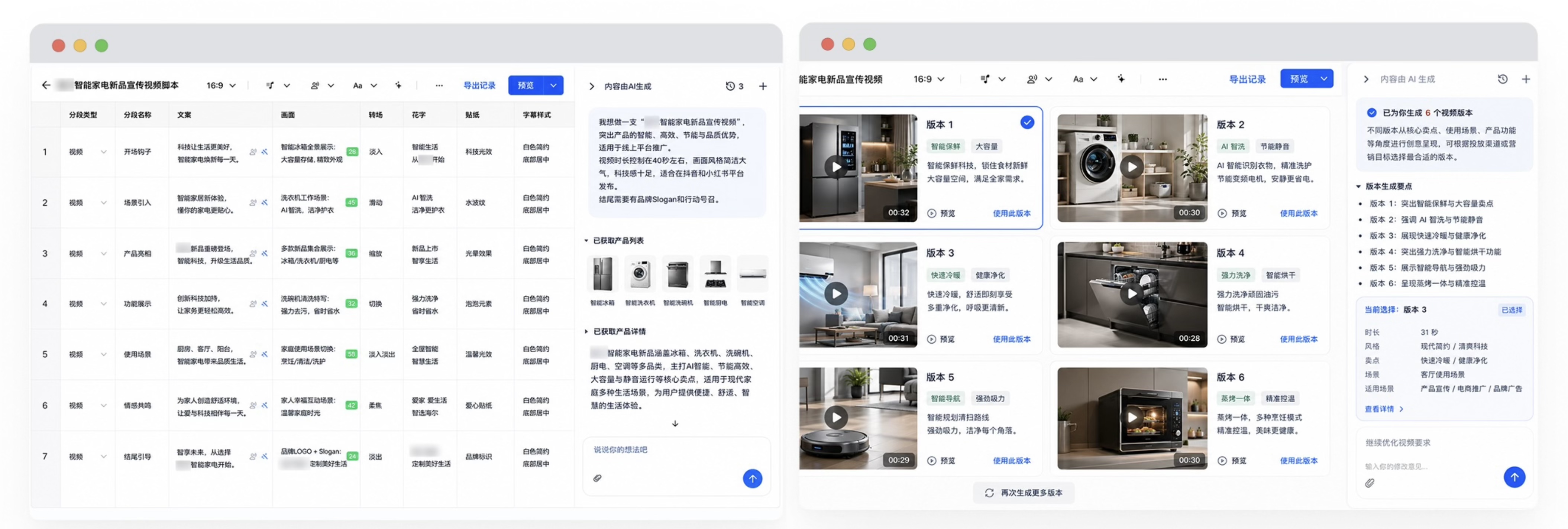
A certain home appliance brand faces challenges in video production: two weeks, 5,000 videos, multiple countries and languages.
Problem
In the traditional manual production model, one editor can produce 5 pieces a day, requiring 1,000 person-days. This is clearly impossible.
GEA's solution
Upgrade content production from a "workshop" to a "factory" — automate material processing, automatically generate scripts, batch output videos, and achieve T+1 trending topics.
How to identify truly viral content from thousands of videos?
Brands involved in this scenario: National home appliance brands, global fast-moving consumer goods brands
Background
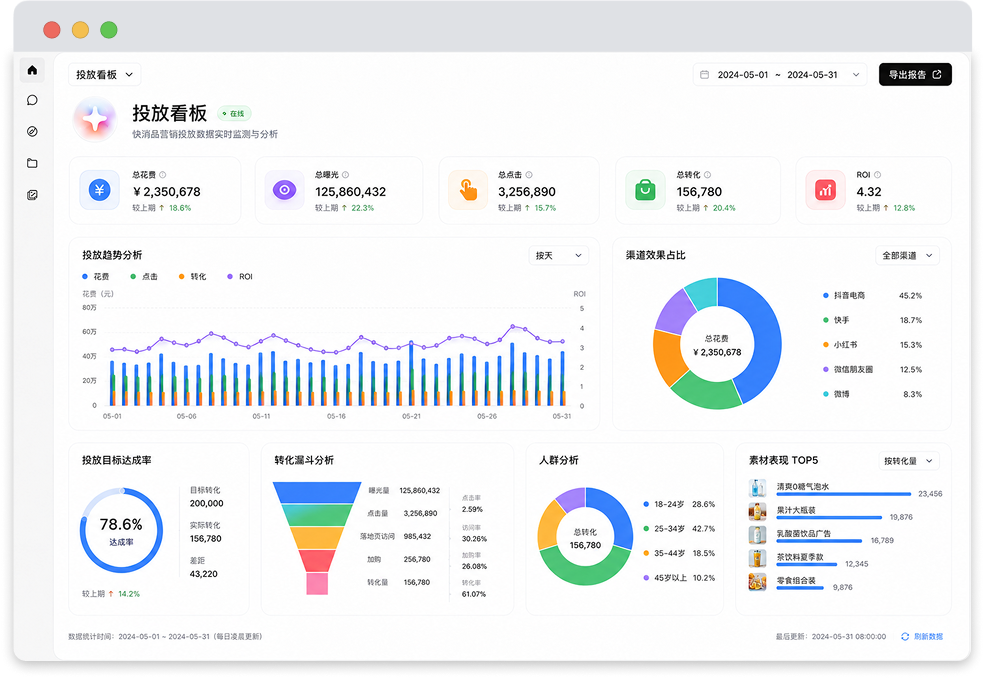
5,000 videos were produced, but their performance varied widely. The average views were 1 million, some exceeded 10 million, while others only reached 100,000.
Problem
The traditional approach is to analyze "why this one is good" after the fact, but by then the traffic window has already closed. It cannot be replicated.
GEA's solution
Establish a multi-layered horse racing system — phased launches, data filtering, dynamic launch optimization, immediately incorporating the characteristics of well-performing content into the next round of production rules.
How to make the same selling point effective in N countries?
Brands involved in this scenario: National home appliance brands, global fast-moving consumer goods brands
Background
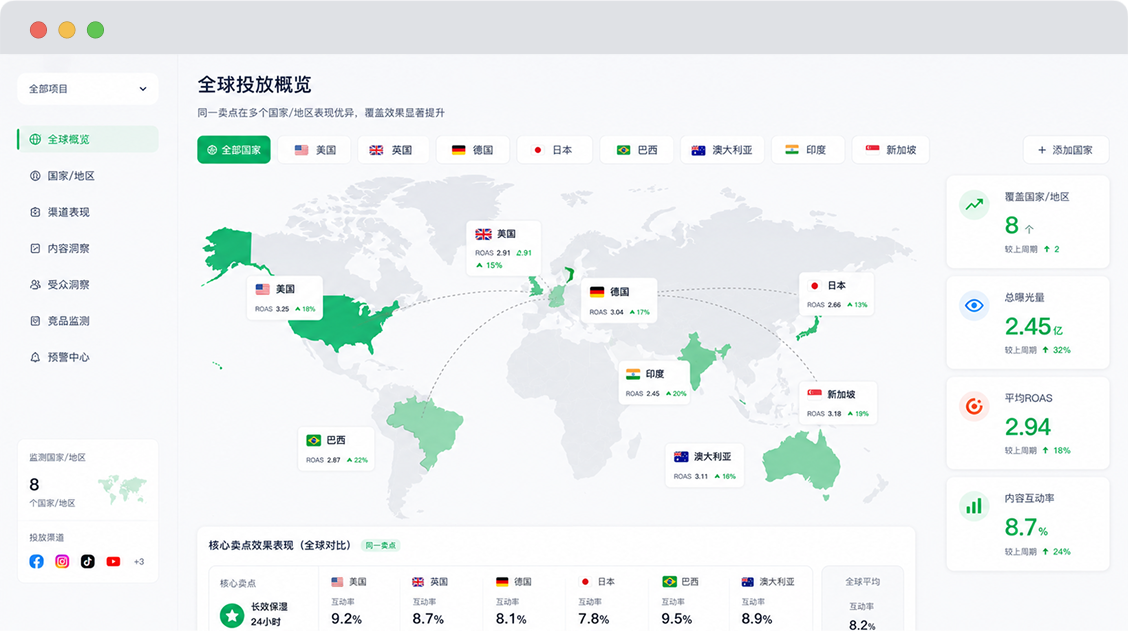
The significance of the World Cup in Thailand, the Philippines, and Vietnam is completely different. Simply "translating into multiple languages" would seem awkward.
Problem
True localization means redesigning, but this would explode costs.
GEA's solution
Establish a "national cultural package" — a library of expressions for each country, a library of applicable scenarios. The same script automatically adjusts based on the country of launch, but the core commitment remains consistent. A single script can vary into multiple country versions in 30 minutes.
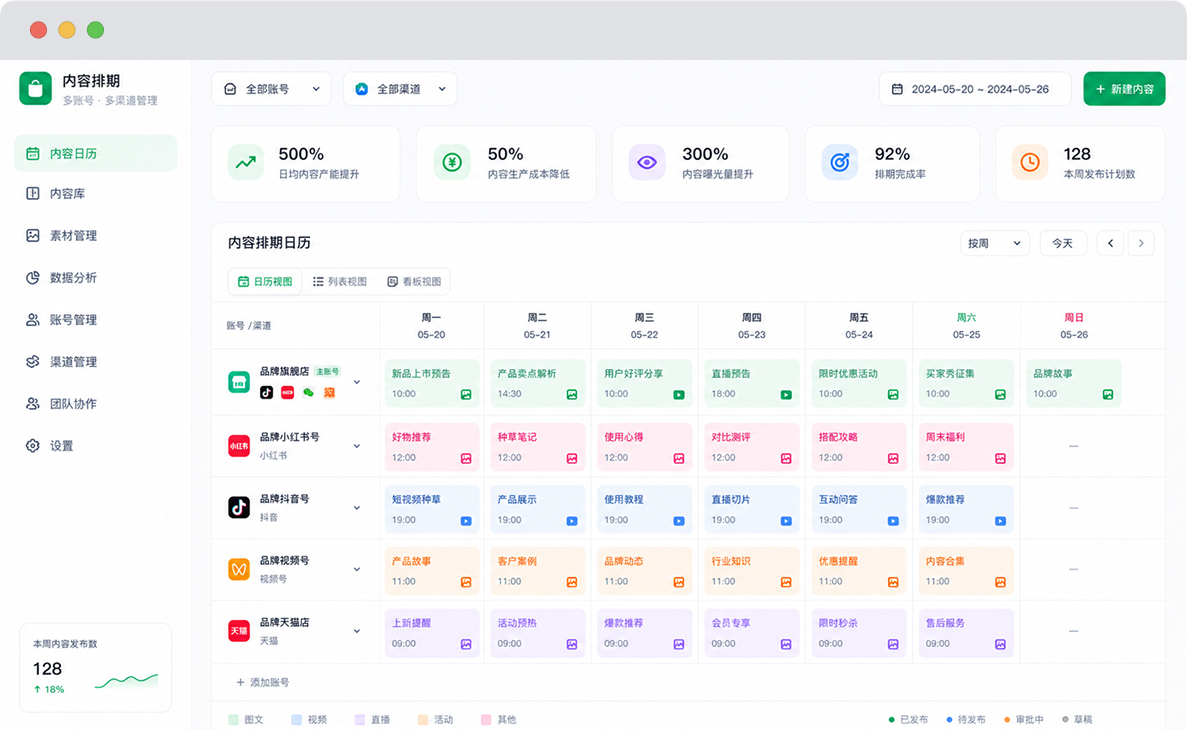
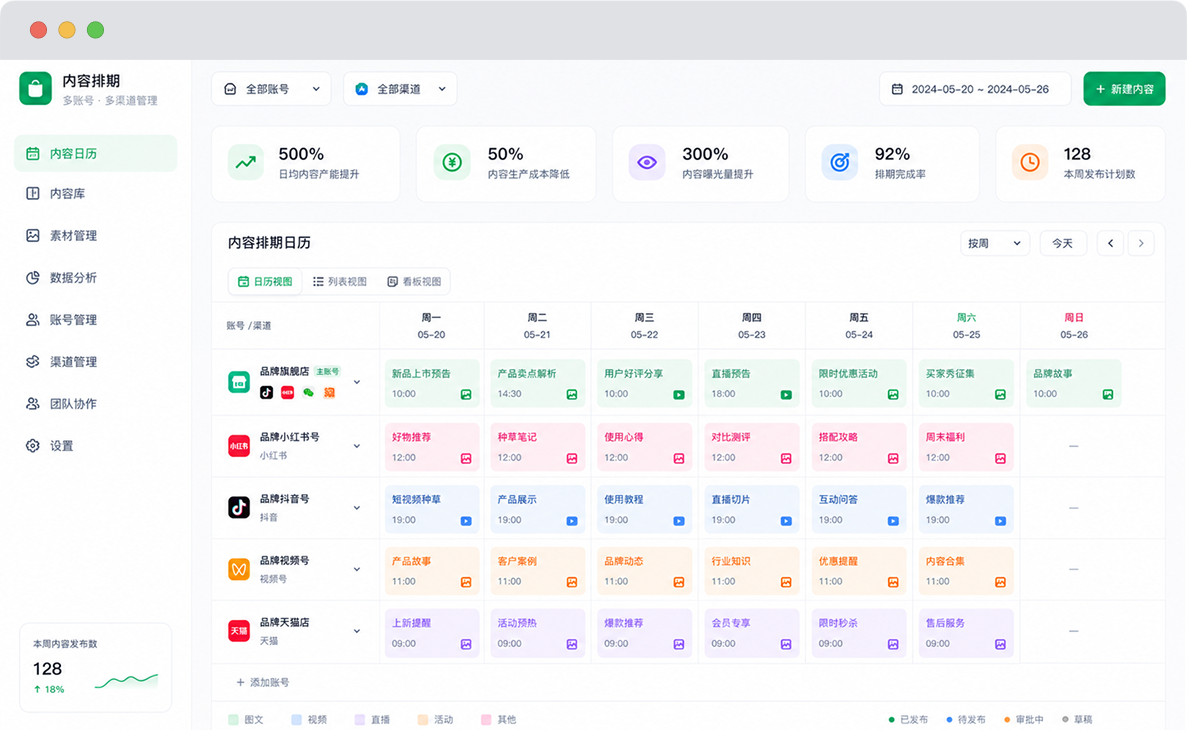
How to manage 1,800 accounts without being flagged by the platform?
Brands involved in this scenario: National home appliance brands, global fast-moving consumer goods brands
Background
The brand needs to operate over 2,000 TikTok accounts, with the risk that some operations may be flagged as "abnormal," leading to a large number of accounts being banned.
Problem
The core risk of large-scale matrix operations is not efficiency, but account health.
GEA's solution
Establish standardized account lifecycle management — account creation, nurturing, testing, launching, with clear rules at each stage, achieving a success rate of 98% for over 2,000 accounts.
How to get mainstream large models to recommend your brand?
Brands involved in this scenario: National home appliance brands, global fast-moving consumer goods brands, snack and candy brands, leading food brands
Background
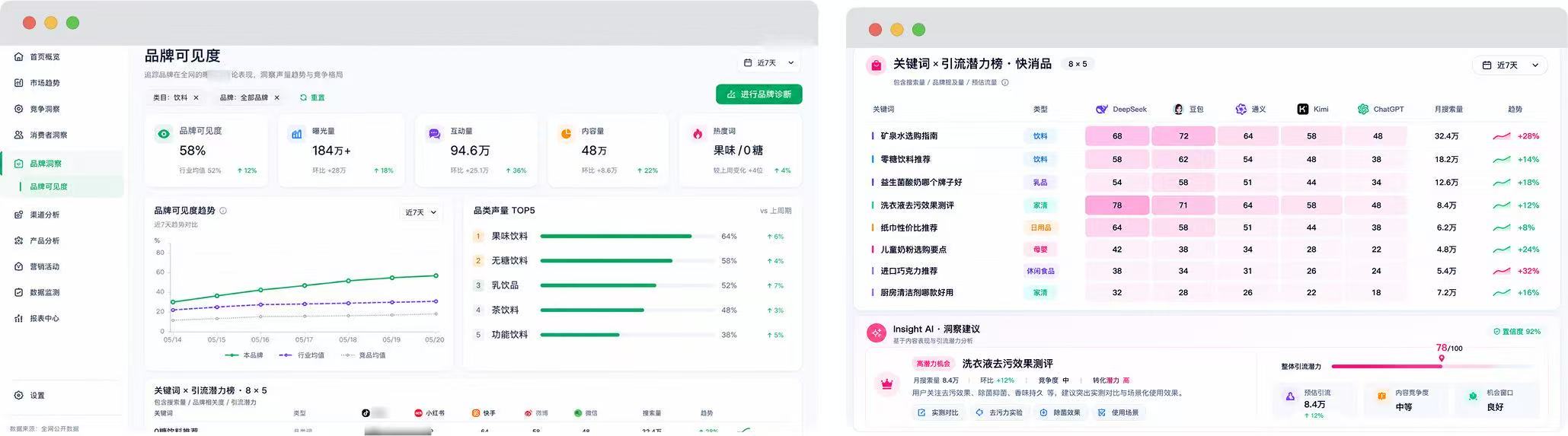
Social media advertising generates a lot of exposure, but when consumers make decisions, they ask AI: "I want to buy a TV, which brand is good?"
Problem
Whether or not to be recommended by AI depends on the AI's sources and how the brand is described, which is a whole new marketing scenario.
GEA's solution
Establish an AI-friendly content system — upgrade the official website to "Q&A," unify multi-channel sources, continuously monitor AI mentions, achieving a mention rate of over 60% for the brand in large models.
How to manage hundreds of versions of materials without errors?
Brands involved in this scenario: National home appliance brands, global fast-moving consumer goods brands, snack and candy brands, leading food brands
Background
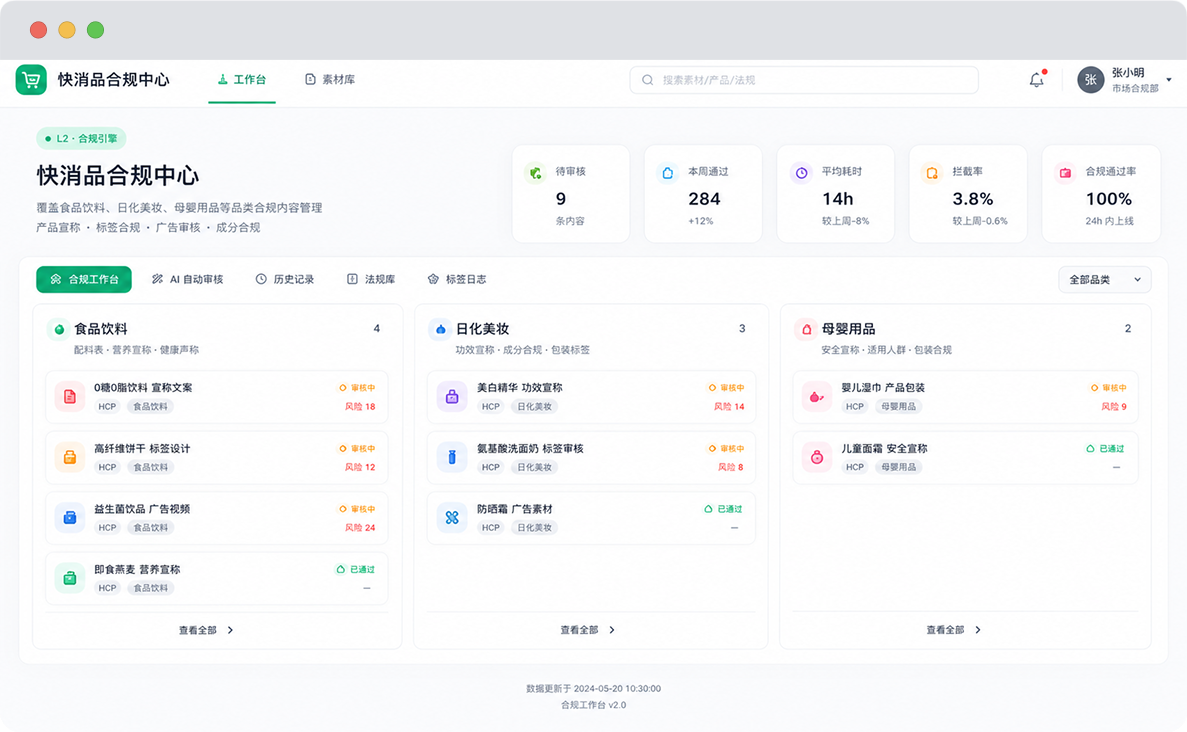
Offline marketing requires managing hundreds of versions of materials across different channels. The traditional approach follows a "draft → feedback → draft" cycle, with an average of 5-10 revisions per material.
Problem
Material versions are chaotic, making it impossible to confirm which version is in use, and brand modification feedback is scattered across emails, making it difficult to trace.
GEA's solution
Implement a unified material management platform for centralized management, version tracking, feedback binding, and online collaboration; compress the revision cycle from 7 days to 2 days, significantly improving the approval rate of materials.
How to ensure consistent execution standards across 200 stores?
Brands involved in this scenario: National home appliance brands, global fast-moving consumer goods brands, fashion brands, leading food brands
Background
Offline materials need to be implemented in over 200 stores, with different implementation standards for various supermarkets like Yonghui and RT-Mart.
Problem
Lack of standardized implementation guidelines leads to inconsistent visual effects across stores, resulting in a fragmented brand image.
GEA's solution
The system automatically generates implementation manuals and benchmark effect diagrams, clarifying material placement, reasons for implementation, and standard examples; establishes a remote acceptance control system, significantly improving the standardization rate of implementation across all stores.
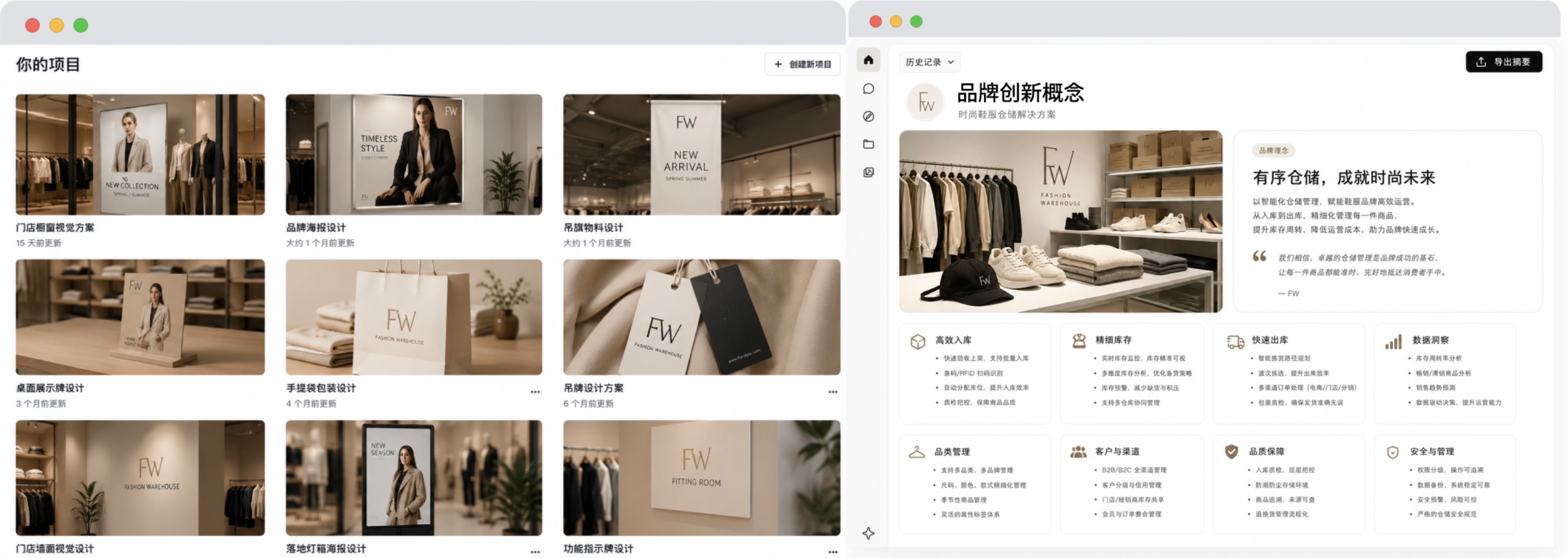
A marketing event involves N execution details. The root of the problem lies not in creativity, tools, or effort — but in the rules. GEA upgrades the vague, experiential, labor-intensive operation methods to clear, systematic, and scalable operational methods.
This is not just about improving efficiency. The rhythm of marketing campaigns is being rewritten.
Category
household appliances
Date
2026-06-01
Read Time
5 min read
Share Page
Related Recommendations

Global Fashion Group: Is Creativity Dependent on Genius, and is Genius Irreplaceable? How Enterprise-Level Intelligent Agents Can Solve the Growth Dilemma of Fashion Brands

Multinational Food: Innovation in Fast-Moving Consumer Goods is No Longer a 'Goldfish's Memory'