After becoming AI-Native: What Comes Next? On Brands and Good Taste in This Era
Conversation between Shen Shuaibo and Fan Ling of Tezign: Centered on products including GEA and Context System, they discuss AI-native organizational transformation, human-AI collaboration, industry opportunities and new-generation commercial profit models.
This article is compiled from a podcast conversation between Shen Shuaibo and Fan Ling.

Shen: Could you walk us through what Tezign actually is? People have understood it differently at different stages.
Fan: A company is much like a modern large model—it needs retraining every few months, and we as individuals also need to redefine ourselves every couple of years. The same goes for businesses, which may need to be repositioned every two years or so.
The name Tezign blends "tech" and "design". From the very beginning, we aimed to empower creativity across various fields with technology, focusing on marketing and creative scenarios. Technology here undoubtedly refers to artificial intelligence. Starting a decade ago, we developed AI to generate all types of content, with roughly 80% to 90% of use cases falling under corporate marketing.
Over the past two to three years, we spotted a major opportunity. Traditionally, data fell into two categories: structured data stored in Excel spreadsheets, and unstructured data such as images, texts, audio and video. Machines once struggled heavily to process unstructured data. The emergence of large language models has drastically lowered this barrier to understanding unstructured information. As a result, our original content lifecycle capabilities—content creation, management, distribution, analysis and matching, initially built solely for marketing—expanded to cover enterprise-wide unstructured data governance.
Layered on top of this is a Context System that large language models can interpret. Beyond marketing, our use cases now extend to product innovation and user insight generation. Peter Drucker stated that the essence of a business is to create a customer. Centered on end users, two core priorities emerge: crafting compelling narratives for customers, namely marketing; and delivering high-quality offerings, namely product innovation. We leverage AI to help enterprises boost efficiency and undergo digital transformation across these three pillars, and we call this full-stack solution GEA—Generative Enterprise Agent.
Shen: Everyone seems obsessed with AI these days. No event feels complete without an AI discussion. There are trendy concepts like "distilling your colleagues" and the "universal lobster farming analogy". Some AI skills only check the weather, which people can easily look up on their phones. What’s your take on this frenzy?
Fan: AI has evolved at an unprecedented pace over the past year. The DeepSeek turning point happened just over a year ago, marking the moment AI gained reasoning capabilities—prior to that, AI merely generated text and content. Toward the end of last year, systems like Claude Code and GPT-4.6 enabled AI to operate computers autonomously. If AI can control a computer, it can theoretically perform nearly all tasks humans complete on a device.
That’s why I often say internally that desk-bound knowledge work will gradually be replaced by AI. We need to spend more time on our feet, meeting clients face to face; these interpersonal, on-site roles will grow more valuable. With AI now able to operate computers, it can execute nearly all jobs done by knowledge workers—quality aside, it has become technically capable of taking on this work at scale.
Shen: When companies purchase your products, does that mean they can lay off the staff previously liaising with your team?
Fan: That’s an interesting question. For many companies, their first AI deployment takes the form of Copilot-style assistants, boosting individual productivity by 20% to 30% per employee. Last year, some firms started inserting intelligent agents into organizational charts while keeping their original reporting structures intact, treating certain roles as automatable agent tasks. This year, conversations have shifted toward AI-native organizations—restructuring the business with an AI-first mindset. Whether our GEA platform or other AI tools are adopted, their core purpose is to help businesses become truly AI-native, rather than just adding an AI add-on to existing workflows.
Yet the biggest challenge is no longer technical. A viral online essay recently divided professionals into two groups: frontline employees who constantly feel AI falls short of expectations, and CEOs who envision explosive transformative potential with AI deployment. The same AI tool therefore delivers vastly different outcomes based on who uses it. AI is no longer merely a tech issue; it is largely a matter of organizational mindset and the restructuring of production relations within a company.
Shen: I’ve visited multiple Fortune 500 companies lately, all enthusiastic about AI yet making minimal tangible changes. What exactly constitutes an AI-native organization, and what flaws hold back legacy corporate structures?
Fan: We can draw a clear parallel with the electrical revolution. Factories initially swapped steam engines for electric motors—a straightforward swap delivering immediate energy and efficiency gains. But it took roughly 30 years for factories to be fully redesigned around electric motors. Businesses began transitioning from steam power around 1900, and the first purpose-built electrical factories emerged circa 1930, alongside new management theories such as Taylorism.
Tool-level adoption happens fast, but organizational transformation moves slowly. Every established enterprise must first map out its existing operations and staffing model before figuring out viable paths for restructuring.
Shen: You still haven’t spelled out the roadmap for this transition. What does the organizational structure of an AI-native company actually look like?
Fan: I can’t offer a single definitive definition of an AI-native business, but I can illustrate concrete differences after clients deploy our solutions.
Take Atypica, our large-language-model-powered user insight product. Every company claims to be user-centric, yet traditional user understanding relies on lengthy, costly offline research cycles. With an AI agent simulating real consumers, businesses can run 24/7 virtual user testing, pose ad-hoc questions at any time, and co-create content topics or new product concepts. User research that once took six months to a year can now happen daily at the cost of a cup of coffee—fundamentally reshaping how companies perceive their audiences.
We also built a GEA solution dedicated to new product innovation. Few brands can produce breakout blockbuster products nowadays, pushing businesses to launch more niche offerings without expanding their innovation teams. This innovation GEA scans market signals round the clock, similar to quantitative trading strategies: it aggregates transaction trends, social media buzz, viral topics, emerging IPs, customer praise and complaints, and other consumer voice data to continuously generate new product concepts.
This does not mean AI designs perfect new products; it rapidly mass-generates rough, mid-tier concepts scoring around 60 out of 100. Humans are freed from this tedious groundwork to step in and refine ideas from the 60-point baseline, injecting creativity, subtlety and subjective judgment. Previously, teams wasted extensive labor moving concepts from zero to 60 points; now AI handles bulk upfront ideation, letting humans focus on differentiated, inspired creative work.
Shen: Platforms like Alibaba already rolled out category radar tools in the big data era. What fundamentally differentiates big data systems from modern AI products?
Fan: The divide is substantial. In the big data era, competitive advantage centered on data ownership—only large platforms amassed sufficient datasets to power such analytics, yet they lacked robust frameworks to extract actionable insights from raw information.
In the large model era, the model itself acts as a massive built-in knowledge base, already trained to understand ecosystems like Alibaba and Douyin. Companies no longer need to hoard massive datasets; they only require high-quality sample data and well-crafted prompts to elicit targeted insights embedded within the model. Large-language-model-native products are highly customized to individual businesses: you feed the system your internal viewpoints, and it processes relevant data to surface tailored, valuable conclusions.
Shen: Does human creativity still hold significance, or will machines take over creative work entirely?
Fan: This is a complex question. I firmly believe human creativity remains irreplaceable, yet many tasks we once labeled creative were never truly innovative to begin with. I visited Alibaba a decade ago, where they employed 2,000 in-house designers and estimated 2 million designers across their ecosystem. Top-tier design talent flocked to e-commerce banner production back then, yet did repetitive banner optimization really demand elite designers? Our original AI development goal was to automate these clearly defined, formulaic design tasks, freeing designers to tackle more unstructured, genuinely creative challenges.
Today, AI image generation capabilities are far stronger, but creativity still matters deeply. Much work mistaken for creation is mechanical iteration. As probabilistic systems, AI tends toward convergent, homogeneous outputs; true differentiation stems from human intervention. A designer proposing an unconventional perspective creates uniqueness that AI cannot spontaneously generate.
One major shift: product managers and designers no longer need constant handoffs with engineering teams to realize concepts. Designers now possess far greater direct control over final outputs. Historically, designers worked with pixel-perfect precision while front-end developers implemented designs with loose approximations. Today, designers can independently build and deploy web assets, greatly empowering truly creative professionals.
Shen: What core differences set GEA apart from digital employee solutions built by countless other firms?
Fan: Our differentiation stems from our company history. We already help roughly 200 Fortune 500 companies manage their digital assets—unstructured content including images, text and video, which serve as contextual material for large language models. Multiple enterprises can run identical base models, yet their proprietary context sets deliver completely distinct outcomes.
I often frame modern work as "context farming", shifting our focus from content creation to curating and maintaining high-quality contextual datasets hosted on our platform. Context acts like soil, while large models function as seeds; unique soil yields unique growth trajectories, making proprietary context our core competitive edge.
Second, we aim beyond standalone digital employees. Most existing solutions rely on humans directing AI. We want to flip this dynamic: have AI proactively surface priorities to guide human work, with humans contributing subjective judgment, aesthetic discernment and intuitive creative flair. Our mission is to reshape three core corporate functions—marketing, product innovation and user insight—through this AI-led, human-judgment-centered framework.
Shen: These three fields have long depended on intuition and gut instinct. Will this dynamic disappear going forward?
Fan: Intuitive tacit knowledge—subconscious expertise you cannot fully articulate—will remain critical. Scholars such as Professor Wang Defeng and Zhang Xiaoyu have extensively discussed tacit knowledge recently. Much like two chefs cooking identical ingredients yet producing vastly different flavors, this intuitive craftsmanship cannot be automated away.
AI nonetheless changes how we leverage this intuition. I recently spoke with a film studio founder adapting online novels for screen. To gauge audience reception, they interview core fans to identify plot elements viewers reject or embrace for adaptations—deep conversations that yield irreplaceable insights, yet frequent direct interviews with loyal readers are unsustainable. They compile these interview takeaways into contextual corpora to build AI reader avatars, enabling continuous collaborative plot brainstorming and iterative testing with these simulated fan agents.
AI lowers barriers to experimentation but cannot replace sustained, nuanced dialogue with insightful, intuitively attuned human stakeholders. When framed as complementary partners, humans and AI can form powerful collaborative paradigms.
Shen: Some warn of a 2028 economic crisis driven by mass AI layoffs. Many middle-class white-collar workers currently tasked with mid-tier, 60-point work could face displacement with no clear career path. Is this scenario plausible?
Fan: Every major technological revolution triggers labor market disruption. AI uniquely unsettles people because its impact targets white-collar office roles, while blue-collar work remains comparatively insulated. These highly educated, once-prestigious roles now face existential threat, stoking widespread anxiety—echoing the backlash against skilled artisans displaced during the Industrial Revolution.
We can analyze this from two perspectives. First, as an entrepreneur operating within a socialist market economy, I feel acute urgency to stay aligned with this technological shift. Missing the AI wave consigns businesses to stagnant niche relevance; even with comfortable market positioning, internal efforts deliver limited broader value and may generate negative external societal impacts.
Second, this is far more than a commercial challenge—it represents a societal issue. Universal basic income is debated overseas, yet China is not yet ready for such frameworks. Reskilling programs for displaced employees and strengthened social safety nets become essential priorities. This extends well beyond individual corporate responsibility to systemic societal planning.
Shen: Critics argue iconic new brands will cease emerging in the AI era. What is your viewpoint?
Fan: AI accelerates value creation built over time, yet certain temporal processes cannot be rushed, such as gradual human cognition and brand trust-building. AI will amplify the value of established brands, though launching breakout new brands will not necessarily grow easier or harder.
I believe legacy brands like Coca-Cola will grow more valuable amid AI proliferation. Product replication becomes trivial, so consumer trust hinges on brand heritage, cultural resonance, word-of-mouth reputation and authentic human personality. Even AI founders now prioritize public livestream appearances to humanize their companies. Amid homogeneous technical products, differentiation lies in brand philosophy and relatable leadership personas.
Take Anthropic as an example: its marketing strategy abandons fully digital tactics, leaning back into classic consumer brand activations with offline pop-up events and branded "thinking head" hats countering mindless AI dependency. A legal AI startup even hired Jude Law as its public face after search engine confusion between its legal agent product and the actor. These examples signal a return to fundamental brand-building principles.
A common perception gap persists: outsiders view R&D-heavy companies as strong, yet bloated R&D teams often signal slow go-to-market execution. AI lets one developer deliver output equivalent to ten engineers, meaning businesses only need roughly 10% headcount for R&D, with the remaining 90% focused on communicating value to external stakeholders. Trust and interpersonal relationship-building require time to cultivate; no shortcut instantly convinces clients that Tezign is an industry leader.
Shen: Do half your lead sources stem from GEO?
Fan: The logic is straightforward: large language models represent free emerging traffic channels. By creating model-friendly content, brands can surface organically when users pose relevant questions, eliminating traditional media buying costs.
Shortcut tactics exist, yet large models grow increasingly robust against spam and manipulative content over time. Exploitative tricks deliver only fleeting gains while damaging brand reputation long-term.
A new audience segment has emerged: large language models themselves. Brands must develop content marketing strategies tailored for model consumption, structuring messaging to align with how AI retrieves and synthesizes information. For enterprise agent inquiries, Tezign may surface as a recommended solution if we build comprehensive, reference-rich Q&A content optimized for model comprehension. These models consume content akin to in-depth, analytical knowledge seekers—resembling Zhihu users rather than short-form video audiences on Xiaohongshu.
Shen: Did OpenAI’s $200 million podcast acquisition stem from this exact strategy?
Fan: This ties into the build-in-public product development methodology. If our conversation centered exclusively on Tezign product updates, I could tease upcoming initiatives and gather immediate audience feedback. This transparent development lets teams rapidly iterate, pivot or discontinue underperforming features based on public input.
Insight scarcity, not engineering bandwidth, is the primary bottleneck today. Meanwhile, crowded product markets make organic discovery extremely difficult. Founders and product leaders leverage podcasts and livestreams to publicly articulate new offerings mid-development, acting as organic marketing simultaneously.
Podcasts, particularly video podcasts, serve this purpose exceptionally well. This explains major AI firms acquiring media production companies at scale—exactly what I would pursue if in their position.
Shen: As a tech CEO, doesn’t content creation drain significant bandwidth?
Fan: My role is not full-time content production; that work falls to dedicated production teams handling topic planning, curation and post-production. My only responsibility is articulating our products and their underlying narratives clearly. The time investment is modest, while the returns are substantial.
Many enterprise clients first encounter us through my short-video talks, reaching out after resonating with our value propositions while flagging product shortcomings. This direct customer feedback is invaluable for product iteration. Even in B2B enterprise sales, purchasing decisions hinge on individual stakeholders within client organizations; winning over these individuals unlocks enterprise contracts. My posting schedule is intermittent, so time costs remain low, and the goal extends far beyond sales pitches—it centers on articulating our core industry perspectives.
Shen: Which product are you most proud of and eager to promote widely?
Fan: We have two flagship offerings, one foundational infrastructure and one ready-to-deploy application.
First is Atypica, built to deepen corporate user understanding. It simulates diverse consumer personas powered by large language models. Before LLMs, user datasets remained static records; simulated user agents hold active reasoning capabilities and support interactive dialogue to unlock actionable consumer insights. One third-party developer even integrated our APIs for investment strategy work, leveraging simulated investor sentiment personas to guide trading decisions on Polymarket—use cases uniquely enabled by large models.
I describe this as "new wine in old bottles": reimagining the longstanding challenge of user research with a revolutionary product experience. The platform has amassed roughly 100,000 global users, marking its one-year anniversary on May 10. Forty percent of users are overseas, with just over thirty percent based in China, outpacing our initial growth projections.
Second is our proprietary Context System. While companies can license identical base models, performance gaps boil down to contextual quality. Operating without tailored context when deploying LLMs is equivalent to running naked in the AI era. Context engineering, a rapidly rising field known as harness engineering, relies heavily on curated, maintained context to unlock targeted model performance. Our system autonomously refreshes and optimizes enterprise context datasets daily, eliminating manual curation overhead.
Shen: How should businesses select AI products amid an overwhelming flood of tools that quickly become obsolete, leaving teams confused?
Fan: I use a four-quadrant framework to evaluate AI product strategies:
• Old wine in old bottles: Unmodified legacy products • New wine in old bottles: Superficial AI add-ons bolted onto existing software • Old wine in new bottles: AI-native products solving pre-existing market pain points • New wine in new bottles: AI-first products creating entirely new market categories
I cannot confirm which strategy delivers optimal results, yet I am certain which approach performs worst: retrofitting old products with superficial AI features (new wine in old bottles).
This is an intuitive yet flawed corporate reflex: software vendors tack AI modules onto legacy tools. Token consumption increases operational costs and gross margins shrink, while customers perceive minimal meaningful improvement and resist price hikes. Product complexity rises alongside limited revenue upside—a thankless undertaking, yet the default choice for most product managers and business leaders, tempted by the simplicity of "adding AI to our pen to make it an AI pen".
Old wine in old bottles fares better by comparison: legacy products continue generating steady revenue during their mature lifecycle with minimal incremental investment until market demand fades.
Our internal roadmap prioritizes building new wine in new bottles first. Atypica originated from late-night side projects by myself and our CTO, developed over six months with no formal market mandate, built purely to explore AI-native product design principles. Positive client traction validated the concept post-launch. After proving this model viable, we progressed to old wine in new bottles: reimagining our legacy client solutions entirely via AI architecture, which birthed GEA.
I observe thousands of engineers at traditional tech firms wasting resources retrofitting legacy software with AI. My advice to their CEOs: allocate just 1% of staff to maintain legacy systems, and redirect the remaining 99% toward building either old wine in new bottles or new wine in new bottles.
Shen: I agree logically, yet organizational inertia persists. Leaders grasp this reasoning but struggle to identify their personal positioning, insisting they must continue legacy overhauls.
Fan: Roughly half our mid-level managers departed voluntarily or involuntarily last year, and we ultimately saw no operational gaps emerge afterward.
Transitioning toward AI-native products and structures renders two traditional middle-management responsibilities redundant. First, resource coordination: small cross-functional pods can deliver end-to-end outcomes independently with minimal resource allocation overhead. Second, schedule administration: tiny teams align priorities informally over casual conversations, eliminating rigid recurring meetings. Managers whose core roles revolved around resource allocation and project scheduling lost clear value propositions, leading to voluntary dissatisfaction or internal performance mismatches. Affected leaders either step up to own 5–10x larger strategic targets or pivot to individual contributor roles delivering hands-on work.
This shift evolved organically, with no predetermined layoff targets. Traditional corporations operate under industrial-era structures with rigid functional silos and standardized SOP-driven cross-team collaboration. AI drives de-industrialization, expanding individual capability to cover skill gaps and reducing reliance on heavy cross-department coordination. We pursue high cohesion, low coupling team design: small pods align around business outcomes rather than rigid job descriptions, blurring lines between front-end engineers, product managers and designers, with team members able to contribute across roles.
We adopted a pod-based operating model: small, outcome-focused pods own full delivery for business goals instead of individual functional duties. Job functions are not eliminated outright; we reorganized functional expertise into internal communities. A sales employee may join engineering, product or solution communities to build supplementary skills. These communities prioritize employee growth, training members to leverage AI tools and build cross-disciplinary competence, with community leadership emphasizing accountability and ownership alongside technical proficiency.
Shen: Has your headcount grown or shrunk year over year?
Fan: Our team has expanded amid accelerated revenue growth. We achieved 50–60% annual growth last year and are targeting year-over-year revenue doubling in 2026. Our headcount bottomed out in 2023 following organizational optimization, before rebounding through 2024 and 2025. Our objective is not headcount reduction, but more efficient team alignment to pursue ambitious growth. The AI era resembles the Age of Exploration, focused on discovering new market frontiers rather than incremental optimization of existing territories; manpower trimming is never our primary objective.
Shen: Excessive context can turn AI into sycophantic bureaucrats, second-guessing your intentions to deliver agreeable closed-loop answers lacking objectivity. Initial conversations feel pleasant, yet users notice biased outputs over time. How would you address this pitfall?
Fan: Upcoming model iterations will partially mitigate this challenge through technical advancement. Frustration with biased, agreeable AI signals deep, sophisticated adoption beyond quick one-off answers, as users begin demanding controllable, objective outputs.
Context engineering systematically streamlines bloated, unfocused context datasets to ensure relevance and precision—a solvable technical and engineering challenge.
Enterprises also overlook rigorous evaluation frameworks to validate AI performance. Proving an AI solution can complete a task once does not guarantee consistent, objective output at scale. Continuous evaluation processes align model outputs with business requirements, supported by human labeling feedback that explicitly instructs the system to prioritize factual objectivity over deferential appeasement, stabilizing long-term reliability.
Shen: Are there hard ceilings to AI-driven productivity gains? Many AI clients still hire large teams for liaison work, with staff overwhelmed and seemingly unable to leverage AI to cut workloads.
Fan: This phenomenon has two sides. Walking through our office at 9 p.m., many top-performing employees who excel at AI adoption still work overtime. They are overworked precisely because they are highly capable AI users, caught in a self-reinforcing cycle of ambition. AI inadvertently harms work-life balance; two of our most proficient AI practitioners recently requested one-month sabbaticals, which I fully endorsed to prevent burnout. Deeply contextualized AI systems grow hyper-aligned with user preferences, motivating ambitious employees to pursue increasingly aggressive goals and fueling intense internal competition.
Second, AI companies typically allocate only 10% of headcount to R&D, with the remaining 90% dedicated to client relationship management. Interpersonal stakeholder communication resists automation, and human stakeholders often resist AI-mediated conversations. Humans remain single-threaded decision bottlenecks, ultimately choosing AI use cases and deployment strategies.
For customer-facing businesses overly fixated on data-centric R&D headcount, reallocating staffing toward growth, go-to-market strategy and client relationship teams eases overall workload pressure.
Shen: What major heavyweight project are you currently developing?
Fan: Two core initiatives aligning with our earlier discussion: our user-simulation agent and autonomous enterprise context system that iteratively refreshes contextual datasets without manual writing. The first delivers user-centric AI applications augmenting human understanding rather than replacement; the second serves as foundational infrastructure critical for enterprise-grade AI deployment.
We are also building an evaluation platform for creative output. As we deepen our capacity to model user behavior, we aim to quantify gaps between human and AI creative reasoning. Drawing on behavioral economics games such as the Prisoner’s Dilemma, we run comparative tests between simulated AI personas and real human participants to map where AI replicates human decision patterns and where inherent limitations prevent true human-like cognition.
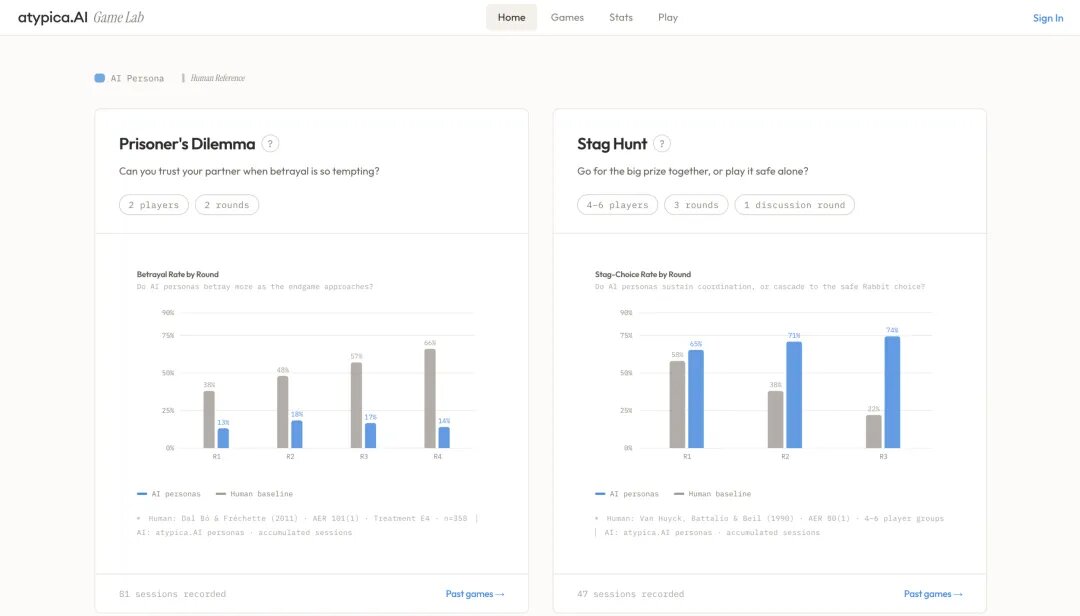
Shen: Anthropic launched a suite of developer tools severely disrupting software engineering workflows. Kimi, Tencent and Alibaba pursue identical strategies—could large model vendors eliminate application-layer companies entirely?
Fan: The tension between inference-layer providers swallowing application-layer players recurs through every technological wave. While I cannot confirm whether AI will break this pattern, our entrepreneurial positioning validates substantial enduring value for application-focused firms.
Even MiniMax prioritizes agent-based monetization, remaining agnostic to whether they deploy their proprietary base models; their core revenue driver is agent application logic, not raw model licensing. This defines their identity as an application company first, rather than a pure model vendor—a mindset we share, with no mandate to exclusively deploy our own base models.
No universal large model solves every use case. I rely on Claude for coding tasks, Sora-adjacent models for video generation, and may switch video models monthly based on capability updates. Multi-model collaboration is standard practice for diverse workloads, so no single model firm can monopolize all application scenarios unless the entire industry consolidates into one entity.
Shen: What will define the most critical priorities in the next development phase?
Fan: A widely cited analysis frames context as a trillion-dollar market opportunity. The industry remains fixated on base model advancement, yet the application ecosystem built around effective context utilization has expanded dramatically. Our ambition is to become the global leader in enterprise context infrastructure. Complex real-world client challenges drive meaningful technical innovation, preventing theoretical R&D disconnected from practical demand.
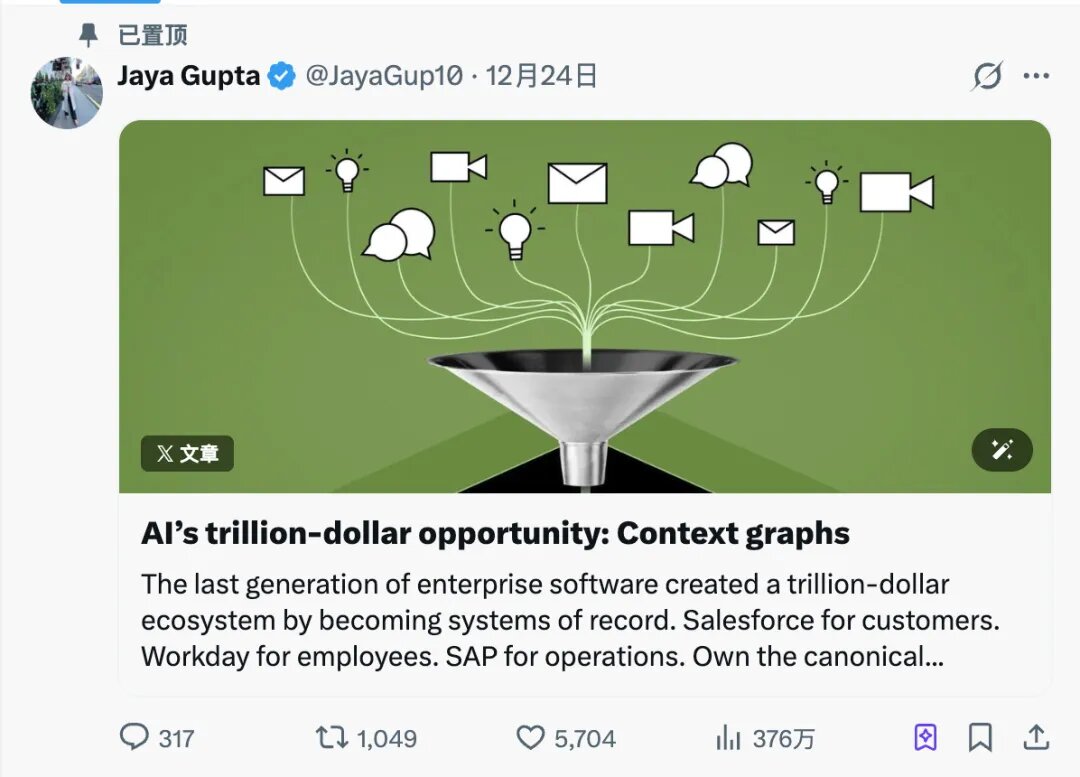
Second, I aim to pioneer sustainable new business models for AI companies. Our agent subscription conversion rates run ten times higher than traditional software products. Agents outperform legacy software by directly delivering end outcomes instead of discrete tools, even displacing service contracts previously fulfilled via software-enabled labor. This fuels emerging pricing frameworks such as outcome-based billing and token economics, still in early exploratory stages. We are also testing joint ventures with vertical industry partners structured around profit-sharing: aligned revenue if solutions drive profitable growth, shared accountability for underperformance, shifting value measurement from efficiency gains to sustainable competitive advantage.
Shen: Traditionally, you buy a hammer to drive nails. Today’s AI resembles an all-in-one package including labor, hammer and nails, delivering finished results directly.
Fan: AI will continue shrinking demand for task-specific functional roles, while judgment-based decision-making responsibilities expand exponentially. AI enumerates all viable options yet cannot make final choices; consequential decisions carry risk and opportunity costs that remain uniquely human responsibilities.
Shen: Exactly. AI generates exhaustive reasoning, yet courage to act remains scarce despite universal access to information.
Fan: Precisely. The AI era leaves people drowning in analytical insights, yet bold, decisive action grows increasingly rare and valuable—creating unprecedented demand for entrepreneurs with imagination and bravery.
Shen: Will large corporations undergo mass layoffs over the next three years? China faces industrial overcapacity, and efficiency gains exacerbate inventory crises for manufacturers like shoe factories that gain little value from productivity upgrades. What legitimate purpose does AI serve in this environment?
Fan: Developed economies boast robust service sectors precisely because industrial automation reduced factory staffing, pushing surplus labor into service roles. China will follow this trajectory, evolving from standardized mass services toward personalized service offerings, a transition still in early stages. I am not pessimistic; every technological disruption triggered labor restructuring across generations, including layoffs during our parents’ era, followed by new job creation and economic reorganization.
Too many AI discussions originate from purely technical perspectives, so I prefer framing this shift through humanistic narratives. Impressionist painters once believed photography rendered painting obsolete. Instead, photography freed painting from realistic replication as its core purpose, evolving modern art into concept-driven expression. A Duchamp urinal gains artistic value from conceptual intent, not visual likeness.
I view AI as a liberating force. It lets humanity move beyond narrow efficiency optimization to reconnect with deeper purpose. Efficiency is a narrow, capitalistic optimization goal. Exceptional enterprises must transcend incremental cost-cutting: a chain with 10,000 milk tea stores gains little value from squeezing store-level staff productivity via AI; instead, AI should empower frontline employees with supportive tools. This higher-order thinking beyond pure operational optimization distinguishes truly great companies.
Shen: Does the advertising industry still have viable prospects?
Fan: My background centers on product development, not advertising. I entered the space incidentally, as marketing and advertising represent corporations’ largest spending buckets, with no sentimental obligation to "rescue" the sector.
From my vantage, advertising professionals possess uniquely creative mindsets, yet the industry has devolved into endless performance optimization amid data-driven ROI pressure—an overcorrection from its original creative mission.
Brand building and cultivating consumer mindsets grow more critical than ever, both requiring sustained time investment. Go-to-market strategy hinges on original creativity that resists AI prediction.
Future industry leaders will not necessarily be the most technically adept AI operators, but those who adopt a thoughtful, intentional stance toward AI. Dominant holding groups like WPP, Ogilvy and Publicis will cede ground to creative professionals embodying the historic ethos "If you’re not president, be an ad man". These creative leaders must develop AI literacy, though they need not become AI engineers themselves to thrive.
Category
In-depth Report
Date
2026-06-25
Read Time
24 min read
Share Page
Related Recommendations

Context System: How to Enable AI to Learn from 'Big Data' to Enterprise 'Proprietary Knowledge'?

The Most Valuable Knowledge in a Company Has Never Been Recorded