What Insights Does the Claude Code Source Leak Provide for Enterprises? A Discussion on Harness Engineering
The leak of Claude Code's source code reveals the value of Harness Engineering, which creates an operational environment for model construction, shifting AI engineering from prompt engineering to competitive system capabilities, aiding the implementation of intelligent agents in enterprises.
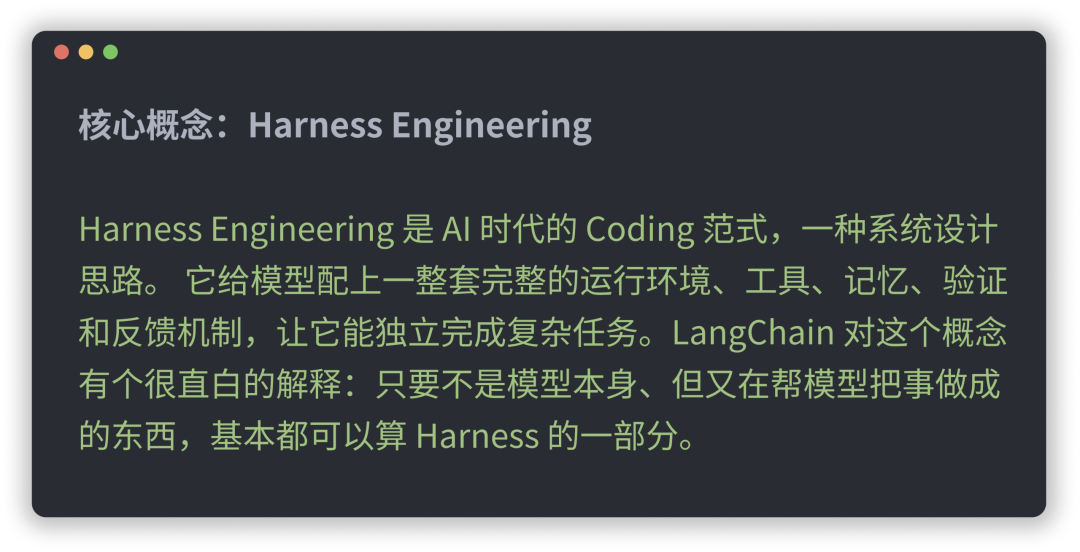
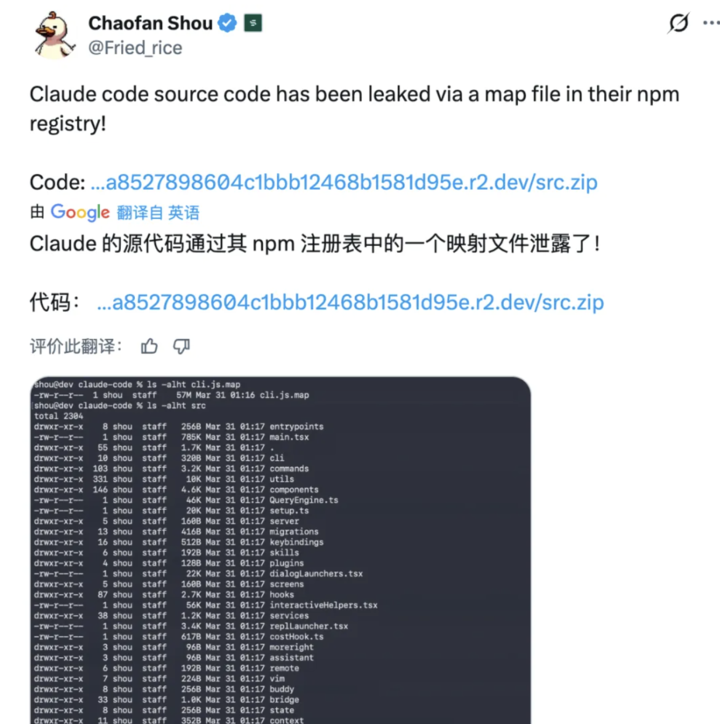
Recently, the leak of Claude Code's source code has sparked extensive discussions in the developer community. Many are focused on the permission mechanisms, memory structures, and even the so-called "Easter egg features," but what truly deserves serious attention is another matter: Claude Code showcases a mature Agent runtime, which is the Harness built around the model.
Harness Engineering is not about how to make models answer better, but about how to enable models to continuously participate in real tasks. It involves a complete set of system capabilities, including memory structures, permission controls, context compression, multi-agent collaboration, and background execution mechanisms. As models gradually become public infrastructure, more and more enterprises are beginning to realize that what truly determines the depth of intelligence is no longer the scale of model parameters, but how the system organizes model capabilities.
The significance of Claude Code lies in its first complete exposure of this change at the engineering level.
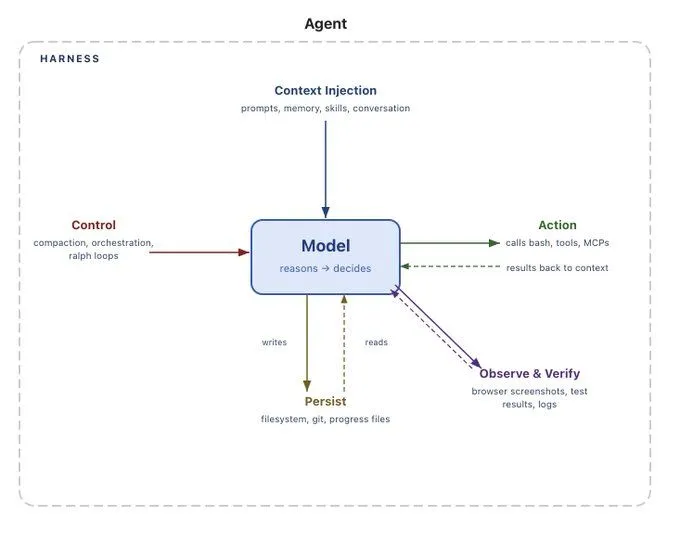
*LangChain, The Anatomy of an Agent Harness https://blog.langchain.com/the-anatomy-of-an-agent-harness/
From Prompt Engineering to Harness Engineering
In the past two years, the AI engineering paradigm has undergone three significant changes.
1. Initially, there was Prompt Engineering, where people tried to enhance output quality through language optimization.
2. Then came Context Engineering, which introduced more organizational information to help models understand business contexts.
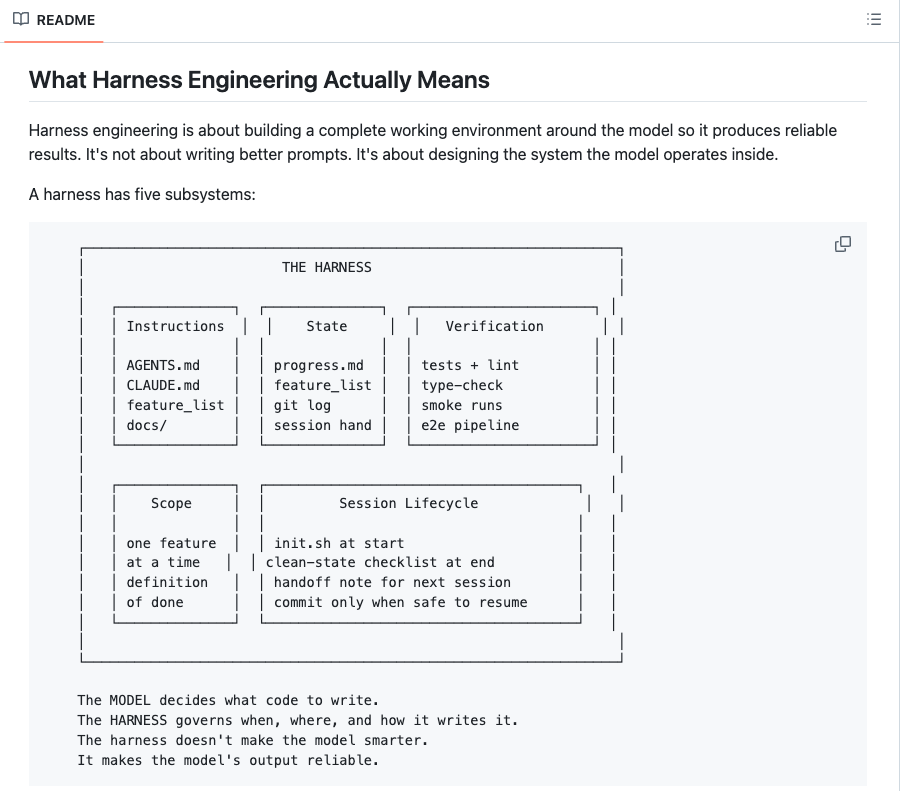
3. Harness Engineering further advances this: it focuses on how to build an operational environment that allows models to become part of a task execution network, rather than just answering questions once.
The source structure of Claude Code reflects this change. The system establishes a centralized tool registration system, layered memory structures, permission spectrum control, IDE bridging mechanisms, and sub-agent isolation execution structures around the model, enabling it to run long-term in a software engineering environment rather than being confined to a terminal dialogue interface.
The TAOR loop (Think–Act–Observe–Repeat) further reinforces this design philosophy: keeping the runtime simple, delegating judgment capabilities to the model, and stability to the framework. This structure of "thin framework + strong model" is becoming the foundation of the next generation of agent systems.
When We Talk About Harness Engineering in Enterprise Scenarios
Real enterprise work is rarely completed with a single response.
Understanding market trends, formulating product strategies, coordinating brand expressions, and validating user feedback typically involve multi-role collaboration, multiple rounds of judgment, and constantly changing information inputs. If a model only answers questions, it remains at the assistive level.
The significance of Harness Engineering lies in transforming models into a part of the workflow. This is usually reflected in three changes.
1. Models begin to operate around goals rather than around questions.
2. The reasoning process can be decomposed, combined, and reused, rather than generated once.
3. Different model capabilities are organized into a collaborative network rather than being called in isolation.
When these capabilities come together, AI truly enters the internal structure of enterprise operations.
How Harness Engineering Changes the Structure of Intelligent Agent Systems
In the design of intelligent agent systems, Harness Engineering typically manifests as three key mechanisms.
The first is the task decomposition mechanism. Complex goals are broken down into multiple executable sub-paths, with dynamic selection of execution order.
The second is the model orchestration mechanism. Different models take on different roles based on capability boundaries, such as reasoning models responsible for judgment paths, generative models responsible for content expression, and multimodal models responsible for understanding visual or video signals.
The third is the context-driven mechanism. The system no longer relies on immediate inputs but on long-term accumulated organizational knowledge for decision-making. These mechanisms together form the brain structure of intelligent agent systems.
For example, in Tezign's GEA architecture, the Creative Reasoning Model is responsible for path divergence and task orchestration, while the Context System provides a unified source of enterprise knowledge, enabling models to understand brand strategies, historical decision logic, and user structure differences. In such a system, models are no longer just executors but become part of the judgment network.
From Competition of Model Capabilities to Competition of System Capabilities
An important trend is emerging.
As models like GPT, Claude, and Gemini gradually become public infrastructure, the advantages of single models are rapidly diminishing. The true source of differentiation for enterprises is beginning to shift to how systems organize model capabilities. The value of Harness Engineering is reflected here.
It allows enterprises to: combine multiple models into a continuously operating capability system, transform one-time generated results into long-term decision-making capabilities, and connect disparate tools into a unified work structure.
This is also why more and more enterprise-level intelligent agent architectures are beginning to emphasize system-level capabilities such as orchestration, context, and agent skills, rather than merely focusing on model performance metrics.
From a technical perspective, this change is akin to a significant migration in the history of software engineering: capabilities are shifting from function-level calls to system-level scheduling.
The Realization of Harness Engineering in Enterprise-Level Intelligent Agents
If we understand Harness Engineering as an engineering approach, it ultimately points to a more specific question: How can AI continuously participate in business rather than occasionally providing suggestions?
In practice, this usually means three things happening simultaneously.
The system can understand goals rather than waiting for instructions.
The system can call upon context rather than relying on immediate inputs.
The system can operate continuously rather than generating results once.
Enterprise-level intelligent agent architectures like GEA are essentially an implementation path of this approach. By connecting reasoning models, context systems, and proactive execution agents, it attempts to transform AI from a "tool for answering questions" into a "system structure that drives business progress."
This change does not come from the models themselves but from how the system organizes the models.
The true revelation of the Claude Code source leak is that AI engineering is entering the Harness Engineering phase: as models gradually become public infrastructure, what determines the upper limit of enterprise intelligence is no longer the choice of models, but the runtime structure, context system, and task orchestration capabilities. Those who can build intelligent agent systems that can run long-term, understand organizational contexts, and continuously drive business results earlier are more likely to gain an advantage in the next phase of software competition.
References:
LangChain, The Anatomy of an Agent Harness
https://blog.langchain.com/the-anatomy-of-an-agent-harness/
Learn harness engineering
Category
In-depth Report
Date
2026-04-01
Read Time
5 min read
Share Page
Related Recommendations

After becoming AI-Native: What Comes Next? On Brands and Good Taste in This Era

Context System: How to Enable AI to Learn from 'Big Data' to Enterprise 'Proprietary Knowledge'?