Why General Agents Are Not General? The Key Role of Agent Orchestration Architecture in Enterprises
General agents have application limitations, and multi-agent orchestration architecture focuses on context management and more, adaptable to scenarios such as enterprise R&D, marketing, and sales. The Tezign GEA system provides practical references for its implementation, and a scientific agent system is key to enterprise AI transformation.
With the continuous evolution of artificial intelligence technology, how enterprises can improve decision-making efficiency and optimize business processes through agent systems has become a core issue that needs to be addressed in AI applications in the face of complex and rapidly changing market environments. “The Orchestration of Multi-Agent Systems: Architectures, Protocols, and Enterprise Adoption” delves into the importance of agent orchestration architecture in enterprise-level applications, proposing how to enhance the execution and collaboration efficiency of multi-agent systems through unified architecture, context management, and state coordination.
What Does the Multi-Agent Orchestration Architecture Emphasize?
In the article “The Orchestration of Multi-Agent Systems”, researchers propose several key elements of agent orchestration architecture aimed at addressing the issues of information flow and task coordination in multi-agent systems. Here are the main points of the study:
1. Context Access and Management
Each agent in a multi-agent system must be able to access and understand a large amount of contextual information. Especially in complex enterprise application scenarios, a single agent cannot handle all tasks but relies on multiple agents to collaborate and achieve more complex goals. Therefore, agents must understand the current business environment, objectives, and prerequisites to make the most appropriate decisions.
2. State Management and Dynamic Adjustment
Due to the complexity and rapid changes in the enterprise environment, agent systems need to dynamically manage and adjust their states to ensure that each agent's behavior aligns with business objectives. When tasks progress or objectives change, the system must adjust in real-time and maintain precise control over task execution.
3. Coordination Protocols and Task Execution
In multi-agent systems, agents must share information, allocate tasks, and ensure that the behaviors of various agents are unified through coordination protocols. These protocols and rules ensure smooth collaboration across agents, avoiding information delays or operational conflicts, and ensuring efficient task execution.
Starting from Business Scenarios: Applications of Agent Orchestration Architecture
Although multi-agent orchestration architecture provides theoretical support from a technical perspective, how to practically apply this architecture to the daily operations of enterprises remains key to the success of enterprise-level AI systems. Here are a few typical business scenarios for discussion:
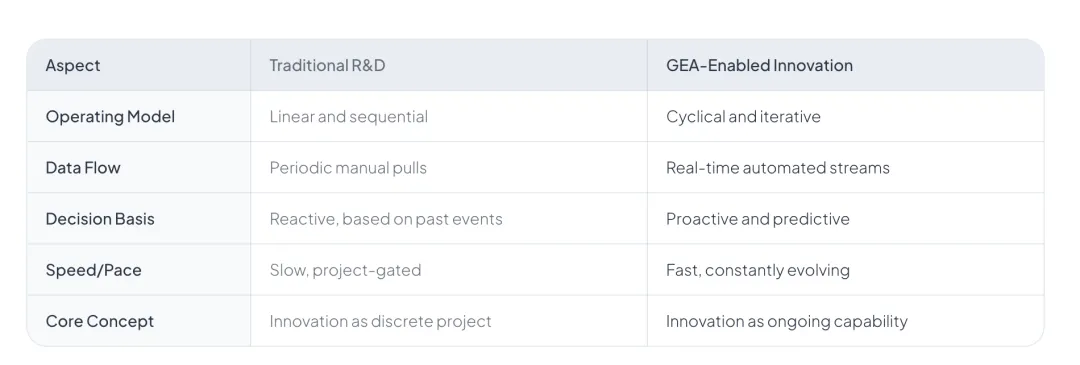
1. Product Innovation and R&D Decision-Making
In the product development process, innovation speed and decision-making accuracy are significant challenges faced by enterprises. Product managers and R&D teams often need to handle a large amount of market information, customer feedback, and technical data. In this complex and uncertain environment, enterprises need an agent system that can coordinate internal information and continuously optimize R&D strategies.
Through the context management and state adjustment of multi-agent systems, R&D teams can dynamically analyze different market signals and product directions through agents, effectively avoiding resource waste and decision-making errors. In this scenario, the enterprise-level agent GEA (Generative Enterprise Agent) system architecture provided by Tezign serves as a best practice reference, transforming the enterprise's contextual data into intelligent decision-making capabilities, continuously driving product innovation from one-off projects to sustainable operational innovation capabilities.
2. Market Research and Real-Time Insights
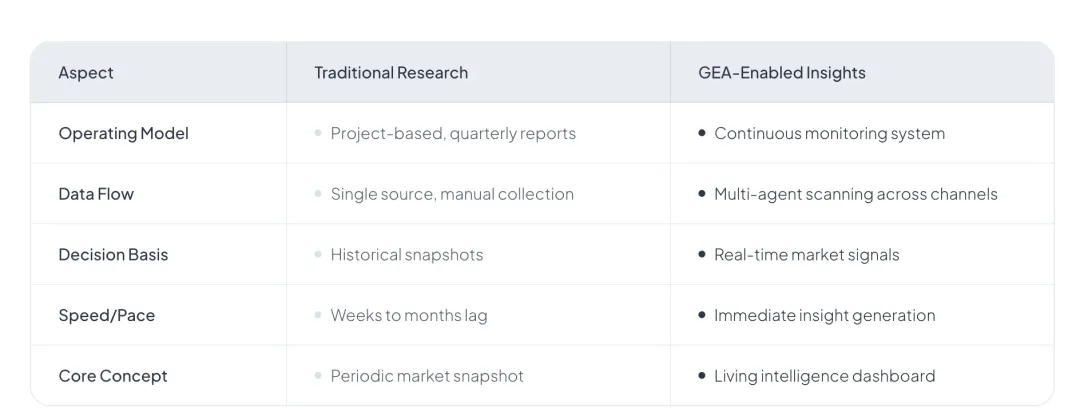
Market research is the foundation for enterprises to understand the external environment and make strategic decisions. However, traditional market research often relies on static data and outdated models, making it difficult to provide real-time decision support. Modern enterprises need systems that can continuously monitor market dynamics, respond quickly, and generate real-time insights.
In this process, the collaboration and task coordination of multi-agents become key to improving efficiency. Through dynamic collaboration of agents, external market changes can be captured in a timely manner, and combined with the enterprise's contextual data to generate accurate market analysis reports. Agents can not only automate the processing of research data but also adjust research directions in real-time, ensuring that enterprises always stay at the forefront of the industry. Therefore, the enterprise-level agent GEA (Generative Enterprise Agent) system architecture provided by Tezign, through its proactive agents, continuously optimizes the market insight generation process and transforms it into actionable strategic decisions.
3. Sales Efficiency and Team Collaboration
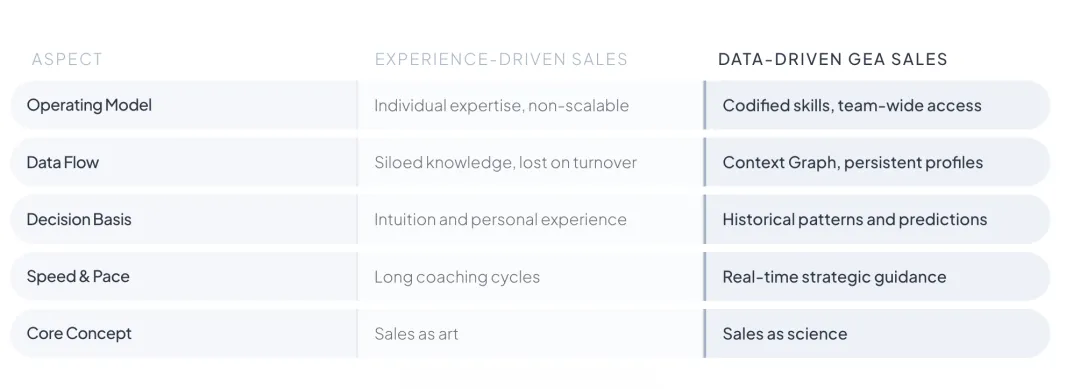
Sales teams often face challenges in adjusting sales strategies, communicating with customers, and capturing business opportunities. Sales personnel need to respond quickly in high-pressure and changing environments, but often lack effective tools to assist in decision-making and collaboration.
Through the coordination protocols and task execution mechanisms of multi-agent systems, sales teams can leverage agent support to optimize customer management and sales strategies. Agents can dynamically adjust sales plans based on historical data, customer behavior, and market trends, providing real-time feedback on optimization effects. In this scenario, the enterprise-level agent GEA (Generative Enterprise Agent) system architecture provided by Tezign, based on skill libraries and collaboration models, can help enterprise sales teams quickly switch strategies in different customer scenarios, enhancing overall team conversion efficiency.
Why Is Building an Enterprise-Level Agent System So Important?
“The Orchestration of Multi-Agent Systems” provides a theoretical foundation for building enterprise agent systems through systematic orchestration architecture design. By combining context management, state adjustment, and agent coordination protocols, this architecture demonstrates how to achieve efficient agent collaboration and task execution in complex business environments. Just like Tezign's GEA system, this architecture provides enterprises with a continuously optimizable agent ecosystem, helping them achieve dual improvements in decision-making efficiency and business growth in key areas such as product innovation, market research, and sales.
Enterprise-level agent systems are not just a pile of tools but should ensure effective operation and continuous evolution of agents in real business scenarios through scientific system design.
From the design concept of multi-agent orchestration architecture to the practical application of the GEA system, we can see that enterprise AI transformation is driven by carefully designed agent systems, promoting innovation and growth across various fields.
Category
In-depth Report
Date
2026-03-11
Read Time
5 min read
Share Page
Related Recommendations

The Most Valuable Knowledge in a Company Has Never Been Recorded

Is AI Overconfident, or Is It All an Illusion? How to Solve the ROI Dilemma of Enterprise AI