The Most Valuable Knowledge in a Company Has Never Been Recorded
Tacit knowledge is the precious implicit experience of a company, and traditional tools and general AI struggle to realize its value. The Context System hierarchically accumulates this type of knowledge, building the core competitive barrier of enterprise AI.
A company has been operating for ten years, hiring many outstanding people and completing countless successful projects.
But one day, the director who "understood the brand best" left the company. The next person to take over searched through all the systems but couldn't find the logic behind those judgments—why this creative direction was rejected, why this word couldn't be used, why this color scheme had issues last year.
That knowledge hasn't disappeared. It has simply never been recorded.
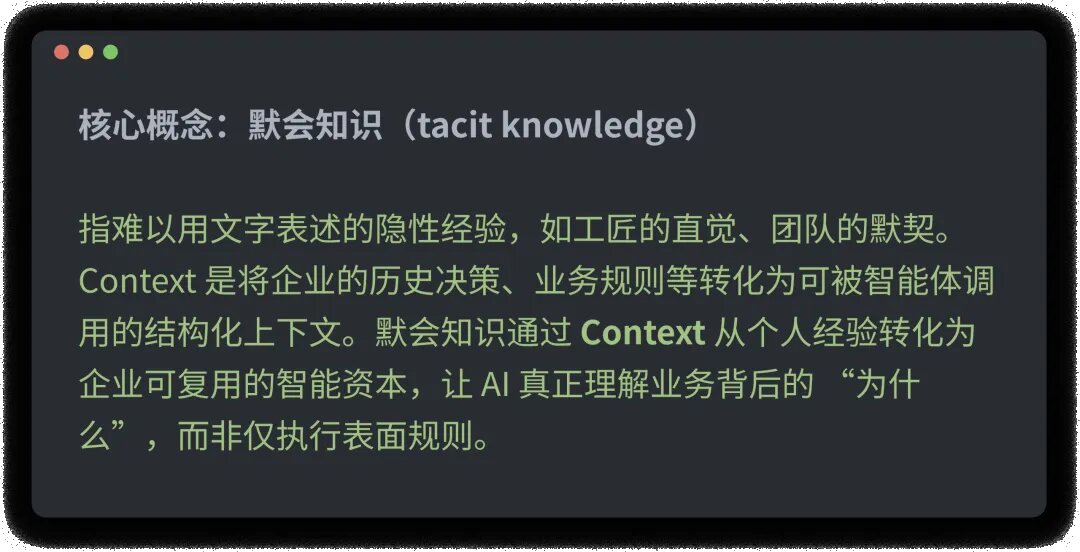
Tacit Knowledge: Those Things That Can Only Be Grasped Intuitively
In 1958, philosopher Michael Polanyi proposed a far-reaching concept: Tacit Knowledge.
His original words were: "We can know more than we can tell."
What we know far exceeds what we can articulate.
Polanyi gave an example: riding a bicycle. You can ride, but you cannot fully describe "how to ride" in words—the subtle adjustments of balance, timing of pedaling, and directional judgment are remembered by the body, not reproducible by language.
This type of knowledge exists in all complex human activities: the feel of a surgeon's hands, the intuition of an experienced engineer, the judgment of an excellent designer about what constitutes a "good work." They accumulate through practice and are passed down through mentorship, yet they are almost impossible to systematically capture and convey.
Tacit knowledge is the most valuable form of knowledge for humanity and the hardest asset for organizations to retain.
What Digitalization Records and What It Omits
Over the past thirty years, companies have spent a lot of money on "knowledge management." ERP, CRM, document systems, project management tools... What has been the result?
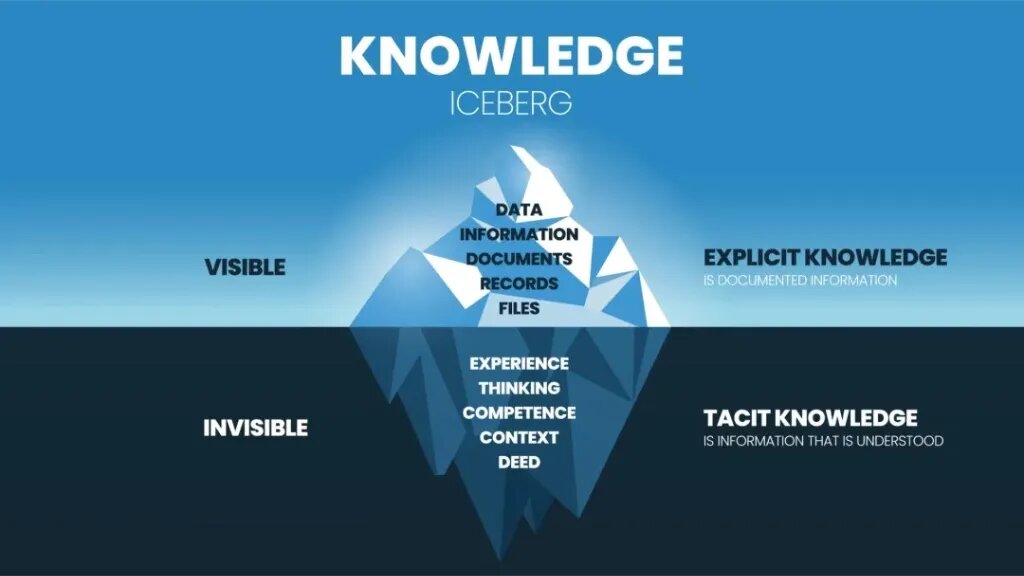
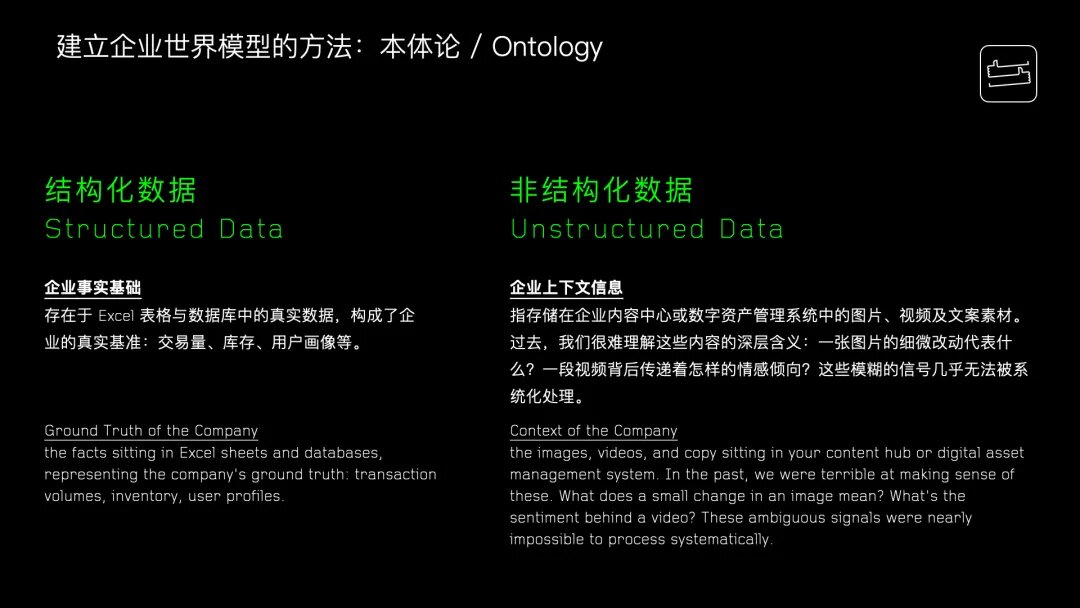
These systems record only explicit knowledge: contract numbers, project statuses, meeting minutes, report data. They form the "skeleton" of the organization, structured, queryable, and statistical.
But the true operation of the organization relies on another type of thing: the consensus formed by the team after a failed project, the preferences behind a word repeatedly mentioned by a client, the intuitive topics that emerge after a content explosion. These are tacit knowledge. They live in chat records, proposal comments, snippets from internal reviews, or even solely in someone's memory.
Traditional IT architecture cannot handle this type of information. Structured data is the "bones" that systems are good at managing; unstructured data is the "flesh" that systems essentially abandon.
Thus, we have a paradox: the deeper the digitalization of enterprises, the thinner the knowledge that remains.
Why AI Has Failed in Most Enterprises
In the past two years, almost every company has adopted large models. However, fewer than 1% have truly gained sustainable returns from AI.
Where is the problem?
It's not that the models aren't strong enough. GPT-4, Claude, Tongyi Qianwen—better versions come out every few months. But no matter how strong the model is, it doesn't know:
why your brand cannot use certain types of words
what your users were discussing last week
which material direction hit a pitfall last year and which direction became a hit
what your team's understanding of "premium feel" is
These are enterprise-level tacit knowledge. They are the fuel that AI truly needs, and they are what 99% of enterprises are unprepared for.
Large models compress "world knowledge," but they do not contain your organizational knowledge. Using a general model for enterprise AI is like hiring a knowledgeable newcomer who knows nothing about your company—no matter how smart they are, they can only guess at the start.
Context System: Turning Tacit Knowledge into Callable Assets
In the Tezign GEA architecture, there is an infrastructure that horizontally spans all levels: Context System. Its design aims to solve the problem of retaining tacit knowledge.
Context is not a database, nor is it a document library.
The logic of traditional knowledge bases is: people write in → systems store → people retrieve. This path can only handle explicit knowledge and relies on people to actively organize it, which has a high threshold and decays quickly.
The logic of the Context System is different: it continuously accumulates judgments in daily workflows without waiting for people to organize.
Take the brand library as an example. Every comment during design reviews, every reason for rejecting a copy, every annotation after a campaign—these fragmented judgments are organized through a structured schema to form a callable asset of "brand judgment." The next time AI generates content, this judgment becomes its contextual input.
This is a crucial leap: the organization's tacit knowledge now has the possibility of being systematically retained and reused for the first time.
Three Levels: From Personal Intuition to Organizational Memory
The Context System can be divided into three levels based on the flow of knowledge:
Personal Level (Personal Context)
Updated daily. Records personal work habits, preferred styles, and judgment tendencies. This is the finest granularity of context, allowing AI collaboration to truly "understand you as a person."
Team Level (Pod Context)
Updated as needed. Accumulates the consensus of project teams or business lines: the special preferences of this client, industry practices for this category, key constraints at this cooperation node. This is where tacit knowledge is most densely packed—the team's "collective intuition" finally has a container.
Enterprise Level (Company Context)
Updated weekly. Gathers organizational-level strategic judgments, brand assets, historical cases, and patterns of success/failure. This is organizational memory and the hardest part to retain.
The three levels are independent yet dynamically combine during AI calls. For the same task, AI will simultaneously perceive "this person's habits," "this team's practices," and "this company's stance."
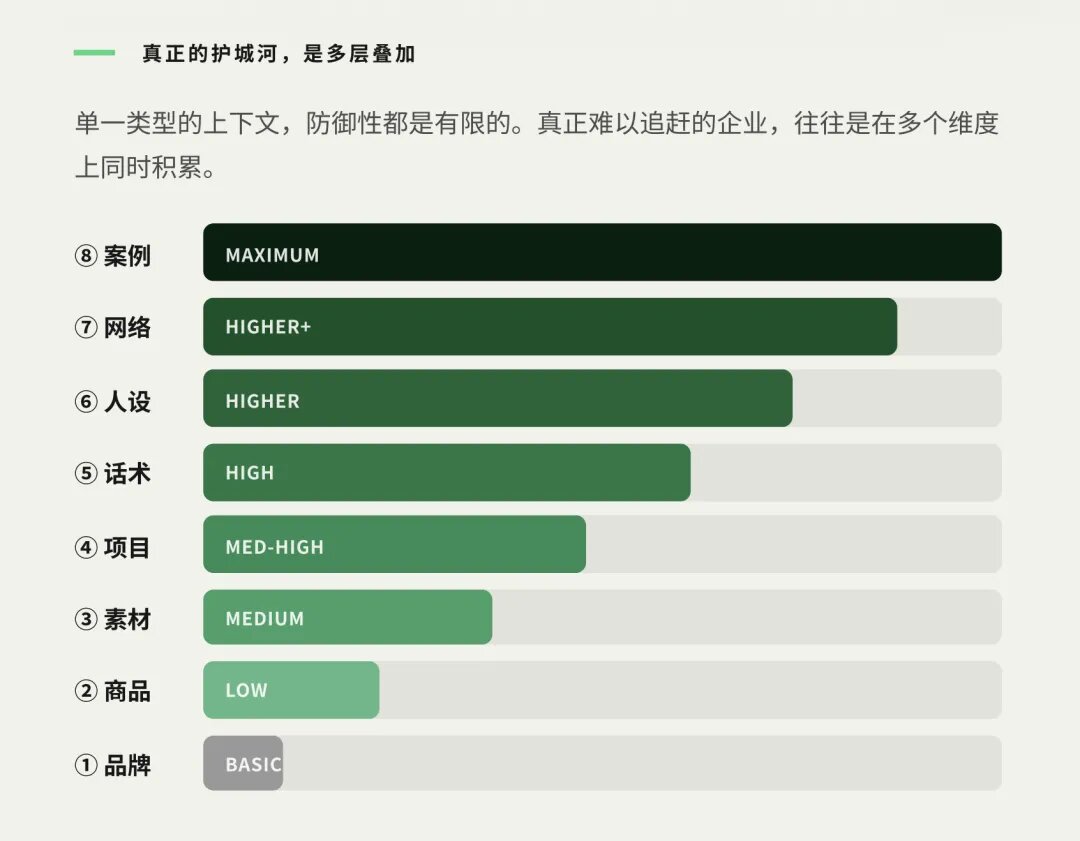
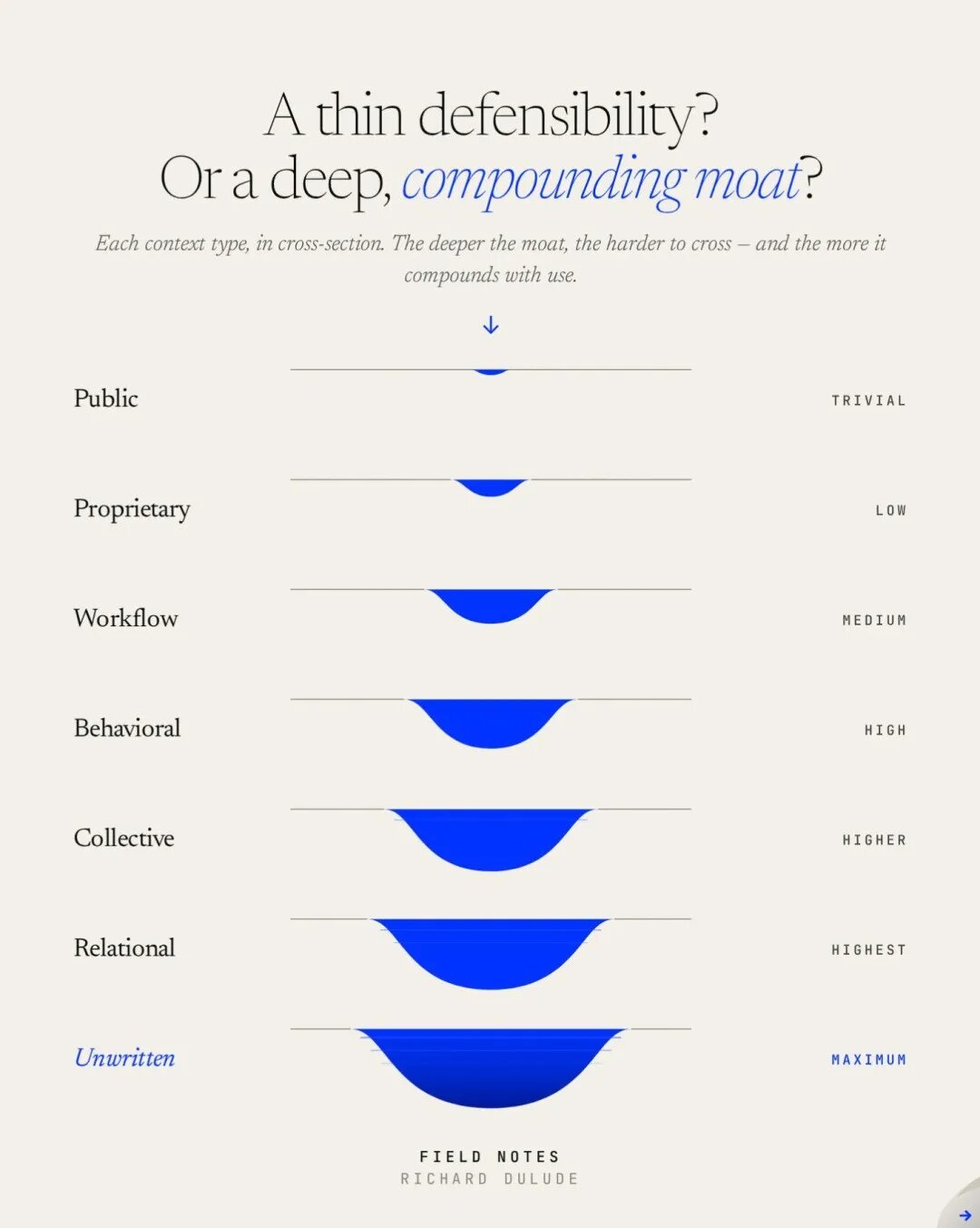
Time Compounding: Context is the Only Competitive Barrier That Cannot Be Purchased
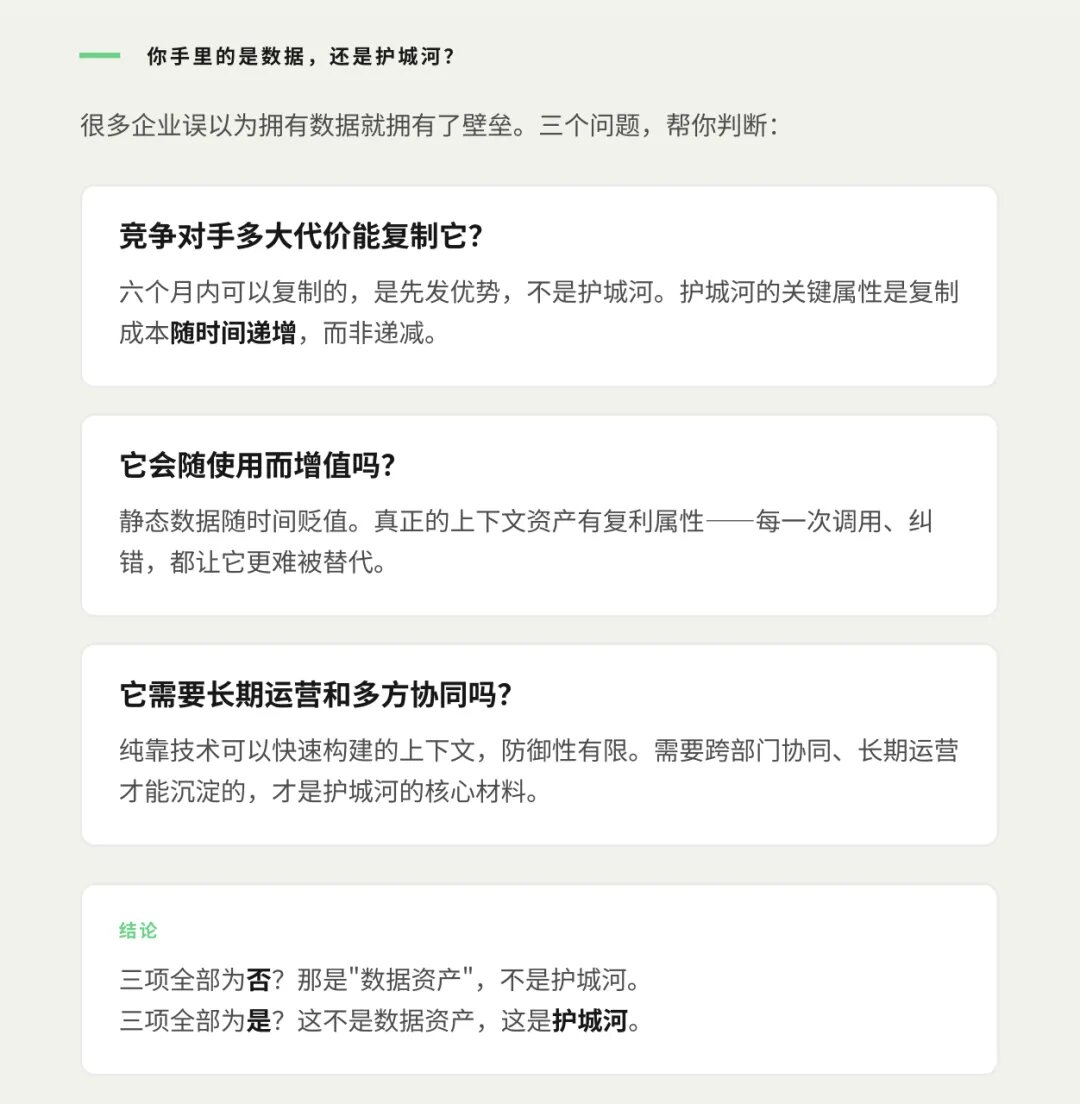
The capabilities of large models can be purchased by all enterprises at the same price. But Context can only be accumulated by oneself.
If a company starts accumulating Context today, it will have one year of Context after one year; two years after two years.
And competitors who start tomorrow will already be a whole year behind at the starting line.
This is a time-compounding asset, and it gets better the more it is used—every AI call, every manual correction, every successful or failed project makes Context more precise and more dimensional.
Polanyi proposed tacit knowledge to describe a dilemma: this type of knowledge is important but cannot be transmitted. When the most experienced person in the organization leaves, their judgment is taken away as well.
The answer provided by the Context System is: let tacit knowledge naturally accumulate in workflows without relying on any individual's active organization. The organization's memory begins to detach from dependence on individuals.
A Judgment
In the competition for enterprise AI, the first phase was about who accessed better models. That phase has ended because everyone is using the same model.
The second phase is coming: it's about who has accumulated deeper Context.
Models are externally purchased capabilities, while Context is a self-growing asset. The more systematically and continuously a company accumulates tacit knowledge, the more its AI "understands" this company, and the harder it becomes for competitors without this Context to replicate the results.
This is the true moat of enterprise AI—not what tools have been purchased, but what judgments have been accumulated.
Category
In-depth Report
Date
2026-06-12
Read Time
6 min read
Share Page
Related Recommendations

Where to Start for an AI Native Organization?

The Choice of an AI Native CEO: Hire a GEA to Manage the Team and Seize Opportunities