AI from 'Can Chat' to 'Can Do': Challenges and Opportunities for AI Implementation, and the Relationship Between AI and Humans ... Fan Ling @ CCTV Live Broadcast Full Record
In the WAIC CCTV interview, Fan Ling stated that AI has moved from 'can chat' to 'can do', analyzing the challenges of industry implementation using a 1:2:7 ratio, advocating that AI focuses on understanding humans and building a symbiotic relationship between humans and machines.
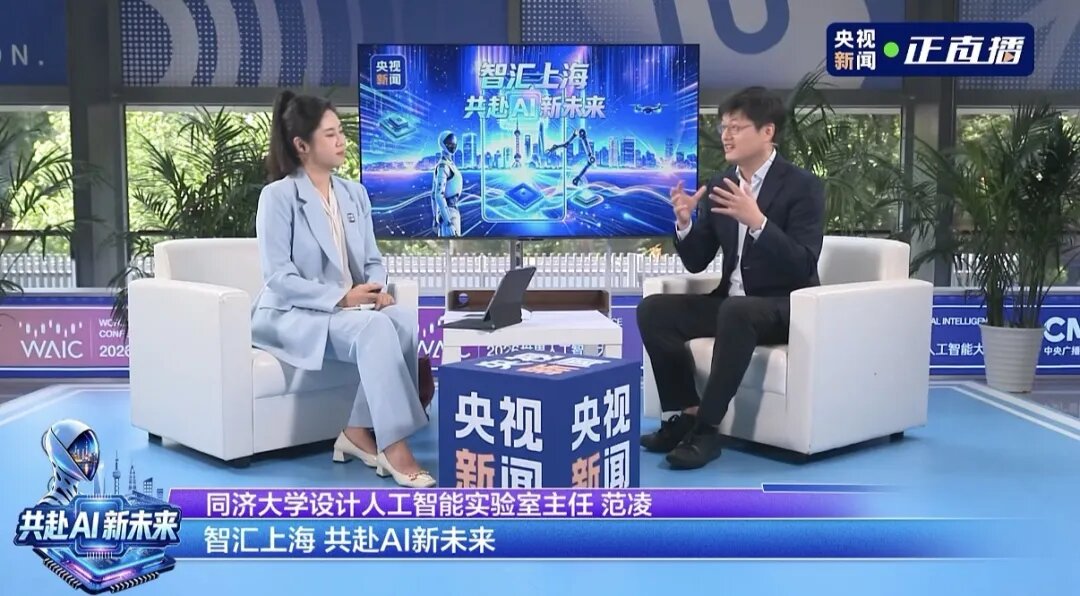
Q1: What are your feelings and expectations for the conference this year, which is held across three locations and four venues?
Fan Ling: I just came from the West Coast Exhibition Hall, which is a venue more suitable for the public to experience various aspects of life brought by artificial intelligence technology. This year is very lively; it’s not just about viewing exhibitions behind closed doors in one place, but there is a real opportunity to connect various aspects of artificial intelligence throughout the city through exhibitions. So I think this is a very significant highlight this year—the entire city has become a space to experience artificial intelligence, with viewpoints, exhibitions, and various life experience scenarios extending out. This reflects the very vigorous development of artificial intelligence, especially in the past three to four years, transforming from a niche deep technology into a new social and ecological state empowered by technology.
Q2: How is AI connected to our lives? What does the change from can chat to can do mean?
Fan Ling: In the past three to four years, generative artificial intelligence technology has actually gone through three stages. The first stage, represented by GPT, can generate images, text, and videos, which we refer to as can chat. The second stage, represented by DeepSeek, is when AI begins to express how it conceives and thinks, which we call the reasoning model or thinking model. In the past year, the most capable thing AI can do is start writing code to operate computers, so everything that can be done on a computer can now be autonomously handled by AI. Therefore, the change from can chat to can do is essentially a shift from AI being able to converse with you to genuinely helping you get work done.
This change is actually of great help to individuals. Previously, we viewed AI merely as a tool for obtaining information; for example, if I want to explore the WAIC today, AI would tell me which places are worth visiting. But now, if I think of it as helping you get work done, it will help you plan where to go this afternoon. In the past, an individual needed many different functions to assist in completing a task. But now, because AI can take on many roles, a person's capacity is greatly amplified. AI has the opportunity to extend our weaknesses, making us more versatile.
For society, this morning the General Secretary mentioned that intelligence should also be inclusive. When AI has broader behavioral capabilities, those organizations, countries, and groups that previously lacked the resources to utilize these capabilities may now significantly reduce the difficulty of resource allocation, bringing a more universal impact to society.
Of course, this also prompts us to reflect: When AI can do many things, what is our role as humans? The development of AI represents a form of intellectual equality, while human qualities, socialization, aesthetics, and taste become our capital that distinguishes us from machine intelligence. My laboratory is called the Design Artificial Intelligence Laboratory, which not only uses artificial intelligence for design but also aims to design a symbiotic relationship between humans and intelligence. I particularly like this year's WAIC theme—one called partnership and the other co-creation.
I want to discuss two topics that may not be mainstream concerns this year, but I believe will become significant issues in the AI field in the next two to three years. One is that AI, besides working, is also beginning to understand humans—understanding a person's psychology and those descriptions that cannot be expressed. So can AI better help us understand individual humanity? This is a research area we are exploring, and we have developed something called subjective world model, which attempts to do this. The second is that AI continuously works 7×24 hours in the background without human intervention—this is called long-range intelligence, where AI works while humans provide judgment, but humans do not need to drive it. AI can automatically perceive changes; in smart factories, security, and many other scenarios, AI can continuously operate in the background 7×24 hours, with humans providing some judgments.
Related Reading: Subjective World Model: The First Basic Model Aimed at Understanding Humans
Q3: As both a scholar and an entrepreneur, what qualities do you think AI should have to enter thousands of households?
Fan Ling: Indeed, the era of artificial intelligence has given researchers like us the opportunity to become entrepreneurs. Many artificial intelligence companies are actually called researcher founders; these founders are not businessmen but researchers, which is a unique characteristic of starting a business in the era of artificial intelligence. However, a significant issue for researchers starting businesses is that they focus solely on the technical attributes and lack an understanding of the user layer. Therefore, to enter thousands of households, artificial intelligence must become a technology that serves people, rather than just a technology that focuses on parameters and rankings.
I believe good products should have these three attributes.
First, it must understand the user. There is a concept in artificial intelligence called context; all models must operate within a context that understands the scene and the people for the model to truly be useful to you.
Second, we must be able to trust AI to know it will not do harm to you or infringe on your interests; establishing a mutual trust mechanism between humans and machines is crucial. There is a technology currently being widely discussed called harness engineering, which is essentially addressing the issue of trust.
Third, technology should not be the main character; good technology should be invisible, supporting us in our lives, not being in the foreground but in the background. Therefore, user experience is extremely important. So, technology that understands you, you can trust, and is omnipresent but not the main character can ultimately reach thousands of households. Of course, the premise is that the underlying technology must be excellent, truly capable of becoming our partner.
Related Reading: 13 Thoughts on Commercial AI Natives
Q4: As everyone turns their attention to the implementation of the AI industry, what challenges and opportunities do we currently face?
Fan Ling: If we first set aside artificial intelligence and look at the previous generation of disruptive technologies, such as from steam engines to electric motors, it took about 30 years for steam engine factories and companies to transform into electric motor native enterprises. So we indeed need to be more patient with the overall implementation of the industry.
We conducted a study; large models are the starting point for all AI technology applications, but large models only play a part in whether the industry can be implemented. We have a ratio—not very scientific, just a qualitative ratio expressed quantitatively, called 1:2:7.
One is the capability of the model; it only accounts for 10% of the weight in successful industrialization. Two is data; there are various types of data in the industry, and not only data collection, but we also need to specifically collect new data for the model and discover new data opportunities. Seven is people and organizations, which is the change in people. There is a theory in the tech industry called 'crossing the chasm'—a group of very enthusiastic people started using this technology early on and grew rapidly, but to become universal, it needs to cross this chasm. I believe that AI technology, with conferences like WAIC and our country's relevant policies, should cross the chasm quickly, not taking 30 years like the last electrical era. However, it still won't happen overnight; it won't be that everyone has a Doubao or Qianwen app on their phones tomorrow, and our industry will become AI-native overnight.
This requires patience, the kind of patience represented by 1:2:7. The seven may involve organizational adjustments, enhancement of people's capabilities, and reshaping of processes. Our current stage needs to address the seven issues before we can achieve true industrial implementation.
Related Reading: Undefined 'AI Native'
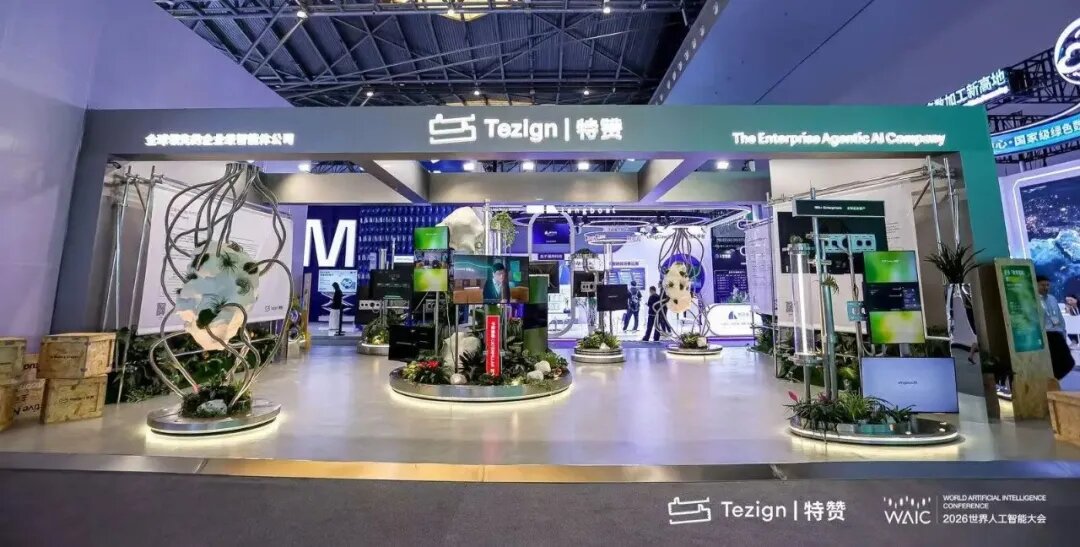
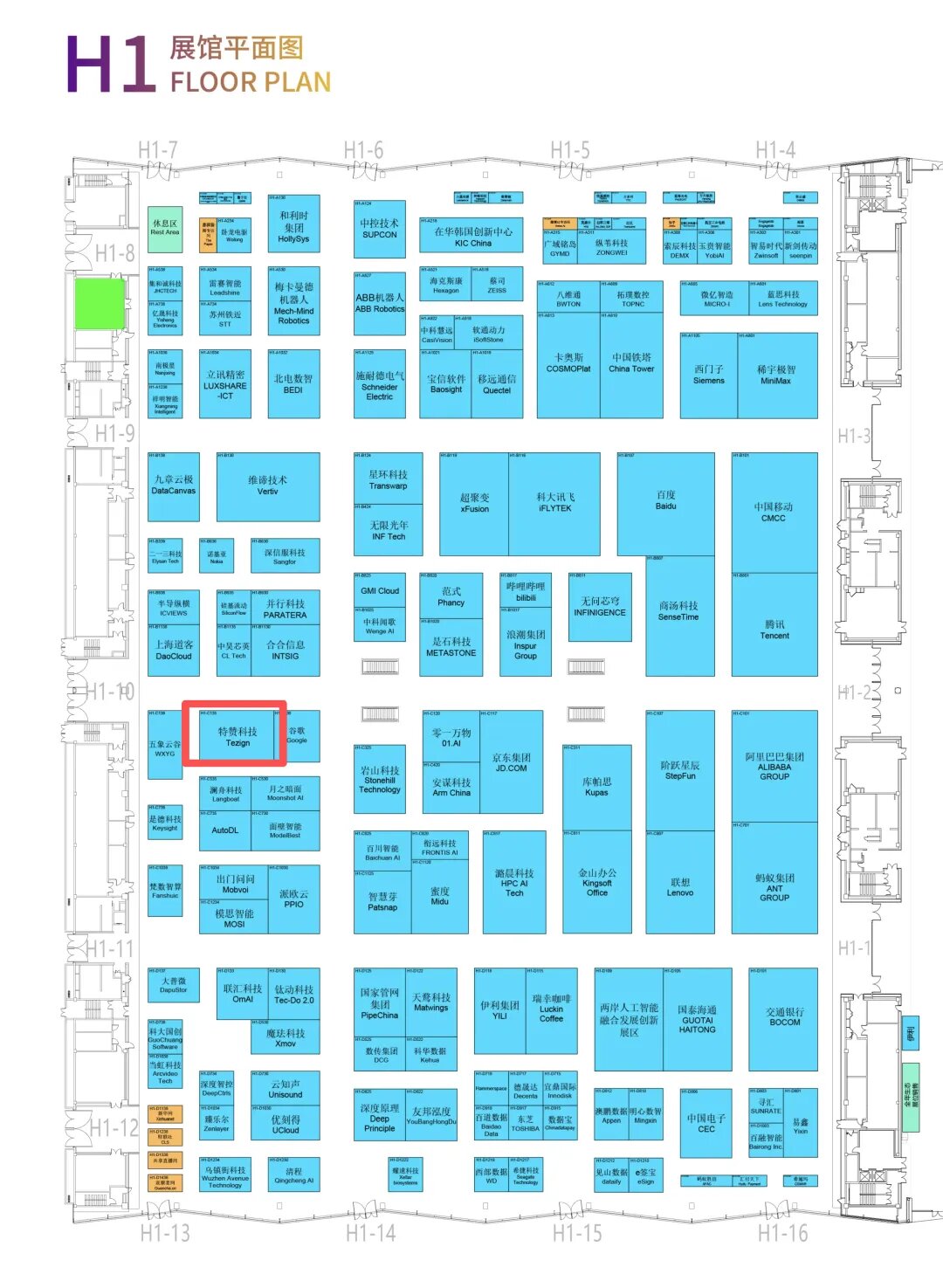
July 17-20, Tezign awaits you at H1-C135
Category
Media & Press
Date
2026-07-17
Read Time
7 min read
Share Page
Related Recommendations

Fan Ling Invited to Guest on CCTV Live Broadcast: AI Should 'Understand People' Rather than 'Roll Parameters', Humans and AI Should Become Partners | Highlights from Day One of WAIC

Gartner Releases 'Innovation Insight: Enterprise Agent Competency', Recognized as One of the Global Five Representative Vendors