The Truly Valuable AI is Embedded in Business
Fan Ling pointed out that the core barrier of AI is the enterprise context. Tezan, leveraging ten years of DAM experience, launched the GEA enterprise intelligent agent, deeply embedded in business to achieve results-oriented growth, with ARR approaching $100 million.
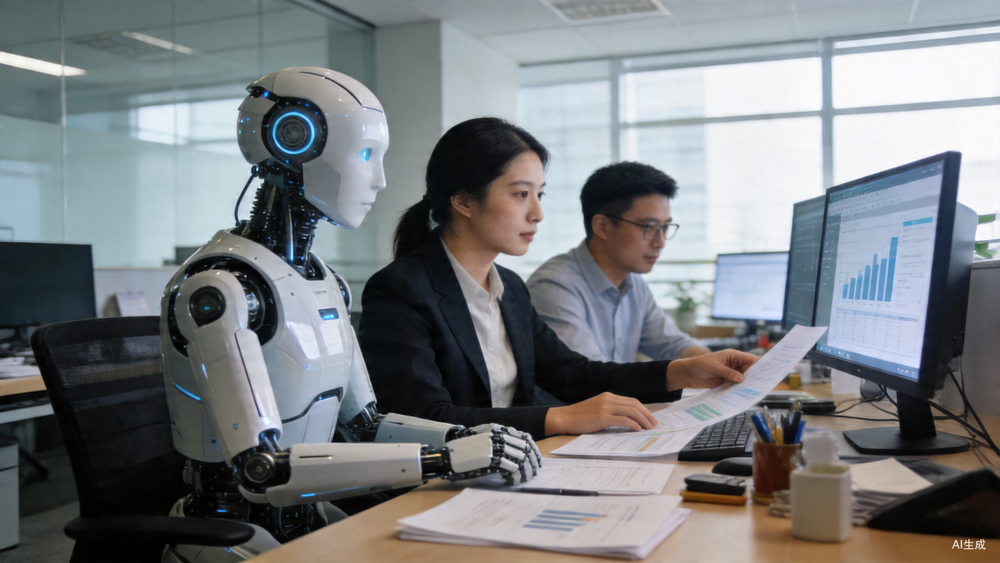
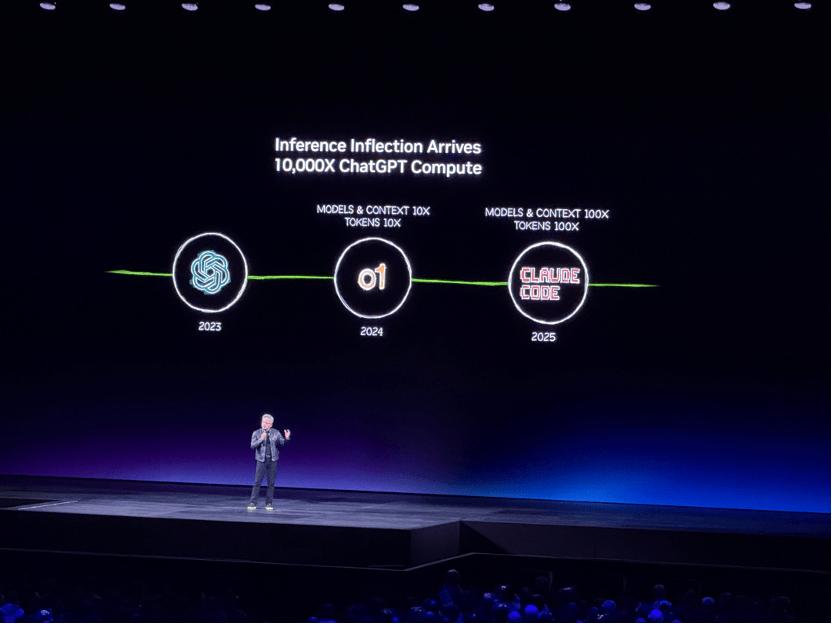
In March 2026, at the SAP Center in San Jose, Silicon Valley, the NVIDIA GTC conference once again became the "Super Bowl" of the global AI industry. Jensen Huang appeared in his iconic black leather jacket and delivered a nearly two-hour speech, pulling the industry directly from "model worship" into the era of intelligent agents.
Although the applause in the venue remained, the atmosphere was completely different. Two years ago, the audience marveled at every cool demo; now, almost no one says "wow." After the event, many people were asking the same question: the technical route is clear, but how exactly do we implement it?
This is a true reflection of the entire industry reaching a deep-water zone: models are becoming increasingly powerful, tools are emerging one after another, and APIs are continuously declining, but enterprise AI applications still remain at the "usable" stage, unable to integrate into processes, embed into business, or form a closed loop.
Fan Ling, founder and CEO of Tezan, was sitting in the audience at that time. After returning to China, he wrote "Two Weeks in Silicon Valley, Ten Truths," with the first sentence being: enterprises no longer ask "should we use AI?" but rather, "we've spent the money, why haven't we seen results?"
This trip to GTC confirmed his long-held judgment: the ultimate barrier of AI has never been the model, but the enterprise context; AI that can truly create commercial value must be deeply embedded in business, rather than floating at the tool level.
In Fan Ling's view, the biggest misjudgment by enterprises in the past two years has been treating large models as capabilities rather than systems. Large models address the question of "can it be done?" but what enterprises truly care about is "who will keep doing it, how to do it, and who is responsible for the results?" Once models become public infrastructure, enterprise competition enters a new stage—
it is no longer a competition of prompts, but a competition of context;
it is no longer a competition of tools, but a competition of systems;
it is no longer a competition of generative capabilities, but a competition of result capabilities.
Lack of the 'Soil' Rooted in Business
In the past three years, enterprises' investment in AI has been nothing short of fervent. From purchasing large models and deploying computing power to launching various AI tools, almost every large and medium-sized enterprise has rolled out its own AI strategy.
However, the reality is exceptionally harsh. Multiple reports from Gartner, McKinsey, and BCG indicate that the vast majority of applications still remain at the level of single-point efficiency improvements, such as writing copy, creating PPTs, summarizing minutes, and beautifying reports, with very few cases entering core business, influencing growth, or changing decision-making.
The root of the problem has never been the model itself.
Jensen Huang has already pointed out the truth at GTC 2026. With the inflection point of reasoning reached, computing power performance has increased exponentially, and multimodal capabilities are maturing, models are quickly becoming public infrastructure like electricity and running water.
The gap between enterprises no longer depends on "whose model to use" or "how large the parameters are," but on what kind of business environment these models run in.
In other words, the current competition in AI has shifted from "who has the stronger model" to "who has the more stable system."
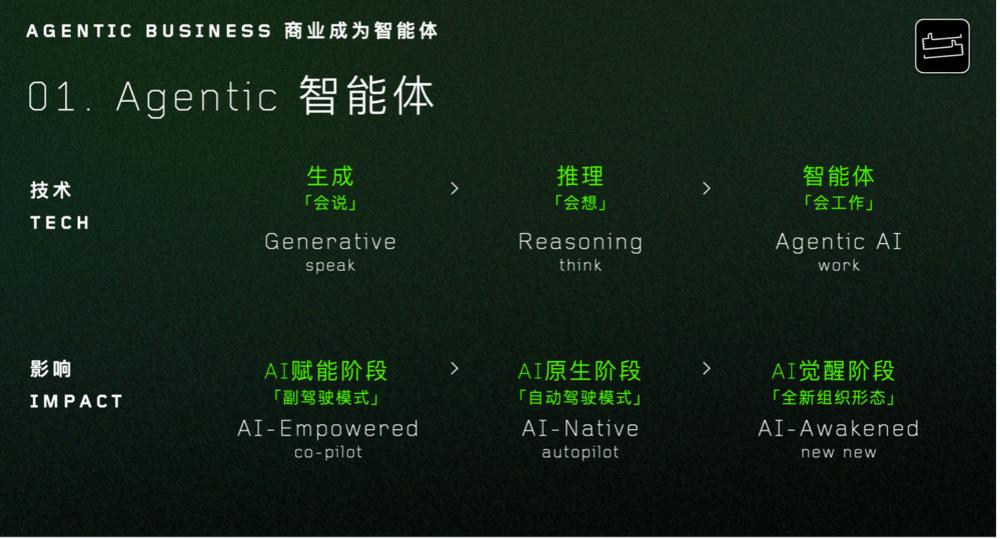
Fan Ling made a vivid analogy: if the model is tap water, the context is the location; the model generates intelligence, while the context generates results. The truly valuable AI is embedded in business, not in the model.
The so-called "context" is not merely the structured and unstructured digital assets of the enterprise, but a complete, dynamic, and AI-understandable business decision-making system, encompassing the decision logic, approval rules, collaboration processes, preferences, risk boundaries, and the weighing process of "why choose A over B" formed over numerous projects.
In Fan Ling's view: "The truly valuable context is not just the result, but the decision-making process itself." Only by digitizing, structuring, and making all this tacit knowledge, organizational experience, and business preferences callable can AI transform from "general intelligence" to "enterprise-specific intelligence."
For a long time, this most valuable asset has been in a dormant state. Humans cannot move it, systems cannot connect, and AI cannot utilize it. Even if the model is powerful, without a dedicated context, it can only provide universally applicable answers, failing to align with the enterprise's real business, real preferences, and real rules.
The deeper bottleneck lies in people and organizations, not technology.
Most enterprises' first reaction to AI is "old wine in new bottles," adding AI functions on top of existing software. But in reality, enterprise software is already complex; blindly adding AI will only create more redundancy and confusion, making users more perplexed, ultimately leading to no one willing to pay for the added AI. This is also why there are so many "AI+" products in the market that seem lively but struggle to convert into real renewal rates.
Therefore, for AI to create real commercial value, it must be embedded in business processes, accumulate decision-making experience, and continuously evolve and iterate. The foundation supporting all this is not interfaces and prompts, but a context system that is deeply rooted in business, understands business, and carries business.
And this is precisely what Tezan has quietly accomplished over the past nearly ten years.
Context: An Unreplicable Long-term Barrier
In 2015, Fan Ling returned to China and founded Tezan in Shanghai, envisioning empowering business and society with technology.
In its early days, the company provided creative resource connection services, aggregating over 100,000 professional creators to connect enterprises with creative capabilities in design, copywriting, video, illustration, etc., delivering hundreds of thousands of creative content assets.
At that time, the industry had not yet coined terms like "unstructured data" and "context"; Tezan simply addressed the pain points of enterprises' dispersed creative needs, inefficiencies, uncontrollable quality, and difficulty in asset accumulation.
It wasn't until six or seven years ago that Tezan made a key strategic choice to shift from creative services to enterprise digital asset management (DAM).
At that time, enterprise content entered an explosive growth phase. Short videos, social media, private domains, live streaming, and e-commerce blossomed, with a fast-moving consumer goods or cosmetics company potentially generating tens of thousands or even hundreds of thousands of graphic and video materials in a year.
These contents were scattered across employees' computers, cloud storage, vendor backends, and design tools, with chaotic versions, difficult searches, extremely low reuse rates, and hidden high compliance risks.
Tezan DAM thus made its entry. It is not just simple cloud storage, but a full-stack system covering content production, unified management, intelligent tagging, global search, permission control, compliance review, and data insights, capable of automatically parsing over 70 file formats, using AI to complete tagging, classification, deduplication, and recommendations, compressing content search time from hours to seconds, and improving content collaboration efficiency for large enterprises by over 60%.
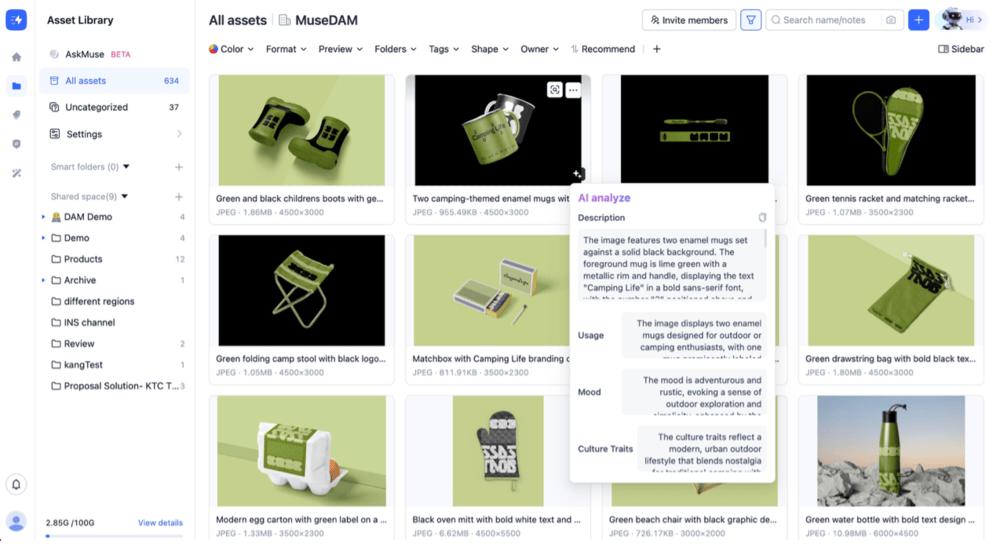
Before the era of large models, these assets were merely "files in a content management system." But in the era of intelligent agents, they have become the most scarce cognitive infrastructure for enterprises. The same model capabilities can be replicated, but the same scale and density of enterprise context cannot be replicated.
This is also why the competition in Agentic AI is fundamentally not a competition of models, but a competition of Context Systems.
More importantly, Tezan chose to serve demanding clients like Unilever, Procter & Gamble, and L'Oréal, building a three-layer barrier that later entrants cannot surpass.
The non-accelerable context asset is the first layer of the barrier. The assets stored in Tezan DAM have never been isolated files, but the complete decision-making chain, project history, brand rules, creative preferences, user insights, compliance boundaries, and market feedback of the enterprise.
Fan Ling pointed out: "The truly valuable context is not just the result, but the decision-making process itself." These assets are deeply bound to the business, growing with compounding over time, with extremely high migration costs, and cannot be quickly replicated through open-source data or algorithm optimization.
The compound threshold of multiple capabilities constitutes the second layer of the barrier. For example, those who can create content tools may not understand enterprise compliance; those who can develop model algorithms may not understand creative logic; those who can handle vertical scenarios may not possess cross-industry reuse capabilities.
Based on AI engineering capabilities and ten years of enterprise service experience, Tezan has gradually formed a "trinity" capability structure from content understanding, AI engineering to enterprise-level delivery, which cannot be completed by a single technical team or tool team.
Trust from large clients and compliance systems form the third layer of the barrier. Medium and large enterprises are cautious in selection, have long verification cycles, and extremely high replacement costs. Once stable cooperation is established, later entrants can hardly penetrate with single-point functions. Tezan's long-term investment in data security, privacy compliance, cross-regional collaboration, and complex organizational adaptation forms a solid moat.
This also reasonably explains a peculiar phenomenon in the industry: there are many players making content tools, but very few have long-term deepened and reached the intelligent agent stage, seemingly no second Tezan has emerged. Tezan's uniqueness is further reflected in three simultaneously established prerequisites:
First, it requires long-term accumulation of enterprise context;
Second, it requires abstracting real business processes into callable Agent Skills;
Third, it requires a willingness to be responsible for results, rather than just delivering tools.
These three things are rarely accomplished by any company simultaneously and sustained over ten years.
For a long time, outsiders have viewed Tezan as a content marketing company, a creative tool company, or a SaaS software company, but regardless of the labels attached by the outside world, the past experiences of Tezan have always followed a consistent main line—transforming the dormant unstructured content of enterprises into callable, value-generating assets. It’s just that in the era of large models, this task has a new name: context.
It is not that they suddenly started doing AI; rather, when the AI era arrived, they had already built a solid foundation.
GEA: Reconstructing AI Value with Ten Years of Accumulation
Fan Ling admitted that after ten years of entrepreneurship, he has often felt lonely; what Tezan does is something that "grows deep in business," which seems not sexy enough. But with the successive appearances of GPT-4 and Deepseek, the AI track has suddenly become exceptionally crowded and lively over the past three years.
Starting in 2025, the industry underwent a fundamental shift. The subject of AI calling content shifted from "people" opening systems, finding materials, editing, and sending out to "intelligent agents" automatically understanding needs, retrieving assets, executing tasks, and continuously iterating 24/7.
This change directly pushed Tezan's core advantages accumulated over ten years to the forefront of the industry.
Fan Ling seems to have a clear judgment on this: "If we only keep adding AI along the original boundaries, we may end up not changing anything at all. In the face of AI, we should treat it as a new continent."
Therefore, Tezan did not take the route of "old wine in new bottles," but instead built AI-native products from scratch around core issues. The final result is the GEA (Generative Enterprise Agent) enterprise-level intelligent agent system, which was just released in March 2026.
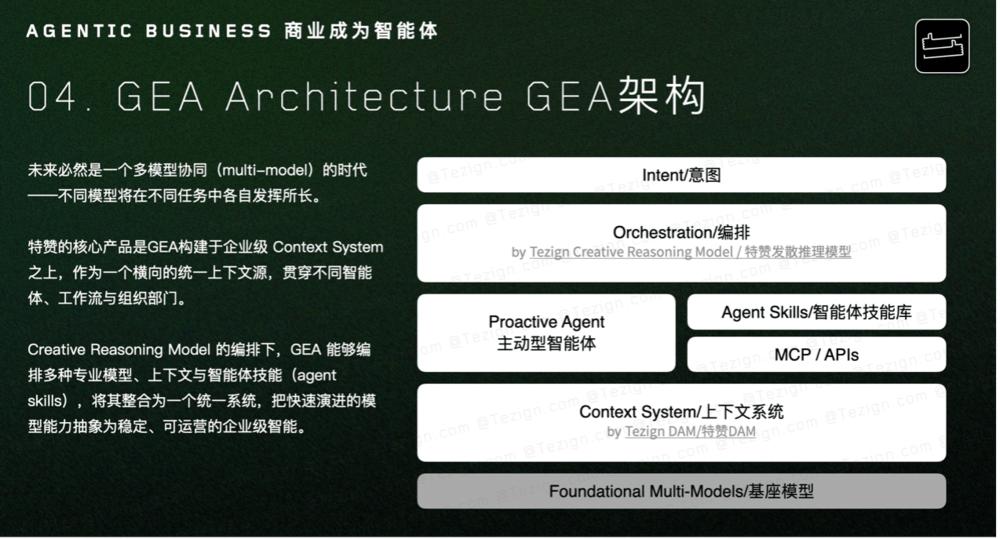
GEA is neither a plugin nor a Copilot, but a system with a four-layer architecture, a full-stack closed loop, and proactive operation.
The bottom layer is the Context System (upgraded from Tezan DAM), serving as an enterprise-level context memory system that carries all exclusive assets and rules of the enterprise; above it is the intelligent agent skill layer, with over 400 modular capabilities executed by the Proactive Agent system; the next layer is the orchestration layer, driven by Tezan's self-developed divergent reasoning model (Creative Reasoning Model), which first explores divergently, then converges decisions, scheduling over 30 sub-models; the top layer is the intention layer, which directly understands the enterprise's business goals rather than merely technical instructions.
This architecture fundamentally changes the role of AI in enterprises. Intelligent agents are no longer limited to passively responding to instructions and completing single-generation tasks; they can autonomously operate around business goals, continuously perceive external signals and internal states, and proactively initiate actions at key nodes.
They are no longer just auxiliary tools for enhancing human efficiency but can independently undertake business processes, being responsible for intermediate processes and final results.
More importantly, each operation will be accumulated as reusable experiences and rules, allowing the entire system to continuously iterate and become more aligned with the characteristics of the enterprise's business.
Fan Ling mentioned, "In the past, enterprises bought software to manage processes; in the past three years, enterprises tried models to improve efficiency; and now, enterprises deploy intelligent agents to deliver results."
This means that enterprise software is transitioning from "Seat-based software" to "Outcome-based system."
This is a judgment that could reshape the entire SaaS valuation logic.
In fact, GEA was already implemented among Tezan's existing clients six months before its official release. Fan Ling revealed that nearly 30% of Tezan's existing clients have actively switched to the new system, covering multiple fields including fast-moving consumer goods, automotive, beauty, and healthcare.
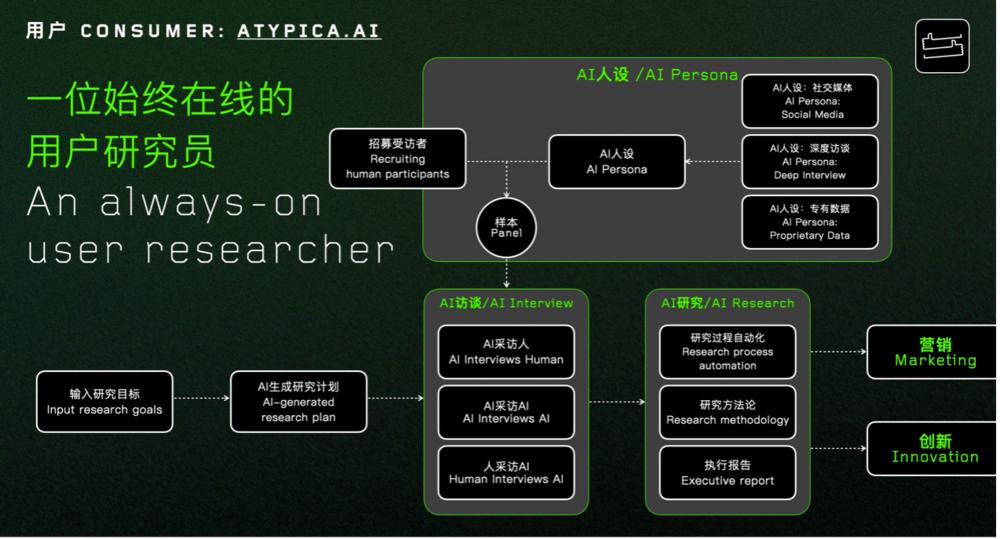
For example, a certain international fast-moving consumer goods brand previously followed a linear process for new product development, from market research, concept creation, packaging design, user testing to market promotion, with each link tightly connected, taking 3-6 months. The team had to brainstorm to launch over 20 creative ideas a year, with very few successfully hitting the market, wasting a lot of investment in long cycles and repeated trial and error.
After introducing GEA, this traditional process has been restructured and optimized. The intelligent agent continuously captures global market signals, competitive dynamics, e-commerce data, and social media sentiment, mining innovative clues in real-time from a consumer's complaint, preference, or potential demand.
It no longer waits for human instructions but automatically generates product concepts, packaging plans, and marketing scripts based on the brand's complete context, while simultaneously linking AI Persona and real person testing for dual validation, rapidly iterating and continuously optimizing.
The results are immediate; now the brand has over 300 product proposals in the testing phase, with more than ten new products successfully launched. The explosive gift box that hit the market during this year's Lunar New Year was a typical case fully supported by GEA, from insights to implementation in one go.
Similarly, a globally renowned 3C brand leveraged GEA to solve long-standing challenges in overseas social media growth, such as cultural differences, complex platform rules, slow content iteration, and difficulty in unifying brand tone.
With GEA, AI is no longer just a tool for assisting in creation but is directly responsible for growth results as the "business number one position," able to monitor data in real-time, automatically review effects, dynamically adjust strategies, and complete tasks that previously required weeks of collaboration among planning, copywriting, design, deployment, data, and localization teams independently, with the team only needing to make key calibrations and strategic controls.
The above two cases validate the core value of GEA: first, it does not merely enhance efficiency but reconstructs the business system; second, it does not showcase flashy demos but solves real problems, delivers real results, and brings genuine growth.
From the perspective of the capital market, Agentic AI represents a structural upgrade of enterprise software.
For the past thirty years, the value of enterprise software has been anchored in "process digitization"—from ERP, CRM to SaaS, essentially helping enterprises move offline processes online and standardizing human operations. In the next decade, the value of enterprise software will shift to "result delivery"—no longer paying by seat count but by business outcomes.
Once models become public infrastructure, the companies that truly possess long-term value will no longer be model providers but platform enterprises capable of building context systems, orchestrating capabilities, and executing closed loops.
In this coordinate system, Tezan's path is distinctly different from most "AI application layer" players. It is not "building applications on top of models" but constructing a complete intelligent agent operating system around enterprise context. This shifts its business model from seat subscriptions to outcome subscriptions—this is not a functional upgrade but a structural leap in the business model.
This year, Tezan's revenue reached an all-time high, with ARR approaching $100 million. In a time when AI application layers generally exhibit "flashy demos but thin revenues," such a structural leap is rare.
In Fan Ling's eyes, this transformation is almost a "farewell to the past."
This farewell does not negate the past but fully releases the capabilities accumulated by Tezan over ten years in the AI era. The focus of enterprise services has also shifted, no longer just providing efficiency tools for people but building a long-term operational underlying system for intelligent agents.
Business boundaries are gradually expanding, extending from previously focused marketing scenarios to supporting a more complete business chain for enterprises, including product innovation, user insights, and other core operational scenarios. Meanwhile, the business model has also shifted from traditional seat subscriptions to new pricing methods related to business value and token consumption.
The relationship between Tezan and its clients is no longer limited to passively responding to demands but is moving towards deep collaboration to jointly define the future of business.
Models can iterate, computing power can upgrade, and tools can be replaced. But what truly determines the upper limit of enterprise AI is whether it possesses its own context system.
In Fan Ling's view, the gap between the next generation of enterprises will not be who first accesses the model, but who gets the intelligent agent into business earlier. Tezan has proven through nearly ten years of practice that while models can iterate, computing power can upgrade, and tools can be replaced, the context rooted in business, the orchestration capability that understands business, and the full-stack system that delivers results are the true moats in the era of enterprise AI.
The curtain has already been raised on the era of intelligent agents in business. The real competition lies deep within each enterprise's business, in those previously overlooked decision details, collaboration links, and organizational memories.
That is where AI is truly valuable.
(Source: WeChat public account Huxiu APP, Author: Tie Dao Xi Qian Er Ge)
Category
Media & Press
Date
2026-04-23
Read Time
15 min read
Share Page
Related Recommendations

Witness the WAIC Model 'Mind Reading'! Live Event is on Fire

AI Implementation: 70% of Challenges Are Not Technical, But Organizational