Witness the WAIC Model 'Mind Reading'! Live Event is on Fire
At WAIC, Tezign launched the Subjective World Model (SWM), a four-layer heterogeneous data modeling approach that captures consumers' true psychology. Unlike ordinary large models, it connects GEA enterprise agents to facilitate business implementation, with exclusive interview data building a core barrier.
If you walk into the 2026 WAIC venue, the most intuitive feeling might be summed up in one word: 'intense.'
With over 1,100 companies and a 100,000 square meter exhibition area, almost every booth's screen flashes the word Agent.
However, the louder the call for 'intelligent agents,' the more apparent the industry's anxiety: computational power has reached its limits; how exactly can agents enter enterprises and help core businesses make money?
Amidst the technical clamor, a new solution caught our attention—Subjective World Model (SWM).

To understand this new architecture, we squeezed into Tezign Technology's booth.
Faced with hardcore technical breakdowns, we had to admit that relying on large models (LLM) to guess consumers' thoughts might have been a misstep from the start.
Because, LLMs are fundamentally unsuitable for modeling human decision-making.
Core Judgment of Architecture Design
The starting point of SWM's design is a known fact in cognitive psychology: there is a systematic bias between people's 'self-reported preferences' and 'actual decision weights,' which is measurable and can be modeled.
Based on this judgment, SWM chose a path of collaborative training with four layers of heterogeneous data—
Each layer targets different types of 'understanding humans' sub-tasks, using different data sources, modeling objectives, and validation mechanisms, with all four layers scoring jointly during inference.
Layer 1: Expression Layer
Data: Billions of native social media texts
Objective: Construct a language style vector → high-dimensional mapping of demographic/psychographic features
Technical Essence: This is a supervised representation learning task. The input is the user's historical text sequence, and the supervisory signal comes from user profile annotations (age/location/occupation/consumption level, etc.). After training convergence, users in the same demographic cluster will naturally cluster in the embedding space based on their language representation—this embedding serves as the persona anchor for subsequent layers.
The expression layer itself is not a barrier—social data can be collected at scale.
Its value lies in providing a 'diffusion foundation' for the sparse in-depth interview data of the Story Layer: by using the persona anchor to transfer the characteristics of in-depth interview personas to a larger social user group.
Layer 2: Story Layer
Data: Tens of thousands of hours of one-on-one in-depth interview data, with each interview lasting 1-2 hours, producing 5k-20k words of unstructured text
Objective: Model the temporal causal graph of behavioral motivation
Technical Essence: This is a sequential causal modeling task, not a classification or generation task. The training objective is not to predict 'what the next sentence is,' but to identify the complete causal chain in the interview narrative from trigger event → consideration formation → decision point → post-purchase rationalization, and structure it into a directed causal graph.
Why synthetic data completely fails at this layer:
The narratives of real respondents exhibit causal consistency across contexts—an individual will repeatedly express their core motivational structure in different purchasing scenarios, forming a recognizable 'motivation signature.'
Synthetic interview data generated by LLMs lack this attribute because LLMs predict each token step independently, without maintaining a consistent internal state across contexts.
Synthetic data will systematically fail in cross-validation between the Cognition Layer and Behavior Layer—equivalent to a built-in anti-synthetic mechanism.
Layer 3: Cognition Layer
Data: Behavioral judgment questionnaires, Schwartz Value Survey, Big Five Inventory, and other standardized scales
Objective: Individual value weight vector and risk preference coefficient
Technical Essence: The core of this layer is modeling the gap between stated preference and revealed preference—i.e., the difference function between 'what consumers say they care about' and 'what consumers actually weigh in decision-making.' The training objective is to establish a calibration mapping between the behavioral narratives provided by the Story Layer and the scale measurement results, outputting the individual's true value weight vector.
Layer 4: Behavior Layer
Data: Economic game experiment data (ultimatum game / public goods game / trust game) + real transaction records
Objective: Behavioral economics parameter estimation—loss aversion coefficient λ, hyperbolic temporal discounting rate δ, social norm sensitivity γ
Technical Essence: Parameterized individual modeling based on prospect theory. These parameters play a key role in cross-context behavioral predictions: when the model encounters out-of-distribution scenarios (product categories or purchasing contexts not seen in historical data), it needs to extrapolate reactions through these foundational parameters rather than relying on historical pattern matching. This is the underlying reason why SWM can effectively work in new product research.
Four-Layer Collaborative Reasoning: How to Output AI Persona
After completing the four-layer training, SWM maintains a set of joint states for each target persona: language style embedding from the Expression Layer + motivation causal graph from the Story Layer + value weight vector from the Cognition Layer + economic parameters from the Behavior Layer.
During inference, given a new research prompt (e.g., 'What do you think of this new packaging design?'), the four layers score jointly: the Expression Layer determines language style and emotional tone, the Story Layer invokes motivation structures from similar contexts, the Cognition Layer corrects self-report biases, and the Behavior Layer injects stable behavioral tendency parameters across contexts.
The output AI Persona maintains a consistent internal state under continuous questioning—this is fundamentally different from LLMs that generate personas directly:
- LLM personas are stateless, with each answer generated independently;
- SWM personas are stateful, with an internal state that persists across prompts.
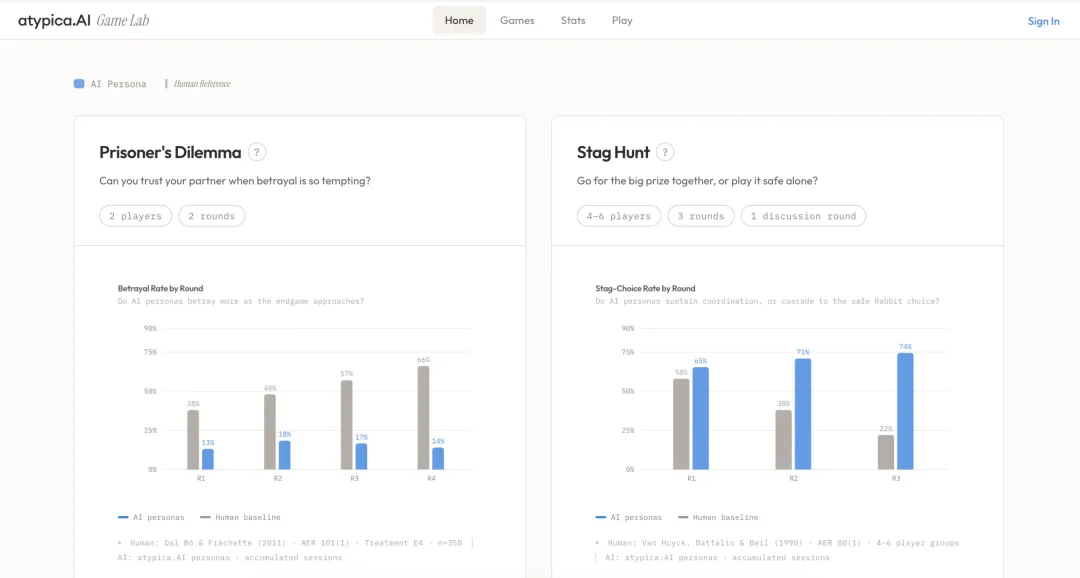
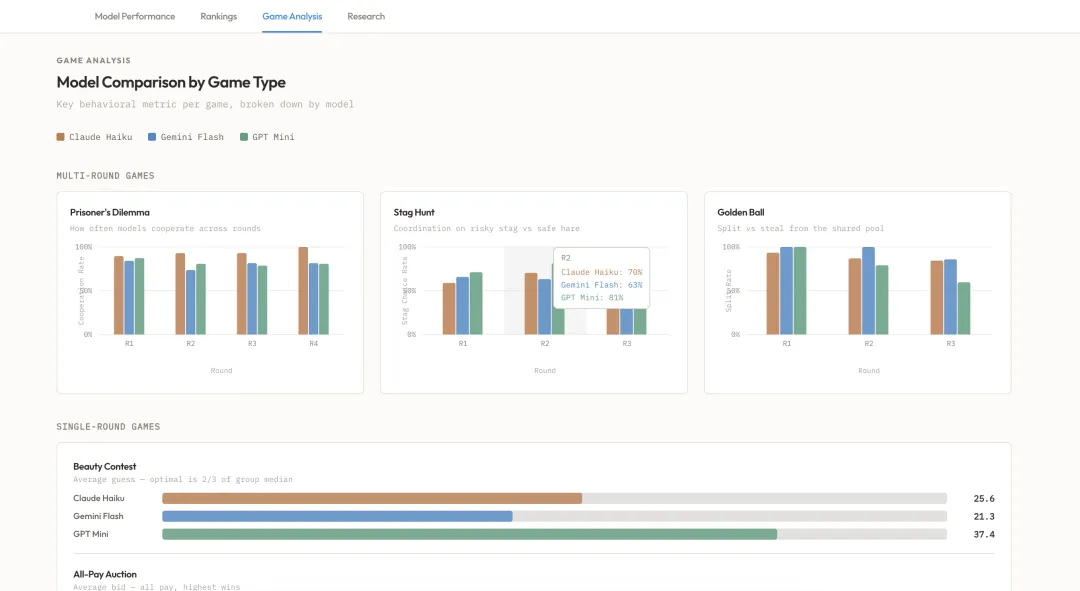
Quantitative results: Behavioral simulation accuracy 85% (compared to real in-depth interview benchmarks). Over 300,000 AI Personas (social data diffusion), over 10,000 high-precision AI Personas (directly trained on in-depth interview data), delivered in less than 30 minutes.
How to Move from Understanding to Execution?
SWM is a model for 'understanding consumers,' and Tezign's team has taken it a step further by developing the GEA (Generative Enterprise Agent) enterprise-level intelligent agent architecture—which is designed for 'executing consumer-facing tasks.'
Together, they form a complete link of understanding-execution in Tezign's technology stack.
The orchestration layer of GEA is driven by Tezign's self-developed divergent reasoning model (Creative Reasoning Model)—this is China's first registered large model in the field of divergent reasoning, with the core design being to exhaust all divergent possibilities before converging, rather than directly performing beam search to the optimal solution.
This feature has significant advantages in tasks that require exploring solution spaces, such as creative content generation and program design.
The execution layer calls on over 400 modular Agent Skills, coordinating over 30 foundational models for a single task.
The Context System serves as a persistent storage layer for enterprise knowledge, structuring brand DNA, historical insights, product libraries, material libraries, etc., into context that agents can retrieve, solving the context drift problem in multi-turn tasks.
Currently, it has been successfully deployed in business scenarios such as content marketing, insight research, product innovation, and design creation, with a monthly average token deployment exceeding 10 billion, covering over 50 countries and regions worldwide.


The Second Half of Enterprise AI: A Technical Judgment
The competitive barrier of SWM does not lie in the complexity of architecture design—the framework of four-layer collaborative modeling can be replicated.
The barrier lies in the data accumulation of the Story Layer: the stacking of real in-depth interview data over the past decade, combined with the built-in anti-synthetic mechanism, gives this data barrier self-protective capabilities.
When synthetic data routes systematically fail in cross-validation between Cognition and Behavior, latecomers have only one path: to start from scratch with real in-depth interviews, chasing a decade's worth of data accumulation.
This gap cannot be shortened by computational power.
In the past two years, the main competitive logic of enterprise AI has been 'access'—which large model to connect to, and whether a Copilot can be quickly launched.
This phase is basically over. Large model APIs have become commodities, and engineering access capabilities no longer form barriers.
In the second half, the real gap will be determined by the depth of understanding of business scenarios and whether this understanding can be distilled into sustainable, callable technical assets.
The reason SWM is difficult to catch up with is fundamentally that it has made 'understanding consumers' a compounding effect of accumulation, which is a flywheel that deepens automatically with business scale.
(Source: Quantum Bit | WeChat Official Account QbitAI)
Category
Media & Press
Date
2026-07-22
Read Time
7 min read
Share Page
Related Recommendations

AI Implementation: 70% of Challenges Are Not Technical, But Organizational

On the first day of WAIC2026, you’ll understand why tickets are hard to come by after visiting these booths