Three Key Signals from WAIC 2026: Computing Power Restructuring, Agent Delivery, and AI Hardware Closed Loop
The 2026 WAIC reached a historic scale, releasing three major industry signals: computing power shifting to full-stack system competition, enterprise agents delving into business contexts, and embodied intelligence forming real-time closed loops with edge hardware, marking AI's entry into a long-term stable implementation phase.

How to ensure the intelligence we already possess operates long-term
Understanding specific people and organizations, entering the real world?

Seventy years ago, a group of young scholars first proposed the concept of "artificial intelligence" at the Dartmouth Conference.
Seventy years later, by the Huangpu River, the artificial intelligence industry is no longer satisfied with just making machines learn to think and speak; it has begun to hand over this capability to enterprise systems, intelligent terminals, and robots, attempting to truly integrate AI into the operation of human society.
From July 17 to 20, the 2026 World Artificial Intelligence Conference and the High-Level Meeting on Global Governance of Artificial Intelligence were held in Shanghai. This year's conference, themed "Intelligent Partners, Co-Creating the Future," was spread across four venues in three locations: Expo, Zhangjiang, and West Bank, with an exhibition area exceeding 100,000 square meters for the first time, featuring over 1,100 companies showcasing more than 3,000 exhibits, with over 300 products making their debut. The two major tracks of intelligent computing and embodied intelligence gathered more than 200 companies.
This is the largest WAIC ever held, and it may also be the most complex in terms of technology routes and product forms. Large models, super nodes, agent operating systems, AI phones, humanoid robots, dexterous hands, near-memory computing chips, and various industry solutions all appeared within the same exhibition framework. At first glance, they belong to completely different technological tracks, but together they present a clear evolutionary path:
AI is transforming from a model that can generate answers into a system that can understand goals, mobilize resources, perceive the environment, and deliver results.
In the past three years, large models have proven their ability to write articles, generate images, write code, and understand videos, as well as handle increasingly complex reasoning tasks. However, in 2026, the key question facing the industry is no longer "Can AI do it?" but rather "Can AI do it long-term, stably, and at low cost?" Successfully completing a task once in testing is completely different from a system handling tens of thousands of business requests daily.
A robot completing a jump on stage is not the same capability as it continuously performing handling, sorting, and loading tasks in a factory for months. Transitioning artificial intelligence from capability demonstration to real production requires a complete set of infrastructure beyond the model: how computing power is organized, how data flows, how tools are invoked, how permissions are controlled, how results are evaluated, and how errors are promptly detected.
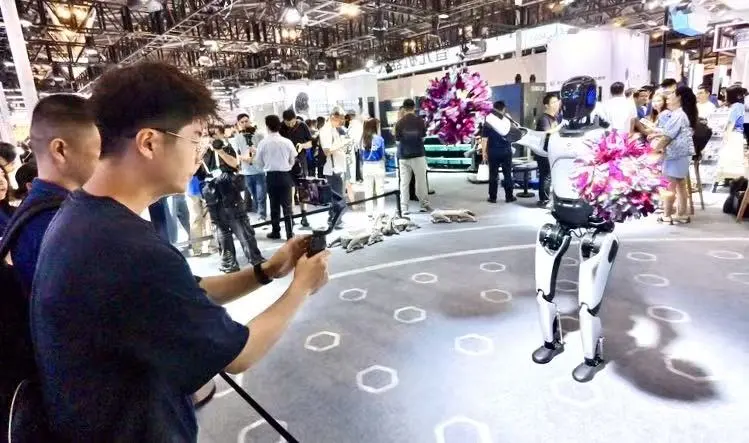
At the onset of the large model craze, the industry was most easily drawn to parameters, rankings, and model releases. Now, more and more companies are focusing their efforts on the systems behind the models and the real tasks in front of them. Models have not disappeared, nor have they become unimportant. On the contrary, they are being embedded into larger technological architectures, much like electricity, chips, and operating systems.
Through this year's WAIC, we observed three migrations occurring in the AI industry.
01 Computing power is no longer just about chips, shifting from parameter competition to system competition
One of the most attention-grabbing products at this year's WAIC is Huawei's Atlas 950 super node prototype.
The key to the super node is not how many chips are packed into a cabinet, but whether it can reduce the cost of data exchange between chips. High-speed interconnection, shared memory, task scheduling, and software stacks collectively determine whether a large number of independent chips form a team that fights alone or a computing whole that can work collaboratively.
However, as model scales increase and reasoning tasks become complex, a single chip is increasingly unable to independently determine final performance. The speed at which data is transmitted between chips, whether hundreds or even thousands of chips can collaborate efficiently, whether memory is sufficient, how tasks are scheduled, and whether software tools are mature all affect the actual utilization of computing power.
Even if a chip's theoretical peak is high, if a significant amount of time is spent waiting for data, cross-card communication, and task switching, it is difficult to translate that into effective model training and reasoning capability. It's like a factory; having the fastest workers does not necessarily mean it has the highest output. Raw material supply, workstation arrangement, transportation routes, and management systems can all become bottlenecks that determine output.
AI computing power is undergoing a similar transformation. The basic unit of competition is gradually shifting from a single chip to servers, super nodes, and clusters; the dimensions of competition are also expanding from computing performance to high-speed interconnection, memory, heat dissipation, software ecology, energy efficiency, and overall operation and maintenance. Especially in the reasoning era, computing power systems are no longer just facing a few large-scale training tasks lasting several months, but a large number of requests that vary in length and have significant concurrent fluctuations.
Intelligent agents need to repeatedly invoke models and tools, reasoning models need to generate longer thinking processes, and multimodal models must simultaneously handle text, sound, images, and videos. These changes will increase token consumption and raise higher demands for response speed, unit cost, and system stability.
Public data shows that by 2025, the scale of China's AI-related industries has surpassed one trillion yuan, with the overall penetration rate of AI in key industries exceeding 80%. The daily token call volume in China has grown from 100 billion at the beginning of 2024 to 100 trillion by the end of 2025, and it continues to increase rapidly in 2026.
Compared to model parameters, token call volume is closer to the true level of the AI industry. Parameters represent the capabilities a model may possess, while tokens indicate that these capabilities are being utilized. Only when models are embedded in search, programming, office work, customer service, marketing, scientific research, and manufacturing processes will tokens continue to be generated. When the daily token calls reach the hundreds of trillions, industry competition will naturally shift from "who has the larger model" to "who can produce intelligence at a lower cost and higher efficiency." This is also the core background for the rise of super nodes.
It is not just about packing more chips into the same cabinet; it is about minimizing the distance between chips, allowing a large number of processors to share data, memory, and tasks, thereby improving the effective computing power of the entire system. For domestic AI chip companies, this change brings both opportunities and raises the competitive threshold.
In the past, a company only needed to design a chip capable of running mainstream models to have a chance to enter the market. In the future, what customers need may no longer be just a card, but a complete solution that encompasses chips, servers, the internet, software platforms, and cluster operation and maintenance. In other words, domestic computing power competition is shifting from "is there a chip" to "can a system be formed."
Yixing Intelligent debuted its Epoch series RISC-V AI computing power super node solution at this year's WAIC, which, through its Epoch cloud-based high-performance AI chip, ELink high-speed interconnection architecture, integrated liquid cooling solution, full-stack software ecosystem, and large-scale cluster networking, constitutes a complete system capability that far exceeds traditional AI server performance. According to the company, this solution supports high-bandwidth interconnection of 32 to 128 cards within a single cabinet and introduces an orthogonal backplane architecture to replace traditional cable connections, improving signal transmission quality, significantly reducing transmission latency, and enhancing computing power density and reliability. ELink can simultaneously support vertical expansion within the super node and horizontal networking between nodes, further extending computing power resources to tens of thousands of card-level clusters.
Currently, Yixing Intelligent's Epoch series AI chips, accelerator cards, and related hardware have entered mass production and bulk delivery stages, covering industries such as the internet, telecommunications, finance, and energy. The company has also partnered with industry chain partners to build the industry's first full-stack RISC-V super node AI Token factory. This reflects that domestic AI computing power competition is transitioning from "can chips be manufactured" to "can complete infrastructure be delivered."

RISC-V provides another route for this competition. Unlike private instruction sets controlled by a single enterprise, RISC-V is an open instruction set. Theoretically, different companies and research institutions can design processors, expand functions, and improve the software ecosystem based on it. However, openness does not automatically equate to maturity.
For an AI chip to truly enter a production environment, it also requires compilers, operator libraries, framework adaptation, performance tuning, and developer tools. Model architectures are rapidly changing; the mainstream operators and precision formats today may soon be replaced by new reasoning methods. Therefore, the value of an open architecture lies not only in reducing licensing restrictions but also in allowing chips to have the potential for continuous evolution and access to more R&D resources.
However, whether it can ultimately form competitiveness still depends on mass production, software adaptation, customer migration costs, and long-term operational data. In the field of AI infrastructure, any grand technological narrative must ultimately be tested against the same set of metrics: how many effective tokens can be generated per kilowatt-hour, how long can a device run stably, how much time is required for model migration, and whether it can quickly recover after a failure.
The true threshold of the computing power industry has never been just about lighting up chips, but about turning chips into productivity that customers can continuously use. This is why intelligent computing platforms, model service platforms, compilers, reasoning engines, and computing power scheduling systems are becoming increasingly important. If chips are the engines, super nodes and clusters are the vehicles, then software platforms determine whether this vehicle is easy to drive.
Model companies hope to shield the differences between different chips, developers want to migrate models at the lowest possible cost, and enterprise customers hope that computing power systems can be as stable, transparent, and easy to use as cloud services. Whoever can lower the barriers to using computing power will have a better chance of attracting developers and customers.
This round of computing power competition is also changing the cloud computing industry. Traditional cloud services mainly charge based on CPU, storage, and bandwidth, while AI clouds are increasingly providing services based on model calls, token counts, and task results. Computing power itself is gradually retreating to the background; what customers ultimately purchase is the speed of model training completion, the latency of reasoning responses, and the processing capacity for specific business tasks.
In the computing power industry, the term "Token factory" is becoming a commonly used concept to describe this shift. It no longer focuses solely on how many chips are deployed, but rather on how many usable tokens a system can stably generate under given power and hardware conditions. In this logic, chip peak performance is not the only metric; the overall system's throughput, energy efficiency, stability, and utilization determine the final output. The WAIC 2026 further illustrates that while the performance of a single chip remains important, it is no longer sufficient to solely determine the competitiveness of an AI infrastructure.
The future leaders in computing power may not only belong to companies with the strongest chips but are more likely to belong to enterprises that can organize chips, interconnections, software, energy, and customer needs into systems. Model training shaped the previous stage of the computing power market, while large-scale reasoning will redefine the infrastructure for the next stage.
02 Intelligent agents enter enterprises, with the real barriers being context and delivery
If super nodes address how intelligence is produced, then intelligent agents focus on how intelligence is used. Agents are one of the most densely appearing concepts at this year's WAIC. From agent operating systems and intelligent agent phones to enterprise agents and multi-agent collaboration platforms, more and more companies are no longer satisfied with having AI answer questions; they want AI to understand goals, break down tasks, invoke tools, and complete work with minimal human intervention.
The shift from chatbots to intelligent agents may seem like just a change in product names, but it corresponds to two completely different product logics. Traditional chatbots wait for users to pose clear questions and then return text, images, or code. They can assist in completing a specific step, but most of the work still requires human connection. Humans not only need to know how to ask questions but also need to judge whether the answers are reliable and transfer the answers to the next task.
The goal of intelligent agents is to receive a more abstract task, then autonomously break down steps, seek information, invoke tools, and continuously adjust based on intermediate results. For example, users no longer ask AI to "write a marketing copy" but rather to "devise a marketing campaign for a new product." This task may require researching market trends, analyzing user feedback, identifying target demographics, proposing creative directions, generating content for different channels, and finally monitoring the dissemination effects and continuing to optimize.
Each of these steps may be completed by different models, software, and data systems. Therefore, the value of intelligent agents is not merely another method of generating content but an attempt to become an intermediary layer that organizes different tools and processes. This is also why operating systems, orchestration platforms, memory systems, and context engineering are beginning to receive attention.
For an intelligent agent to truly enter an enterprise, it needs to understand at least three types of information. The first type is world knowledge, which is the common information learned during general model training; the second type is enterprise knowledge, including product information, brand specifications, customer information, business data, and historical projects; the third type is organizational operating rules, such as who can access what data, what content requires approval, which departments a task should go through, and who is responsible in case of risks.
General large models often can only address the first type of problem well. They know the general rules of marketing, manufacturing, finance, and retail but may not know how a specific company defines its brand, what a particular customer has purchased in the past, or what approvals a contract requires. The true assets accumulated by enterprises over the years are often not fully documented in public files. They are scattered across databases, meeting notes, emails, employee experiences, historical solutions, and numerous implicit rules. Many decisions even lack standard processes and can only rely on familiar business personnel for judgment.
This creates the core barrier for intelligent agents to enter enterprises: models understand the world but do not understand organizations. Therefore, as foundational model capabilities gradually become public supply, the competitive focus of enterprise AI is shifting toward context. Context is not equivalent to simply placing some documents into a knowledge base. It also needs to address whether information is up-to-date, whether different sources conflict, which business object the data belongs to, who has access rights, and under what circumstances the model should invoke which piece of information.
Incorrect enterprise context can be even more dangerous than having no context at all. If a model does not know the answer, it may prompt the user to provide more information; however, if it references an outdated pricing policy, an expired contract, or incorrect customer records, it may make seemingly reasonable but actually completely erroneous judgments.
This is also the starting point for Tezign Technology's demonstration of the GEA enterprise-level intelligent agent architecture. GEA consists of four layers: intention, orchestration, skills, and context, where the context layer attempts to transform the enterprise's scattered brand data, content assets, and business experiences into a unified fact source that AI can call; the orchestration layer coordinates different foundational models and modular skills based on tasks. Tezign hopes to transform enterprise AI from a one-time delivery project into a capability system that can continuously participate in enterprise operations and deliver results.
According to the company, it currently serves over 180 enterprise clients, with its platform covering more than one million professional users across 50 countries and regions globally, and has been widely implemented in scenarios such as insight research, content growth, design creation, and product innovation.

Tezign has made a representative judgment: many core issues of enterprises are not just mathematical problems with standard answers.
New product directions, brand strategies, user insights, and creative designs all require decision-makers to first explore multiple possibilities and then make judgments within organizational constraints. To this end, Tezign has also developed a Creative Reasoning Model aimed at open-ended business problems, hoping to enable intelligent agents to not just quickly converge on one answer but to first diverge, then judge and execute.
Whether this exploration can truly improve the quality of enterprise decision-making still requires more real business results for validation. However, it at least reveals a core contradiction faced by enterprise intelligent agents: models excel at generating answers, but what enterprises truly need is to undertake the process.
An answer is usually just a piece of text, while the process includes goal confirmation, information collection, plan comparison, permission approval, task execution, result evaluation, and accountability tracing.
When intelligent agents begin to participate in the process, they are no longer just tools for improving efficiency but become, to a limited extent, a "digital employee" of the organization. This will change the form of enterprise software. In the past, employees needed to learn the menus and buttons of different software, constantly switching between CRM, ERP, content systems, databases, and collaboration tools. Intelligent agents may become a new interaction layer above these software. Employees only need to describe their goals, and the intelligent agent understands the intent and invokes different systems to complete queries, analyses, and operations. Traditional software will not disappear, but more interfaces may retreat to the background, with human intent becoming the new entry point. However, there is still a long way to go from chatbots to digital employees in terms of building reliability.
If a chatbot answers a question incorrectly, the user can ask again; however, if an intelligent agent deletes the wrong file, sends a wrong quote to a customer, or modifies production parameters, the consequences will directly impact the real world. Therefore, enterprise intelligent agents will not immediately leap from auxiliary tools to fully autonomous systems. A more realistic path is to first help employees search, summarize, and generate content, then invoke tools under human confirmation, and finally, possibly complete some low-risk tasks independently within clear boundaries.
Whether intelligent agents can enter core processes ultimately depends on three conditions: whether they can understand the real context of the enterprise, whether the execution process can be observed and audited, and whether errors can be promptly detected and halted. Models determine how smart an intelligent agent is, while context and governance mechanisms determine whether it is trustworthy. After enterprises introduce intelligent agents, they also need to rethink the evaluation methods for AI projects.
In the past, the success of a software could typically be measured by usage rates, user numbers, and renewal rates. Intelligent agents require a more complex set of metrics. Enterprises need to know their task completion success rates, average costs, manual takeover rates, and types of errors, and they also need to determine whether they have saved employee time or merely shifted work from execution to checking and correcting.
Even if an intelligent agent generates outputs quickly, if each output requires employees to double-check, its real efficiency improvement may be quite limited. This is also the dividing line for enterprise AI moving from demo to production environments. In demonstrations, intelligent agents only need to complete a carefully designed task; in enterprises, they must face vague instructions, missing data, system failures, permission restrictions, and constantly changing business rules.
Succeeding once is not difficult; sustained success is the real technical threshold. Intelligent agents will also bring new organizational issues. When a digital employee can simultaneously undertake research, writing, data analysis, and task execution, traditional job boundaries may become blurred. Enterprises need to redefine the division of labor between humans and AI and decide who is responsible for the results of intelligent agents.
In the future, it is more likely that an intelligent agent will not completely replace a position, but rather an employee will manage multiple intelligent agents, or multiple specialized intelligent agents will collectively serve a team. The value of humans will shift from personally completing every step to setting goals, providing judgments, managing exceptions, and assuming responsibility. This also means that deploying intelligent agents in enterprises is never just a technical project.
It is also an organizational engineering project. If an enterprise's existing data is chaotic, processes are vague, and there is a lack of collaboration between departments, intelligent agents will not automatically solve these problems; instead, they may further amplify existing issues. Only when enterprises can clearly describe their business can machines truly understand and participate in it. This may be the most important competition for enterprise AI in the next phase: not who can quickly access a new model, but who can turn the model into a long-term operational part of the organization.
03 AI Gains a Body, From Perceiving the World to Forming Real-Time Closed Loops
At this year's WAIC, the most intuitive heat still belongs to robots. Over 200 embodied intelligence companies gathered to exhibit humanoid robots, quadrupedal robots, dexterous hands, joint modules, sensors, and training platforms, forming an ever-expanding industrial chain. Compared to a few years ago, the discourse system in the robotics industry has undergone significant changes. In the past, the focus of humanoid robot demonstrations was on "how human-like they are": whether they can walk, dance, run, and perform complex actions. Today, the industry is increasingly concerned with whether they can work.
Once robots enter factories, can they adapt to parts of different sizes? When production lines change, do engineers need to reprogram them? How close can the speed of task completion get to that of humans? What are the failure rates and maintenance costs during continuous operation?
This indicates that embodied intelligence is transitioning from action performance to task delivery. The reason large models are changing robotics is that they provide a new technological path for machines to understand language and the environment. Traditional industrial robots typically rely on preset programs. Under fixed positions, fixed rhythms, and fixed workpiece conditions, they can repeat the same action with high precision, but once the environment or items change, engineers need to recalibrate.
Embodied intelligence aims to give robots a certain degree of generalization ability. Humans can directly tell robots to "clean the table" or "put different parts into corresponding boxes," and the robots then convert natural language into action plans. However, the real world is far more complex than the world of language. If a language model makes a judgment error, it can regenerate; if a robot makes a judgment error, it may break items, interrupt production lines, or even harm those around it. Therefore, for robots to truly gain work capability, they need to form a complete "perception-understanding-decision-execution-feedback" closed loop.
First, they need to understand the environment through cameras, lidar, force sensors, and tactile systems; then break down human goals into specific actions; and finally execute through joints, motors, and dexterous hands, adjusting in real-time based on results. This is why robot competition cannot solely focus on large models. The structural design, reducers, actuators, sensors, batteries, control systems, and data collection capabilities also determine whether products can be implemented. For factories, whether robots resemble humans is not important; what matters is whether they can consistently create value. Industrial scenarios may become the first market for embodied intelligence to achieve large-scale implementation.
Factory environments are relatively structured, task objectives are clear, and it is easier to calculate input-output ratios. Robots do not need to possess general intelligence from the start; as long as they can stably complete specific tasks such as handling, sorting, quality inspection, loading and unloading, and inspection, they have the opportunity to form a business closed loop. However, even in industrial scenarios, the large-scale implementation of robots still faces challenges.
An action success rate of 99% sounds high, but if a production line needs to execute tens of thousands of actions daily, the remaining 1% still means a large number of anomalies and manual interventions. Therefore, industrial customers care more about whether the task success rate remains stable after robots have run continuously for hundreds of hours rather than how impressive a single demonstration is. Robotics companies are also seeking to rebalance between product and business models.
Fully general humanoid robots have the greatest imaginative potential but need to solve issues related to perception, decision-making, embodiment, data, and costs simultaneously. In contrast, starting from specific tasks such as handling, sorting, and inspection makes it easier to form revenue and data closed loops. Robots accumulate data through real scenarios, which in turn trains models and improves hardware; this may be the realistic path for embodied intelligence to gradually achieve general capabilities.
Past intelligent hardware waited for human operation. Users opened apps, pressed buttons, and then received results from the screen. The new generation of AI terminals aims to continuously perceive users' voices, images, locations, and physical states, proactively providing assistance at the right time. The premise of this shift is the continuous enhancement of edge AI capabilities.
The cloud can provide stronger general reasoning capabilities, while edge has advantages such as low latency, local operation, privacy protection, and personalization. As model compression, chip performance, and terminal computing power continue to improve, more and more AI tasks will be dynamically allocated between the cloud and local devices. Tasks that do not require real-time responses and involve significant computation can be handled by the cloud; tasks involving continuous perception, personal data, and immediate feedback are better suited for local execution.
Especially in data involving health, images, sounds, and locations, the significance of edge computing is not just to improve speed. It also determines whether devices can operate without continuously uploading sensitive information.
Shensi Dongli, under the consumer-grade neural technology brand LumiMind, which is centered on brain neuroscience, is exploring this direction with its first product, the LumiSleep D1 brainwave-regulating sleep device.
Unlike wearable devices that primarily analyze sleep states through indirect indicators such as body movement and heart rate, the LumiSleep D1 collects brainwave signals in real-time in a non-invasive manner, decoding brain state changes related to the process of falling asleep, and generating personalized acoustic guidance with millisecond-level dynamic adjustments, continuously adjusting based on brain state changes, forming a "monitoring-decoding-generating-regulating" closed loop.
The product uses a built-in chip for local computation, thereby accelerating computational efficiency and protecting user privacy. The product has already begun pre-sales and is planned for launch in September 2026. Its significance lies not only in adding a type of sleep hardware but also in the functional boundaries of smart wearables moving from recording and presenting physiological indicators such as body movement and heart rate to perceiving brainwave signals and providing real-time, personalized feedback based on state changes.
In other words, what LumiSleep D1 explores is not traditional sleep tracking but dynamic adjustments of acoustic guidance based on real-time brainwave signals.
From an industrial perspective, neural perception-based smart wearable devices represented by brainwaves are providing a new technological path: smart devices are no longer just reading external behaviors and physiological signals but are beginning to attempt to understand internal states and provide real-time feedback based on state changes.
For LumiMind, the LumiSleep D1 is not just a sleep product but also the first step in pushing neural technology out of the laboratory and into daily life.
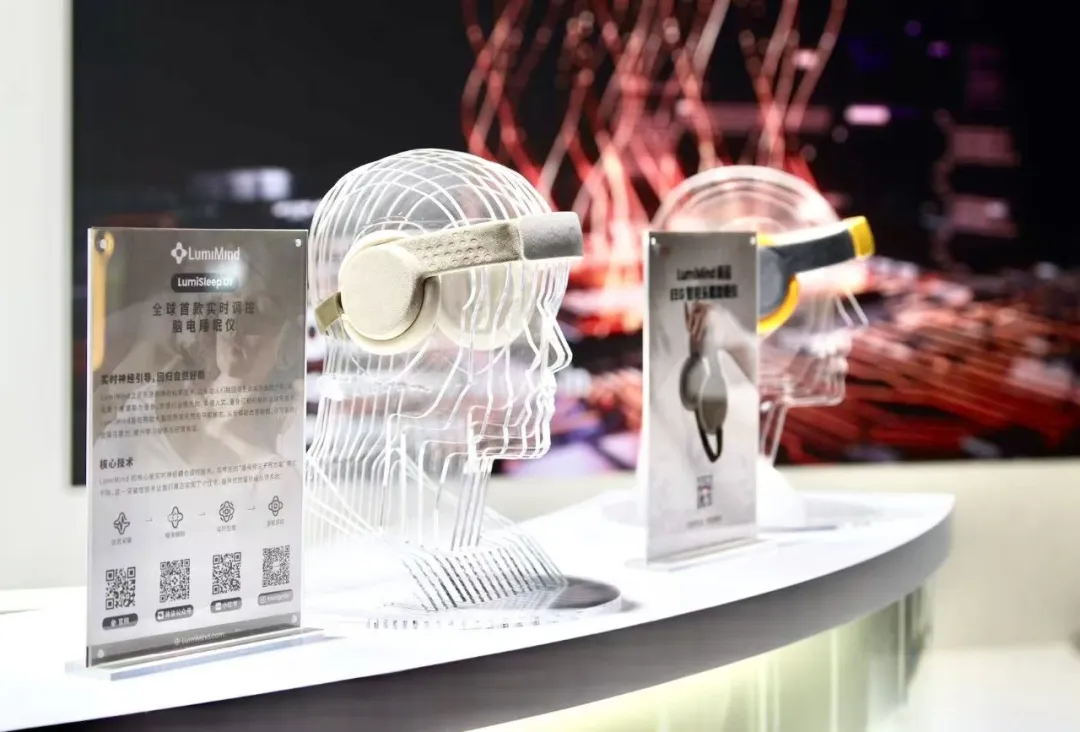
Of course, there is still a long distance from consumer-grade neural devices to widely validated health solutions. Brainwave signals are easily affected by actions, wearing methods, and individual differences, and the actual effects of acoustic feedback require long-term, standardized user data and research validation.
However, neural perception products at least provide a way to observe the future of AI hardware. Robots attempt to understand the external world, while smart wearables begin to try to understand internal states. Although they seem to belong to completely different tracks, their underlying logic is becoming increasingly similar: continuously collecting signals, assessing current states, generating actions or feedback, and then continuously adjusting based on new results.
This means that AI is transforming from a question-and-answer tool into a continuously operating closed-loop system. It appears not only in the bodies of robots in factories but may also exist in smartphones, glasses, headphones, and devices that people wear daily. Once AI gains a body, the standards for evaluating industries will also change. An error in a chat product may only be an inaccurate answer; an error in a device that controls a robot or continuously reads bodily signals may have real-world consequences. Therefore, the closer AI gets to the physical world, the higher the demands for safety, explainability, and reliability.
Smart devices need to clarify what data is processed locally and what data needs to be uploaded; robots need to know under what circumstances they should stop actions; intelligent agents need to request human confirmation before executing high-risk tasks. These capabilities are not additional features but necessary conditions for AI to transition from demonstration to large-scale application.
This year's WAIC featured over 300 debut products and also promoted the landing of a number of industrial scenarios and collaborative projects. However, for the AI industry, the number of debuts is no longer the only important metric. The market is no longer lacking new models, new intelligent agents, and new robots; what is truly scarce is systems that can continuously produce results. How much repetitive labor can be reduced? How long can costs be recovered after deploying robots? What is the utilization and stability of computing systems? Does an AI hardware truly solve user problems? These questions may not be as eye-catching as technical demos, but they determine whether an AI company can cross the commercialization threshold.
Thus, the competitive unit of the AI industry has shifted from individual models to complete systems. This change can be summarized as three migrations: from single chips to computing power systems that can produce effective tokens; from answering questions to understanding enterprise contexts and undertaking business processes; and from existing in chat boxes to possessing perception, action, and real-time feedback capabilities in physical terminals.
None of these three migrations are easy to accomplish. They require collaboration between algorithms and hardware, cooperation between technology companies and industrial customers, and synergy between product innovation and reliability building. Therefore, WAIC 2026 is not announcing that AI has become omnipotent. On the contrary, it indicates that the entire industry is finally beginning to face more complex issues than training large models: how to ensure the intelligence already possessed operates long-term, how to make it understand specific people and organizations, and how to integrate it into the real world while maintaining reliability and controllability.
(Source: WeChat Official Account 36Kr)
Category
Media & Press
Date
2026-07-21
Read Time
26 min read
Share Page
Related Recommendations

Witness the WAIC Model 'Mind Reading'! Live Event is on Fire

AI Implementation: 70% of Challenges Are Not Technical, But Organizational