3C Electronics
Global Smart Devices: During the New Product Confidentiality Period, How Does This Smartphone Brand Allow Users to Test 24/7 Continuously?
Tezign created an AI virtual user testing solution for the smartphone brand, relying on historical data to generate user models. During the new product confidentiality period, virtual machines can automatically test 24/7, eliminating sample bias and continuously providing R&D reference data.
Category
3C Electronics
Date
2026-06-18
Read Time
4 min read
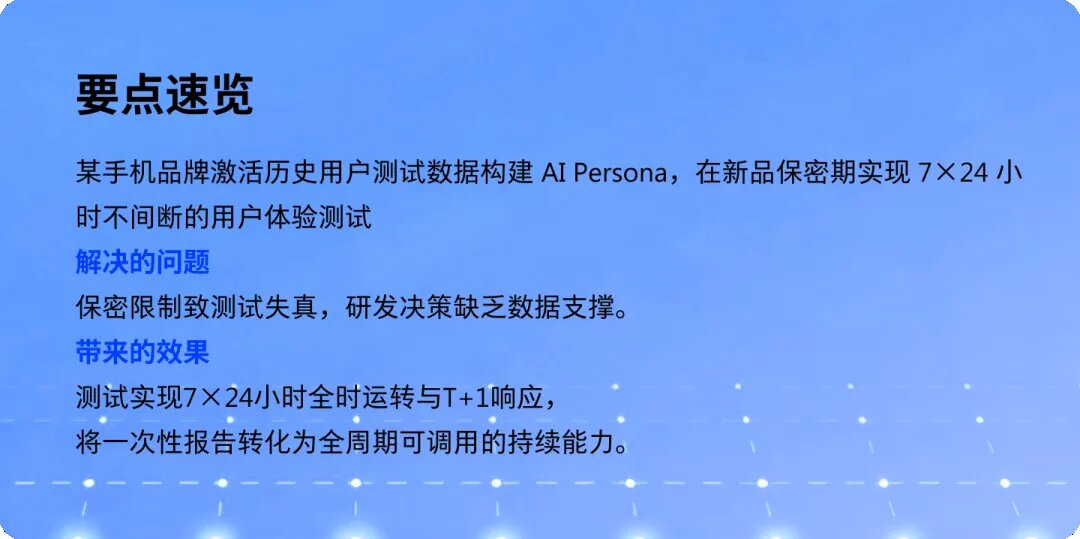
In the smartphone industry, there is a contradiction that almost everyone cannot avoid when it comes to user experience testing:
The more important the new product, the higher the confidentiality level, and the less real users can be exposed to it. The less real users can be exposed, the more the testing data relies on internal samples—yet the bias in internal samples often only reveals itself after the product is launched.
Most teams define this as a "dilemma between confidentiality and testing." But the real problem lies elsewhere. The real issue is that the understanding of user behavior by enterprises has always existed in snapshots of certain tests—rather than a continuously operable capability that can be called upon at any time.
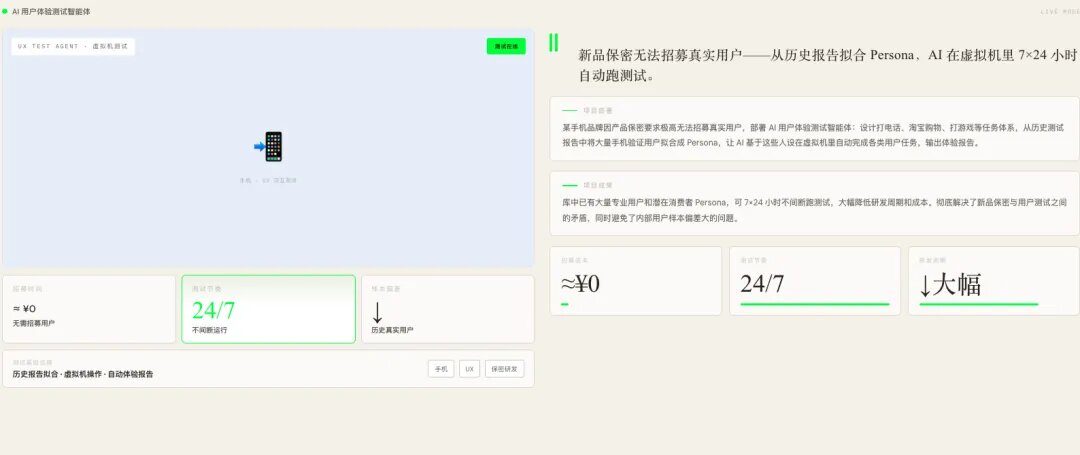
When Confidentiality Requirements Completely Close the Testing Window
A certain smartphone brand faced even more extreme situations during the new product development cycle. The product confidentiality requirements were extremely high, not only prohibiting external user recruitment but also strictly controlling the scope of contact. The composition of internal testers itself had serious sample bias—these were all individuals highly familiar with the product, making it impossible to simulate the first-time usage experience of real consumers.
The traditional solution is to wait—wait until the confidentiality window opens slightly, wait until the internal testing phase, wait until even a small batch of external users can be found. The testing rhythm is completely hijacked by the confidentiality rhythm, and many key judgments in R&D can only rely on internal feelings or be advanced under conditions of severe information deficiency.
The cost of this waiting is not just time; it is the feedback signals that testing should continuously provide during the R&D process, which completely disappear.
Awakening User Insights Dormant in Historical Reports
The entry point of the GEA solution is not to find new users but to re-understand what the enterprise already possesses.
This smartphone brand has accumulated a large number of historical testing reports—testing records of different models, different functional modules, and different user types. The past usage of these reports was to archive them after project completion and occasionally refer to them at the start of the next project.
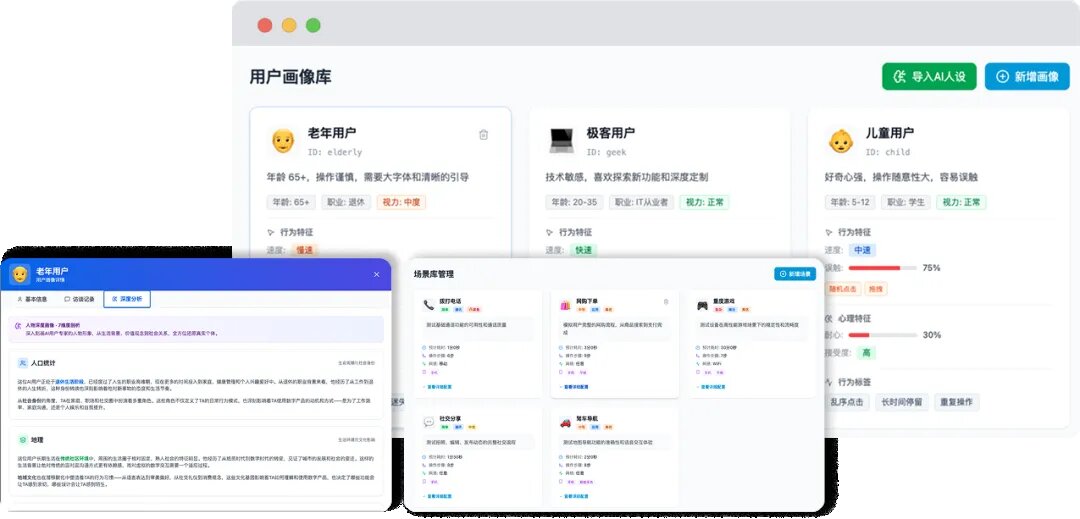
What GEA does is reactivate this historical data. From a large number of historical testing reports, different types of real validation users are fitted into AI Personas—not labeled user profiles, but decision-making entities with complete behavior patterns and usage habits. Users who make calls, users who shop on Taobao, heavy gaming users—each category has corresponding cognitive structures and operational habits modeled in.
These AI Personas then enter a virtual machine environment to perform real user tasks: opening applications, completing operations, triggering interactions, and recording bottlenecks. The entire testing process does not require any real users to be present.
Breaking Free from the Constraints of Confidentiality Rhythm, Testing Always-On
Once this system is up and running, what changes is not just "can it be tested," but also the answers to "when to test and how many times to test."
The previous logic was: wait for the testing window to open, run a batch of tests, and make judgments based on the results. An iteration of a version was a waiting period.
Now the logic is: the AI Persona library runs tasks in the virtual machine 24/7, testing can be initiated at any node in the R&D process, and results are pushed to the team by t+1. Product managers no longer need to wait for the testing window but can obtain data support at any decision-making node.
A functional change can run hundreds of simulated tests that night, with results available the next morning. This speed is unattainable by recruiting real users, even without confidentiality restrictions.
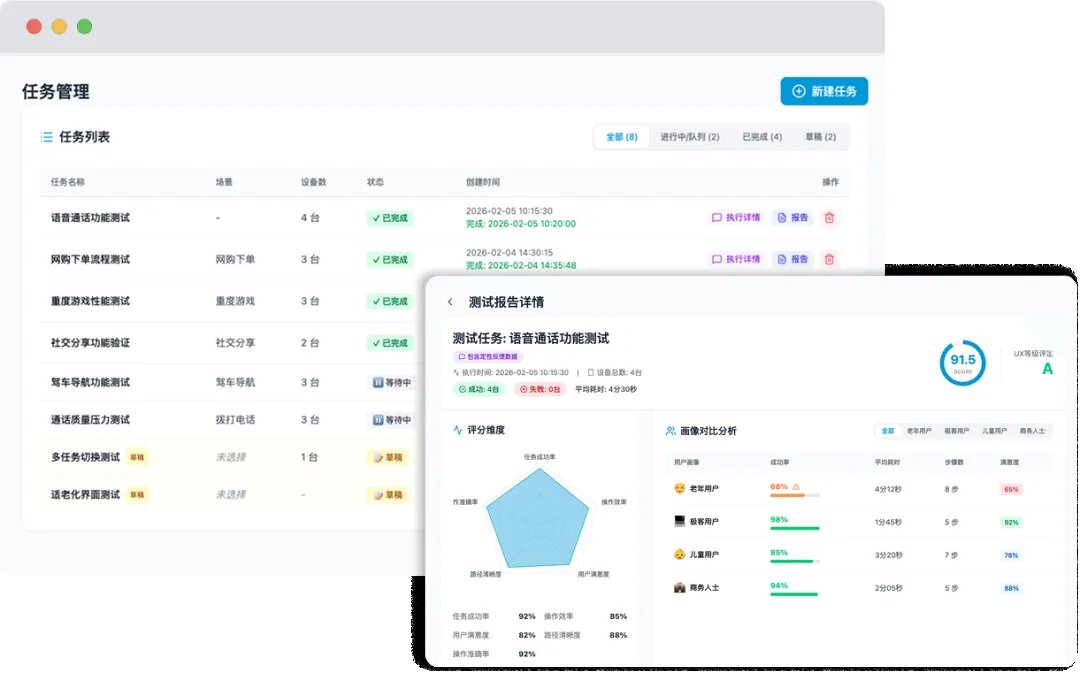
From Single User Testing to Continuous Testing Capability
What truly deserves attention in this case is not just the resolution of the contradiction between confidentiality and testing—although this contradiction has been resolved.
More importantly: the enterprise's understanding of target user behavior has transformed for the first time from "reports archived at the end of a project" to "a continuously operable capability that can be called upon at any node."
The AI Persona library will not close with the release of a certain product. Every time a new testing task is completed, the results are written into the Context System, and the user behavior model continues to calibrate with data accumulation. The testing of the next product starts from all the user insights accumulated from the previous product, rather than starting from scratch.
The R&D competition among smartphone brands is, to some extent, a deep competition in understanding real user behavior. Whoever can obtain user behavior data in real scenarios earlier, more frequently, and more accurately will have the upper hand in product decision-making.
This system allows this to happen continuously under confidentiality conditions for the first time.
If you have similar scenario needs, feel free to scan the code to schedule a corporate diagnosis.


Category
3C Electronics
Date
2026-06-18
Read Time
4 min read
Related Recommendations

Consumer Technology: Is Account Deployment All About Mysticism? This Tech Brand Uses GEA to Build Overseas Content Growth

Cutting-edge Technology: Enterprise-level Intelligent Agents Make Product Pricing No Longer a 'Static One-time Decision'