All
From Passive Response to Active Engagement: Trends in Agent Design
From traditional tool-based AI to agents that actively drive decision-making and execution, Agent Design represents a significant step in AI development. By separating reasoning, execution, tool invocation, and memory management, and effectively integrating these elements, AI is no longer just a reactive system but an agent capable of self-advancement in the real world.
Category
All
Date
2026-03-06
Read Time
5 min read
What is an AI Agent?
If you placed today's large models in a corporate environment five years ago, they would almost be seen as "magic."
Writing copy, generating proposals, modifying PPTs, generating code —
In the field of AI, an agent refers to an intelligent system that possesses autonomy and purpose. Unlike traditional tool-based AI, an agent can actively execute tasks and make decisions rather than merely relying on external instructions. Imagine that AI is no longer just following commands; it can self-learn, reason, and take action in a constantly changing environment.
The core elements of an AI Agent include:
Goal Understanding: An agent needs to clearly understand the tasks and goals it needs to accomplish. These goals are often set by the external environment or users, but the agent must be able to reason based on these goals and understand the different impacts of various decisions.
Reasoning and Decision-Making: An AI agent is not just executing instructions; it also needs to have reasoning capabilities to analyze multiple possible choices and determine the optimal solution. This process may involve multiple steps, including assessing the current state and predicting future outcomes.
Execution Capability: After formulating a plan, the AI agent needs to be able to execute the designated tasks or operations. In this process, the agent may invoke tools, adjust strategies, or collaborate with other systems.
Feedback and Optimization: After completing a task, the AI agent needs to adjust its behavior based on feedback. By continuously accumulating experience, the AI agent can optimize its reasoning and execution strategies, improving work efficiency.
Why Separate “Planning” from “Execution”?
A common challenge in AI design is how to ensure that agents can work continuously and efficiently.
In traditional systems, models often perform reasoning and execution simultaneously, making them prone to overly complex or impractical solutions. In more advanced Agent Design, reasoning and execution are separated:
Reasoning Phase: The AI agent first thinks and reasons, generating multiple plans.
Execution Phase: Once a plan is decided, the AI agent begins execution, strictly following the plan step by step.
This separation ensures that each step is a well-considered decision, and the actions during execution are more orderly and efficient.
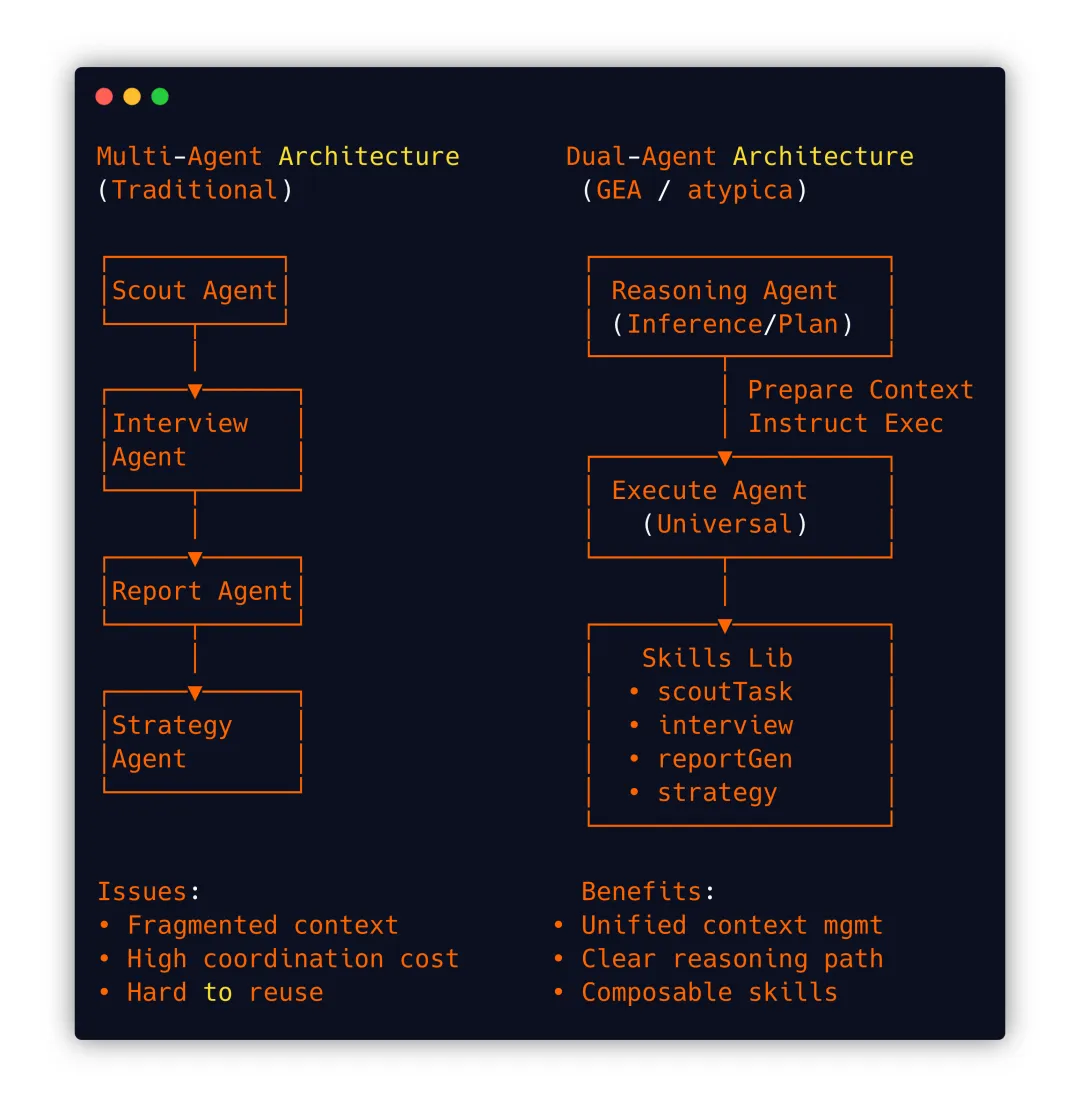
Tools and Skills: Making AI a “Jack of All Trades”
Unlike traditional tool-based AI, an important feature of AI agents is their ability to autonomously invoke various tools and skills to perform tasks. Each tool and skill can be defined as a specific “behavior unit,” such as data querying, task management, API calls, etc.
These tools are not called externally but are integrated into the agent's operational framework. When faced with a task, the agent selects the appropriate tools and skills based on current goals and task requirements to assist in completion.
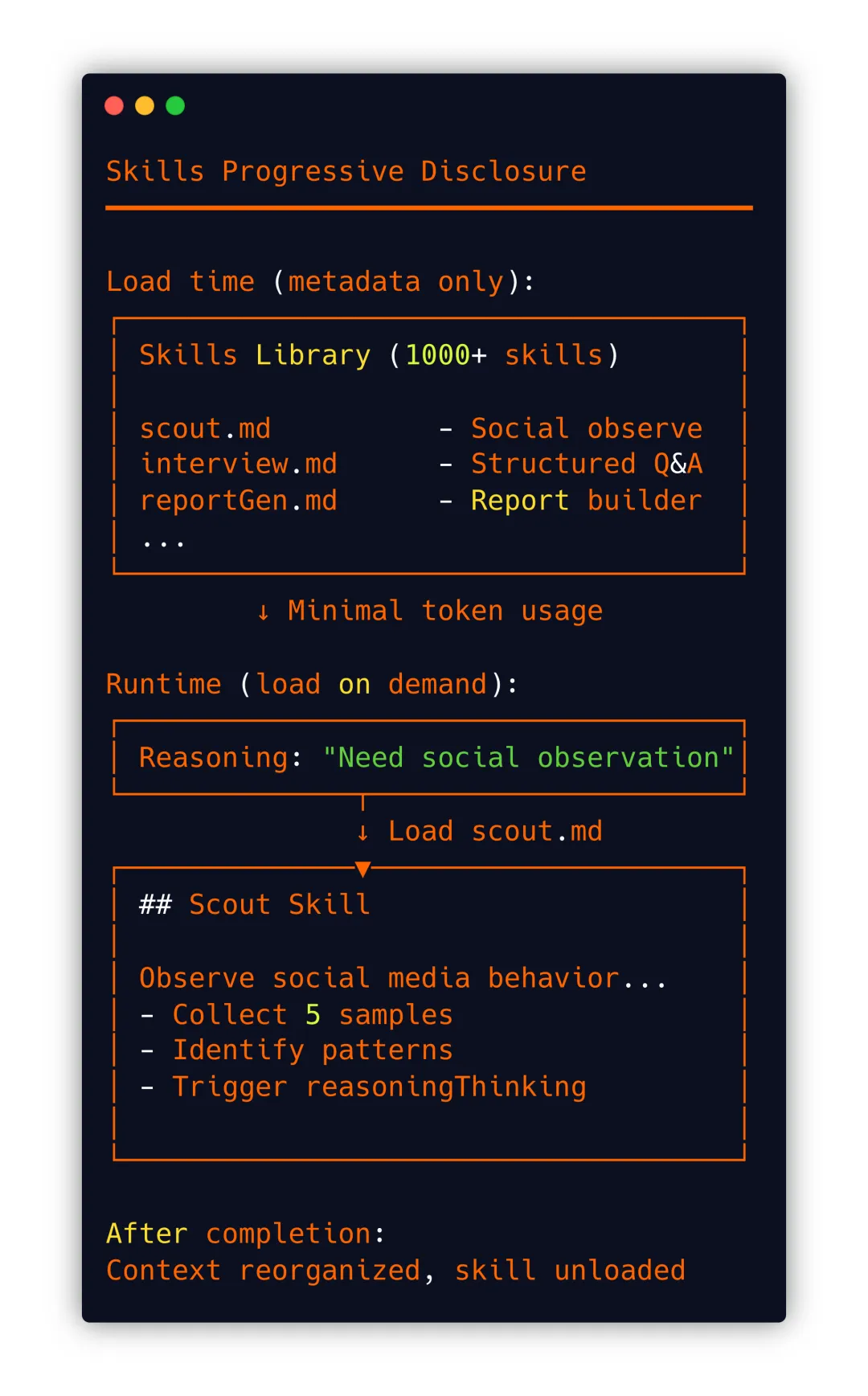
State Management and Contextual Memory: Preventing AI from “Forgetting”
An AI without memory starts from scratch each time it processes a task, which poses a challenge for agents that need to work continuously and accumulate experience. In Agent Design, agents need to have good state management capabilities, remembering past experiences, decisions, and execution processes to provide references for subsequent tasks.
This memory and state management is not just about remembering data but also tracking the “decision path,” which is the context. Each agent records its reasoning process, chosen actions, and results, allowing it to quickly find the best solution in future tasks.
From AI Agents to Enterprise-Level Agents (Enterprise Agentic AI System)
Based on these core principles, Tezign's enterprise-level agent (GEA) provides an intelligent agent system that can actively participate in corporate decision-making and execution. It not only understands the goals and needs of the enterprise but can also make efficient decisions and actions based on the enterprise's unique contextual data.
The GEA is not merely a tool but a comprehensive system that includes multiple agents working collaboratively to drive the achievement of corporate goals. In the GEA architecture, agents reason based on the enterprise's data and historical experiences to generate action plans and execute them. This process can continuously optimize as the actual situation of the enterprise changes.
GEA Design: From Context to Execution
The core components of GEA include:
Enterprise Context Management System (DAM): DAM not only manages data but also structures the enterprise's historical decisions, business rules, and goals into a “Context Graph,” which serves as the foundation for agent reasoning and execution.
Reasoning and Decision-Making: In GEA, the reasoning layer conducts multi-path reasoning based on the enterprise's contextual data, making current decisions and predicting future possible changes.
Feedback and Continuous Optimization: Each agent continuously provides feedback on execution results, and agents optimize their reasoning and execution strategies based on this feedback, forming a self-evolving system.
Through GEA, Tezign aims to provide not just tools but a long-term operational intelligent agent system for enterprises, capable of continuously sensing changes, proactively proposing action plans, and helping enterprises achieve long-term growth and innovation.
In conclusion:From traditional tool-based AI to agents that actively drive decision-making and execution, Agent Design represents a significant step in AI development. By separating reasoning, execution, tool invocation, and memory management, and effectively integrating these elements, AI is no longer just a reactive system but an agent capable of self-advancement in the real world. The GEA system further develops this idea, helping enterprises achieve long-term business optimization and innovation through intelligent agent systems.
Category
All
Date
2026-03-06
Read Time
5 min read
Related Recommendations

What Does the C-end Start to Roll Out Personal Agent Mean? Companies Need to Discuss AI Differently

The Most Comprehensive Interpretation: Can AI Simulate Consumers in Businesses?