Media & Press
Conversation with Fan Ling of Tezign: I Personally "Killed" My Former Self In the AI Era, All Attachment Is a Burden
In the AI era, the core of enterprise competition has shifted to context density. Enterprise-grade agents enable AI-native transformation through a four-layer architecture, driving business growth and efficient innovation.
Category
Media & Press
Date
2026-04-09
Read Time
24 min read
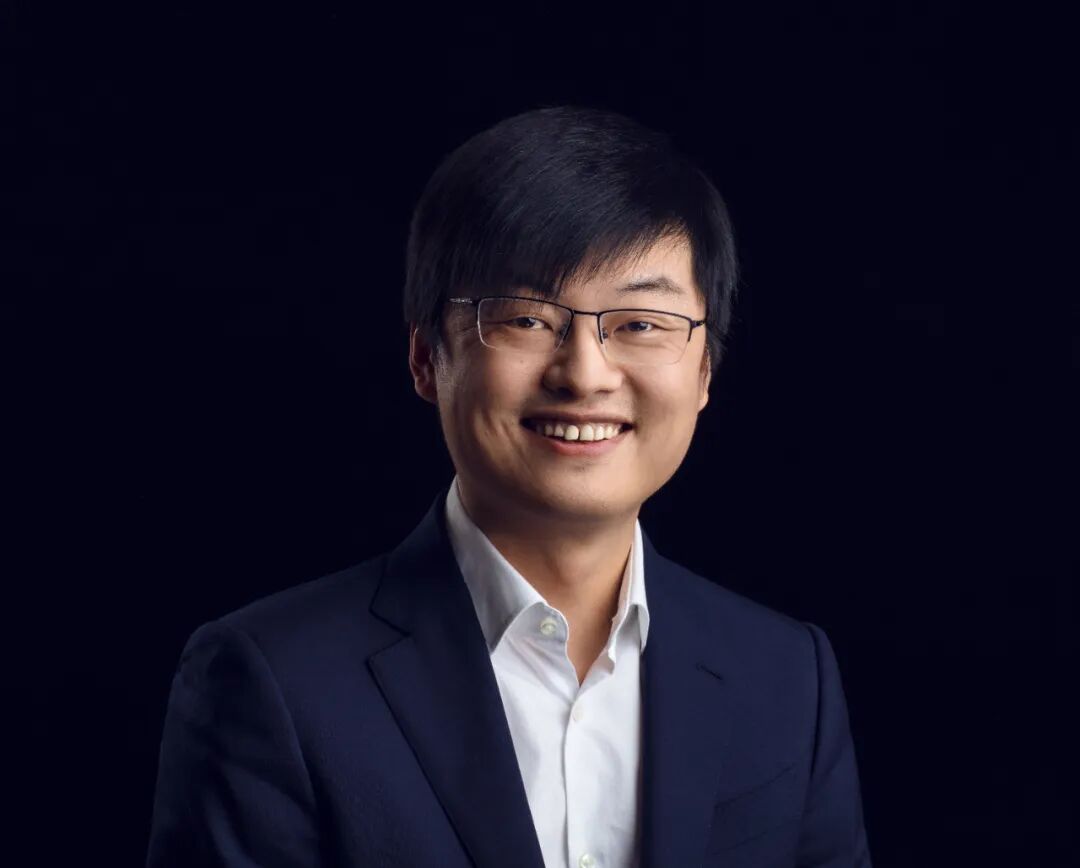
When Everyone Can Use AI, What Is Your Real Moat?
"I don’t know how many tickets there are on the AI ship, but I know getting on board is the most important thing."
This sense of urgency permeated the entire conversation with Fan Ling, Founder and CEO of Tezign. It did not stem from performance pressure or investor demands, but from a primal emotion: fear of missing the ticket to the future in an era of extreme AI-driven Matthew effect.
Today, we are in a period of simultaneous upheaval at both the application and infrastructure layers, a rarity in the history of technology. Anxiety and excitement define this era. Last year, when the founder of Shopify shared on social media that he had returned to the frontline to write dense lines of code, Fan Ling felt a strong resonance.
This is not an isolated case, but a wave. Founders of many tech companies are returning to the frontline, diving back into code, products, and users to personally grasp the pulse of AI.
For this reason, Fan Ling chose a more resolute path: to "kill" his past self.
Recently, the company launched a new product, GEA 企业级智能体系统. It captures how a Chinese enterprise-service entrepreneur has completed a thorough cognitive reconstruction in the face of the AI wave.
The old Tezign, a "craftsman" meticulously cultivating efficiency on a known map, has finally shed the shackles of the old era. A new explorer determined to open the "New Age of Discovery" has set sail.
As foundation models become increasingly standardized and powerful AI is accessible to all, what will be the real moat for enterprises in the future? Where will the decisive factor lie? When AI evolves from an assistant to a participant in real business scenarios (product innovation, insight research, content growth, design creation, etc.), what system can truly undertake goals, organize reasoning, and continuously drive results?
Fan Ling’s answer is GEA:
An enterprise-level agent architecture designed for real business processes.
At the core of this architecture lies "context density." He asserts that we are moving from a tool-driven era to a context-driven era. In the future, the decisive factor will no longer be the tools you own, but the unique, high-density business scenarios, user data, and industry knowledge you feed into AI. An AI virtual character described in just 50 words is vastly different from one with hundreds of thousands of words of backstory. Context defines your uniqueness.
The rapid iteration of AI technology has also brought organizational change. The shift from "AI Empowered" to "AI Native" is more than a semantic change—it represents a fundamental adjustment in organizational logic. Fan Ling and his clients are pioneering a new path: letting Agents conduct new product R&D 24/7, generating 3,000 ideas a year, then using virtual user voting to filter 300 for human decision-making. Here, humans are no longer trapped in repetitive 0-to-70 work, but focus on the creative leap from 70 to 100.
Yet Fan Ling is not an over-optimistic evangelist. He clearly recognizes the huge gap between a polished proof of concept (POC) and large-scale implementation. Crossing it requires two things: first, a systematic evaluation system (Eval); second, high-quality Agent skills "distilled" by top professionals. The former determines whether you can trust AI; the latter determines whether AI can truly perform professional work.
"Let go of the burden that ‘the future must be connected to the past’," Fan Ling said at the end of the interview. This advice applies not only to himself but also to entrepreneurs excited and anxious about the AI wave.
Your past defines who you are today, but your future is created by who you are now. In a new era that celebrates "non-consensus," all attachment is a burden.
01 AI Opens the "New Age of Discovery"
Zhang Peng: Tezign recently launched GEA. From your perspective, how do your enterprise clients view AI now?
Fan Ling: We emphasize repeatedly that launching GEA is not just a product release, but a "reintroduction" of Tezign. Tezign is an enterprise-level agent company.
Let me describe a clear shift in client attitude: Last year, when we talked about generative AI and agents (such as our insight research agent Atypica.AI), they would say, "This is interesting, but…" followed by many reasons not to act.
This year, when we talk about AI, they first raise many questions: How to solve hallucinations? How to ensure data accuracy? But their final conclusion is: "Let’s try it."
This is a fundamental shift. In the past, they researched extensively but acted cautiously. This year, especially with releases like Claude Opus 4.6 and Openclaw, clients still have doubts and fears, but they choose to set them aside and start experimenting.
Why? Because they widely fear that if they don’t act, competitors will get ahead. Their hands are honest.
Zhang Peng: Your newly launched GEA seems to be the product of systematic thinking, and you say its birth is meant to "reintroduce Tezign." What is this new worldview? What kind of product is GEA?
Fan Ling: We have used AI since the early days, starting with GPT-2.0. Frankly, we once underreacted to market sentiment, thinking it was "just another hype." But early last year, when I saw products like Cursor and Devin, I realized this was no longer just a technological change, but a challenge to "software" itself—and we were beneficiaries of software.
We built our first Agent product, Atypica. The most important lesson we learned was that it not only replaces software but potentially replaces the professionals who use software. AI no longer just improves efficiency; it gets the work done directly.
This cognition drove us to rethink from first principles. GEA is our complete reconstruction of everything we do for clients. So GEA’s launch was backward: clients had used it for months before we officially announced it. For me, the moment I decided to launch it was the moment I decided to lay down Tezign’s past image and redefine the company.
Second, in mid-2025, I realized AI does not open an era of deep cultivation on existing maps, but a "New Age of Discovery." For companies like ours that have deepened in traditional fields, excellence is instinct. But I suddenly felt we could be "Columbus" rather than a meticulous "craftsman."
This means breaking boundaries to seize new territory. We no longer focus only on content; we also build agents for product innovation and user insights. You’ll find that Agents share a common underlying architecture, allowing us to naturally expand beyond our original domain—a deeply exciting process.
02 GEA’s Four-Layer Framework and the Path to "AI Native"
Zhang Peng: You say GEA marks the beginning of redefining your company, and it has been running with clients for some time. What is its conceptual framework? How does it serve clients now?
Fan Ling: First, the term "Agent" is widely used today. In my view, building a simple Agent with a bunch of prompts has no moat. Virtually anything done with software or professional services in the past can theoretically be redone with Agents.
Real value and moat lie in these layers:
First, model orchestration. No single model excels at everything—imaging, video, reasoning, writing all require different models. Completing a complex task like "new product innovation" may call on over 20 different models, open-source, closed-source, even custom-trained. Efficient, low-cost orchestration based on tasks is critical, especially since tokens are not cheap.
Second, context. If everyone uses the same models, differentiation comes from the runtime environment you provide. We divide enterprise data into two types: structured tabular data, which we call "Ground Truth"; and massive unstructured data (text, images, videos), which is "context." Tezign has helped enterprises manage content for years, building exactly this capability. With proper context, models can deliver real value.
Between model orchestration and context lies the Agent execution layer. Above all is the most critical layer: intent. Enterprise tasks are rarely simple commands like "print a document," but complex, iterative requirements. Understanding real user intent is crucial. We even trained a dedicated Creative Reasoning Model to understand and enhance intent.
Thus, GEA’s framework consists of four layers:
• Intent LayerDefines real business goals, not just processes single requests—such as growth, innovation, insights, brand consistency, and other operational-level objectives. • Orchestration LayerBreaks goals into executable task paths, organizes reasoning workflows, and coordinates model capabilities and Agent Skills to form reusable execution structures. • Proactive Agent Layer (GEAClaw)Enables agents to run continuously in real business processes, call cross-system capabilities, advance task networks, rather than respond to questions one-time. • Context System LayerServes as the enterprise’s Single Source of Truth, unifying brand knowledge, product knowledge, user knowledge, and historical decision logic, enabling AI to understand the enterprise and evolve long-term.
We believe this combined architecture can truly solve problems once only solvable by professional services—such as user insights, product innovation consulting, and marketing growth strategies. The ultimate goal is to let Agents redo professional services.
Zhang Peng: What does the name GEA mean?
Fan Ling: GEA stands for Enterprise Agentic AI System. We have used this code name internally for a long time. It also echoes Gaia, the goddess of the earth in Western culture, symbolizing "the underlying structure that carries the world"—a meaning we appreciate.
Some companies put digital employees on organizational charts, which I think may be a gimmick. AI technology evolves every year: first generative AI for text and images; then reasoning AI; now Agentic AI that can work.
This brings organizational change. Initially, people thought of "AI Empowered"—equipping each employee with a Copilot assistant or replacing roles with Agents. "Empowerment" means keeping the original structure and strengthening it with new technology, like upgrading weapons.
But now there is another direction: AI Native. We have been reflecting on what AI Native means. For example, when marketing our company, we first grant AI extensive file permissions to understand the business, and organize file architecture for easy AI reading. That is AI Native.
I hope GEA will drive more enterprises to become AI Native. It is not about giving R&D teams a new tool, but creating a new R&D method. For example, letting Agents run new product innovation 24/7. This way, AI drives innovation, rather than humans proposing ideas and AI accelerating them.
Creating digital employees merely for cost reduction and efficiency gains is, in my view, an involutionary logic. We should move toward AI Native to pursue new incremental opportunities.
Of course, Yu Jianjun, founder of Ximalaya, mentioned a third stage: "AI Awakened." We look forward to new species awakened by AI in the future.
Zhang Peng: I understand AI Native is about amplifying enterprise possibilities, but enterprise scenarios require certainty. How does your GEA framework build the certainty enterprises need on top of a probabilistic system?
Fan Ling: The four-layer structure—intent, orchestration, Agent, and context—is designed for enterprise scenarios and solves about 70–80% of problems. But that is not enough. There is a huge gap between a beautiful POC and large-scale enterprise AI adoption. Crossing it requires two key breakthroughs.
The first breakthrough is a term popular in Silicon Valley but underemphasized in China: Eval (Evaluation). Before scaling, you must systematically evaluate the system and understand its fault tolerance. This requires building evaluation infrastructure and industry benchmarks. Just as customer service has rankings, future vertical fields like product R&D and user insights will need benchmarks to prove capability.
The second breakthrough is building high-quality Agent Skills. Recently in the U.S., I observed that data annotation is no longer simple image tagging. Instead, top professionals (lawyers, consultants) solve extremely complex, multi-step real-world problems, and record the entire process.
This is now the most valuable "human data": distilled expertise and wisdom. These high-quality, complex skills will be expensive and proprietary, not free and universal. To truly leverage AI, enterprises must build or acquire such skills.
03 Survival Rules and Worldview in the AI Era
Zhang Peng: It seems you are not building digital employees or simply cost-reduction infrastructure, but more like a "ready-to-use" platform or environment?
Fan Ling: It is an environment, but the word is abstract. I prefer to call it an AI Native "culture medium." It is not a simple tool or a replacement for a few employees; it brings chemical change, fundamentally transforming users’ work methods and even competitiveness.
Let me give an example. One of our clients makes chocolates, a traditional industry that used to update products only every two years. But the market has changed: there are no single blockbuster products, and continuous small-scale creativity is needed to test the market.
Eighty percent of the chocolate core remains unchanged; only 20% changes—packaging, flavors, collaborations, etc. They use AI to massively generate these 20% new product ideas, producing over 3,000 concepts a year.
Then we use simulated user Agents to automatically vote on these 3,000 ideas, filter the best 300, and hand them to humans for discussion.
This means when the team starts product ideation, they do not begin from 0, but face 300 well-developed, detailed proposals. AI has done the 0-to-70 work. Humans no longer waste energy on mechanical 0-to-70 labor, but fully focus on the creative 70-to-100 leap.
This process is organic: human value is better realized, and AI continuously provides fuel. Though not a earth-shaking product, it represents the real path for most enterprises to become AI Native.
Zhang Peng: We talked about Proactive Agents. In what enterprise scenarios are such Agents relatively mature? Where are their boundaries?
Fan Ling: I keep thinking about Proactive Agents. Why must R&D be human-driven? Why not let Agents keep developing and then consult humans? Just as we rarely search proactively today, but content is pushed to us via feeds. Why can’t work be like that? Let AI work nonstop and check in with us occasionally.
I once thought a Proactive Agent should initiate conversations automatically, without human prompts. But I mistakenly believed you needed 10 Proactive Agents to run 10 Agents. Later I realized you only need one Proactive Agent to call all other Agents. This activates the entire workflow—and it is achievable today.
In this collaboration, human value is critical. First, humans set scenarios and goals for Agents. Second, humans are evaluators. Agent logic is predictable; it always takes the highest-probability path. Humans provide feedback, surprises, and challenges to guide it. Third, humans are ultimately responsible. Agents can work and even think, but they cannot bear liability.
Zhang Peng: "Relationships" have become unprecedentedly important. Even in an AI Native future, everything comes back to building connections with users and turning them into better services. What can your clients do with the GEA framework?
Fan Ling: We serve two main client types: Fortune 500 enterprises in FMCG, beauty, new energy vehicles, liquor, etc.; and SMEs and professional individuals, since Agents have lower barriers than traditional software, so this group is growing fast.
Two examples: A Fortune 500 food company used GEA to build a content growth system. AI automatically searches brand-related topics daily, generates content, maintains personas, edits videos, and distributes to its social media matrix. It then tracks high-performing content and recreates it secondarily or tertiarily, forming a closed loop. Humans only select, adjust, and guide. The new product’s ROI increased 7x in three months.
Another example: an individual user with a successful domestic product wanted to expand overseas but didn’t know which market to enter. He used GEA to scan global markets, find suitable users, and test outreach methods, completing preliminary market research and user testing in weeks.
Overall, GEA mainly solves front-end, growth-related non-supply-chain issues. As long as clients propose a growth scenario, we can connect and run it with GEA.
Zhang Peng: Many hardware products conduct pre-launch testing to verify and adjust strategies. Can product optimization simulation be done entirely in virtual space in the future? Are your clients doing this?
Fan Ling: Simply put, yes. Especially in smart hardware, from new energy vehicles to mobile phones. There are two main uses.
First, in the product definition stage, earlier than pre-testing. Much innovation is user-driven. We use Agents to batch-simulate users, collect Voice of Customer, and even create virtual users to brainstorm with brands. For example, we helped a new energy vehicle company gather virtual "young families with two children" to define the next-generation MPV.
Second, in the testing phase. Smart hardware appearance and UX are highly confidential—even cameras are covered during new phone testing—but large-scale user testing is needed. We can generate virtual users to "watch" and "click" new products in a virtual environment.
Of course, I don’t think the future will only use virtual testing; it will be hybrid. Virtual testing greatly increases frequency and reduces costs; real user feedback provides new data and insights to feed the system. Clients from new energy vehicles to audio recorders are practicing this.
But I must add: this must be a human-AI collaboration model. AI handles high-probability, repetitive work; humans forever provide surprises, taste, and challenges.
Zhang Peng: This is like simulation in embodied intelligence. Simulated data has great value and boosts efficiency, but there is a Sim-to-Real gap. How can virtual users ensure valid test data? Why should I trust it?
Fan Ling: This is guaranteed on several levels. First, extensive academic research proves that AI-simulated consumer behavior can reach 85% consistency with real humans via LLM and engineering optimization—a solid foundation.
Second, enterprise application includes evaluation and calibration. We solve the last-mile problem for specific scenarios (automotive, smartphones, FMCG) to make simulation closer to real business.
Third, in special industries like healthcare, data involving the elderly and children is extremely scarce. In such cases, AI-simulated user data may be higher quality than existing data. We should compare against current benchmarks, not absolute truth.
Zhang Peng: Many B2B AI companies "pick clients," thinking service is troublesome if clients are not AI Ready. Before using GEA, do companies need to reach a certain state in business or data?
Fan Ling: The answer is different this year from last. This year: I don’t pick clients, only budgets.
This is the AI "Age of Discovery." I don’t care about client readiness, only determination and budget. Some clients absorb new technology quickly; others are willing but unsure how to start.
For the latter, our core strategy this year is Full Stack Service. We can’t just hand over technology. Even AI-savvy companies need training and support to bridge the gap between "knowing" and "doing."
Full Stack Service means we directly deliver value using AI + human service. If you lack data, we solve it; if you don’t know how to redesign workflows, we design them.
Our goal is to deliver the full system to you eventually, but we won’t let current gaps block your AI journey. That gap is our opportunity.
This is the Age of Discovery: the new world is less comfortable than the old, but far larger.
04 All Attachment Is a Burden
Zhang Peng: You firmly view the GEA launch as a redefinition of Tezign. What milestones has Tezign renovated in history? How did it evolve?
Fan Ling: Tezign — Tech + design, technology and creativity. This essence has not changed; only product forms have evolved. We started as a platform, but gradually realized not every industry suits platforms, especially B2B platforms.
Later we made a major shift: turning the platform into software for large clients. Originally, the platform aimed for inclusivity; later we became a large-enterprise software company related to AI and content. We benefited from many dividends: SaaS, enterprise services, and most recently AI.
This change is the biggest and least logical. In the past, we layered new trends on accumulated assets; this time, we are letting go of past accumulation. I keep telling the team: we are neither large enough to live on resources nor small enough to be unburdened. Everything can become baggage for embracing tomorrow. So we hope to revolutionize ourselves—this change is complete.
Zhang Peng: Past changes were like a rolling egg, layering shells. But today you are breaking the shell from inside to grow something new?
Fan Ling: Yes. It comes from inner urgency. I am not pressured by performance or investors, but afraid of missing the boat in the AI-driven Matthew effect era. I don’t know how many tickets exist, but I know getting on board is everything.
Early this year, I saw many software founders express similar views. Shopify’s founder wrote more code than ever; Airtable’s founder personally built two new products; Intercom’s founder even wrote a break-with-the-past article and changed the business model and board.
This reinforced my belief: in this Age of Discovery, all attachment is a burden.
Zhang Peng: Wall Street is revaluing software, with many companies’ valuations plummeting. Do you think the market underestimates software, or is software really being devoured by AI?
Fan Ling: We used to think China’s tomorrow was America’s today. Unexpectedly, in software, America’s tomorrow is China’s today—emphasizing custom development, low cost, and full service.
U.S. software used to be easy: simple products sold at high prices because many SMEs couldn’t afford professional services and had to accept standardized products. Now AI lets everyone have custom software, so SaaS must be redone. The stock drop is not a misjudgment.
AI will replace not only much software but also many people who use software. I believe all desk jobs may be replaced by AI.
Where is our opportunity? First, embrace enterprise scenarios: deliver outcomes, not just efficiency. Second, embrace the physical world. The junction between physical and digital worlds is where entrepreneurship thrives. For example, we like user research because humans change slowly. Pure AI companies will have shrinking differentiation, but helping traditional industries—like cutting new product R&D cycles from two years to two days—is how we survive.
Zhang Peng: You are also a professor at Tongji University. Do you teach students while running a business?
Fan Ling: I taught at university before starting my business. After returning to China, my alma mater Tongji gave me a flexible position, allowing me to focus on entrepreneurship while contributing part-time.
I don’t teach undergraduates, but supervise master’s, doctoral, and post-doctoral students in a 20–30 person lab. All non-commercial research topics—long-term datasets, talent development—are done in the lab through papers, patents, and projects.
This gives me important balance. Corporate thinking cycles are rarely longer than three months; university work allows long-term accumulation.
Recently, I found AI has brought research and market very close. Almost every professor I talk to wants to start a business. AI gives researchers a new chance: knowledge is closer to the market. For example, the popular Harness Engineering was a research topic, but can become applied technology in 3–6 months. In return, universities urgently need real market problems and computing power—a win-win, though physically demanding.
Zhang Peng: How much of today’s engineering work will be absorbed by models themselves? This determines whether what we do now will be valuable in the future. For GEA, you must consider which work will be absorbed by models and which will retain independent value forever.
Fan Ling: I don’t have a perfect answer, only continuous thinking.
By analogy: models and applications are like platforms and brands. Early e-commerce platforms were strong, but brand power grew later. Now models are the new platforms—strong temporarily—but as applications mature, application-side power will rise.
Models want to do everything, just on different timelines. What we do now may be done by models in three years, so we must keep moving forward.
On the other hand, enterprises will become more sensitive: keeping context (business scenarios) fully private and physically isolated from models. As a startup, we must take sides: we stand with brands (enterprises), helping them protect and leverage their context.
Zhang Peng: This is a worldview and choice. Even universal models rely on data. But enterprises have much "dark data," like cosmic dark matter, hard to observe and extract.
For example, distilling a person’s job skills into a digital employee: explicit knowledge is limited, but much implicit "dark knowledge" activates only in specific scenarios. It is hard for models to absorb everything. This model-invisible dark matter will form a value layer. The future key is organizing this value and collaborating with models to create greater value—like thinking about how to use electricity after its invention, instead of being a battery. The world is a moving target; the key is to participate and see clearly.
Fan Ling: True. In our lifetimes, we have never seen simultaneous upheaval in application and infrastructure layers. Usually infrastructure is stable, and change happens at the application layer. But this time both are changing drastically, making prediction hard. We can only "go with the flow"—meaning never stop.
05 Context Defines Your Uniqueness
Zhang Peng: Let’s extrapolate. If all enterprises use the best models and Agent Skills in the future, where will a company’s unique value and decisive advantage lie?
Fan Ling: I often think about this. In the past, the core was making good products, but AI has lowered the barrier to product development. What can AI not accelerate?
My answer is not highly technical, but I believe it is trust from branding. I see many AI companies returning to human connection. Founders must step forward personally, letting users try products because they trust and like them. This "human connection" has become a key differentiator for AI products.
Second, community and real offline experiences. I see companies like Anthropic opening offline pop-ups like consumer brands, building community and "human touch." When products are similar, these become moats.
Of course, the more users, the more context and data accumulated, the higher switching costs, and the data flywheel effect emerges—another competitive advantage. But at this stage, we must seize value AI cannot quickly replicate: brand and trust.
Zhang Peng: Based on the new worldview, Tezign has taken the first step with GEA. Where will it go next? You must have a plan.
Fan Ling: GEA is just the beginning. We will expand its scenarios every two weeks. We have planned 3–4 upcoming releases, hoping to find more problem scenarios with trusting users.
Second, during my recent U.S. trip, I found that unlike past concepts (ERP, CRM) invented in the U.S., China leads in AI applications. Delivering China’s consumer-market-tested capabilities to global clients in enterprise-grade form has huge potential. A "China for global" trend may truly emerge—not sentiment, but structural opportunity. GEA is global-first from day one, with replication in Singapore, Japan, and the U.S.
Third, Agents do not just replace SaaS; they deliver results directly, replacing part of professional services. For example, can a user research Agent replace consulting firms? Just as legal Agents already replace law firms. I am exploring whether GEA can target not just the software market, but capture part of the entire professional services market.
Zhang Peng: We used to debate open vs. closed software ecosystems. Does this question still exist in the future intelligent enterprise era? How will it evolve?
Fan Ling: Ecosystems and product approaches differ completely between China and overseas.
Overseas, integration is always critical: you must connect with many other software platforms. For example, connecting social media for distribution and data access is easy overseas.
In China, major tech companies aim for closed loops within their own systems. Social media distribution requires workarounds for automation.
My ideal state is open. But in today’s China, true openness is not realistic. So products going overseas must be open.
Zhang Peng: Top entrepreneurs now prioritize globalization, unlike the past (going overseas only after failing in China). This has become an important "new worldview"?
Fan Ling: Yes. Another key reason: AI eliminates language barriers, making it easier to adapt to different cultures and languages—also critical for globalization.
Zhang Peng: Let’s predict boldly: by 2030, what key conditions will a truly valuable company in enterprise intelligent services need?
Fan Ling: I believe we are shifting from tool-driven to context-driven.
The old philosophy was tool-driven, as McLuhan said: "We shape our tools, and thereafter our tools shape us." But now, building tools is simple.
The new core is context-driven. We can now structure and compute previously unstructured data (such as natural language). I find AI application quality directly depends on context density.
For example, a low-performance AI virtual character may have only 50 words of description. A high-performance one has extremely dense context: hundreds of thousands of words describing personality, background, habits, even posture.
So by 2030, whoever masters higher-density context will maximize large language model value and create unique advantages. Context defines your uniqueness.
Zhang Peng: Last question. Many entrepreneurs and enterprises feel anxious about AI but eager to explore. As an explorer already on the path, what advice do you have?
Fan Ling: I feel not anxiety, but urgency—we must act quickly.
My advice: Let go of the burden that "the future must be connected to the past."
Your past defines who you are today, but your future is created by who you are now. Your future does not have to be related to what you did in the past.
The AI era has created an environment that celebrates "non-consensus" ideas. For a long time, we cheered "consensus" and rarely supported "non-consensus" due to cost and efficiency pressures. But this has changed in the past two years.
So we should bravely break with the past and step boldly into tomorrow.
By Zhou Yongliang
Category
Media & Press
Date
2026-04-09
Read Time
24 min read
Related Recommendations

Improve the Compliance System for Multimodal Generative AI, with a Total of 7 Deep Synthesis Algorithm Filings

Self-developed Creative Reasoning Model awarded in Xuhui District, Shanghai, selected for the "Mosu Shencheng" model service provider whitelist