Media & Press
Enterprise AI Agents Are Hot! Global Disruption in Industries, How Can Domestic Players Break Through?
Global enterprise AI agents are becoming a trend, while domestic players are still in the exploratory stage. Tezign's GEA, developed in-house, achieves proactive business evolution through three core capabilities.
Category
Media & Press
Date
2026-03-27
Read Time
8 min read

Hello everyone, I am A Shui~
If you still think AI agents are "black technology stuck in PPT," then you are already OUT!

Today, digitalization is no longer a "multiple-choice question" for leading enterprises, but a "survival question" for all enterprises.
Enterprise AI agents have quietly infiltrated every corner of the business world~
Looking globally, players in this field have their own strategies and showcase their talents;
In contrast, the domestic industry is still in the exploratory stage, with very few players truly capable of adapting to complex business needs.
Today, A Shui will take you through global trends, discuss the domestic situation, break down core technologies and implementation logic, and see what kind of hard power a truly enterprise-demand-oriented AI agent should have.

The Rise of Global Enterprise AI Agents, Restructuring the Underlying Logic of Enterprise Services
Previous general large models have indeed paved the way for enterprise AI applications, but their shortcomings are also very obvious: creativity is abundant, precision is lacking, and they are prone to "hallucinations," making it difficult to truly land in core business operations.
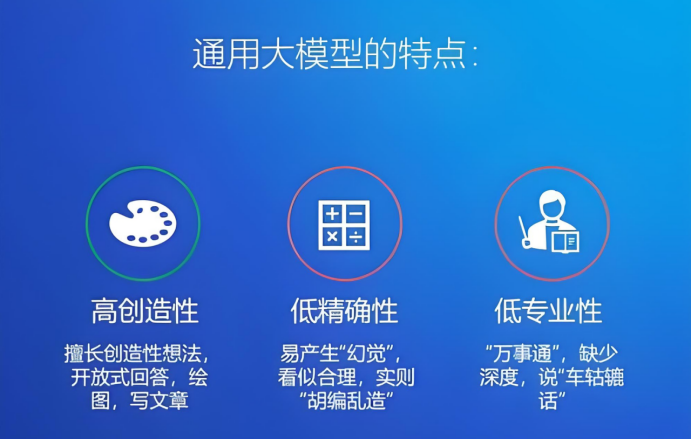
The emergence of enterprise AI agents just happens to solve this "adaptation problem."
As a key form of large model implementation in enterprises, it can understand organizational structures, grasp business processes, actively work, and collaborate across systems, truly integrating AI capabilities into daily operations, fundamentally helping enterprises improve efficiency and optimize processes.
Many authoritative research institutions have pointed out that the research and application of enterprise AI agents have just begun, yet they have already shown great potential to disrupt the professional services and enterprise service markets. Their capabilities of "understanding business, executing autonomously, and collaborating" are redefining the way AI integrates with enterprise operations.
They are not as vague as general large models, nor are they simply basic chatbots; they are more like exclusive "digital employees" that can take root in enterprises.
Currently, globally, players in the enterprise AI agent space have their own tracks:
Some focus on customer experience, creating multi-channel conversational agents;
Some delve into knowledge management, addressing the pain points of "information silos" in enterprises;
Others aim for full-link collaboration, building a foundation that adapts to complex scenarios from the ground up, supporting deep business implementation.

These explorations all illustrate one truth: the competition for enterprise AI agents is no longer a simple contest of single capabilities, but a comprehensive competition of underlying technologies, business understanding, and scenario implementation.
This track has just begun, and it will inevitably disrupt the traditional models of professional services and enterprise services.
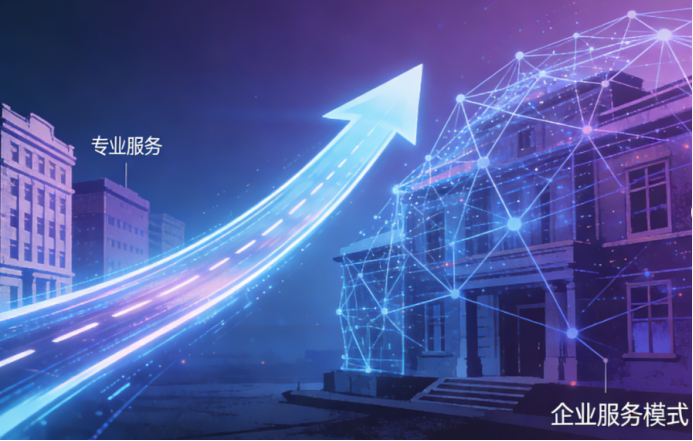
Domestic Exploration Begins to Emerge, Diverse Applications Are Still in Their Infancy
Compared to the global market, domestic enterprise AI agents are still in the exploratory stage and have not formed a mature industry scale.
There are not many players who can truly build enterprise-level intelligent agents from the ground up; more enterprises are still doing some simple, easily implementable AI applications around specific scenarios. (A Shui will give examples~)
Baidu Wenxin Intelligent Agent: Achieved efficient implementation of enterprise office automation and general customer service, can automatically summarize business data and generate meeting minutes. A manufacturing company improved its work efficiency by 60% after using it to build a production data analysis system!

Alibaba DingTalk AI Assistant: Deeply integrates with enterprise workflows, seamlessly embedded in IM, documents, approvals, and other office scenarios, can extract key decision points from massive information, becoming the "office co-pilot" for enterprises to optimize internal operational efficiency.

There are also open-source low-code platforms like Dify, which, due to their advantages of private deployment and low development thresholds, have become the preferred choice for lightweight consulting scenarios for startups.
Overall, it seems that domestic companies working on AI agents can cover various needs, whether for single-point scenarios, specific industries, or lightweight demands.
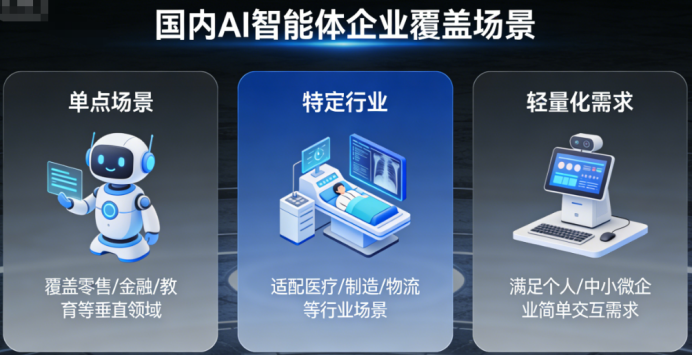
Most of these companies leverage existing general large models, making slight adjustments for different scenarios, which indeed helps enterprises solve many practical problems.
However, at the same time, the core gap in the domestic track is also very obvious: most players are only focused on a single direction, either specializing in a certain industry or only optimizing simple office processes, unable to help enterprises handle complex tasks and cross-system operations.
The enterprise-level intelligent agents that can be developed from the ground up, allowing AI to truly "understand enterprise organizations and comprehend full-link business," are the core demand in the current domestic market.
For this reason, those players who take the lead in building enterprise-level intelligent agent foundations from underlying technologies have greater exploratory value in the industry, and Tezign is a typical representative among them.

Tezign GEA Developed In-House, Creating the Core Paradigm for Domestic Enterprise AI Agents
As a representative in the domestic enterprise-level intelligent agent track, Tezign has not taken the lightweight route of "general large model shelling," but has chosen a more challenging path that better fits core enterprise needs—the in-house developed enterprise-level intelligent agent GEA 企业级智能体系统.
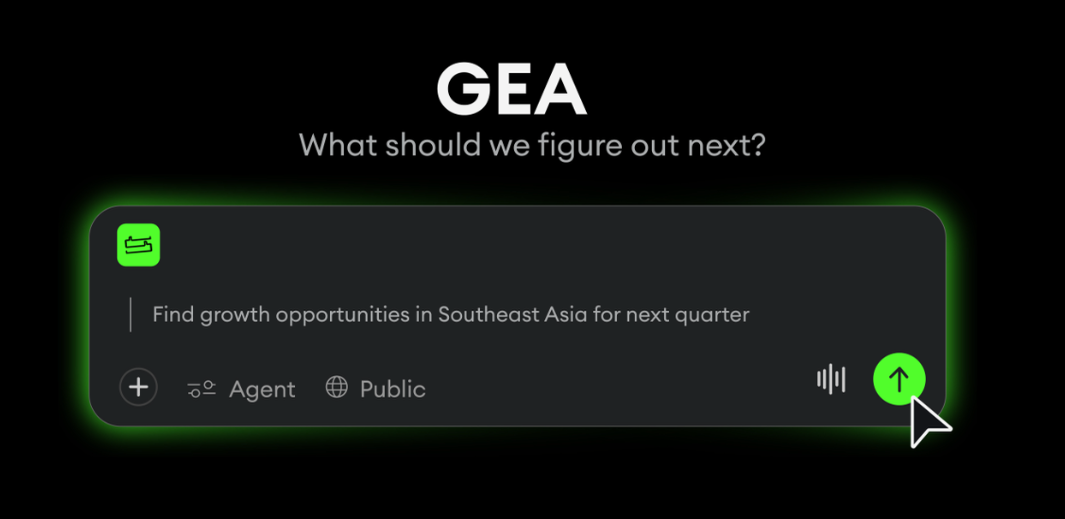
Unlike AI applications for single-point scenarios, Tezign GEA has been designed from the outset around "full-link business collaboration".
Its core capabilities and technical logic are the key to enterprise-level intelligent agents:
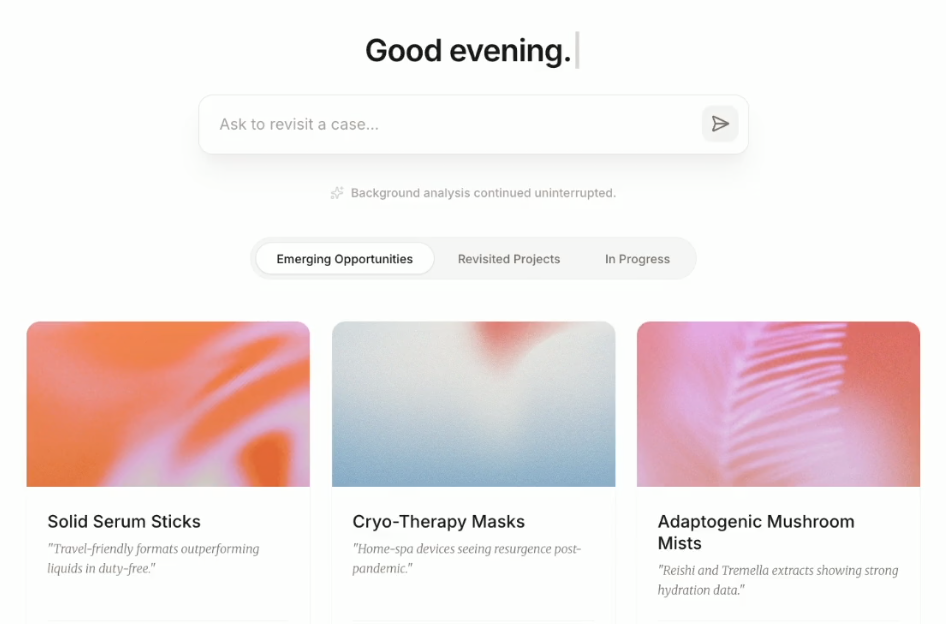
Core Positioning: GEA, from "Human Initiating Tasks" to "Agents Actively Driving Business Evolution"
Traditional enterprise intelligent agents, and most lightweight AI applications in the domestic market, have their core value resting on passive execution—humans initiate specific tasks, and AI operates according to instructions, essentially just an "efficiency tool" that can only solve single-point process optimization issues.
The core value of Tezign GEA lies in achieving a key leap from "human initiating tasks" to "agents actively driving business evolution".
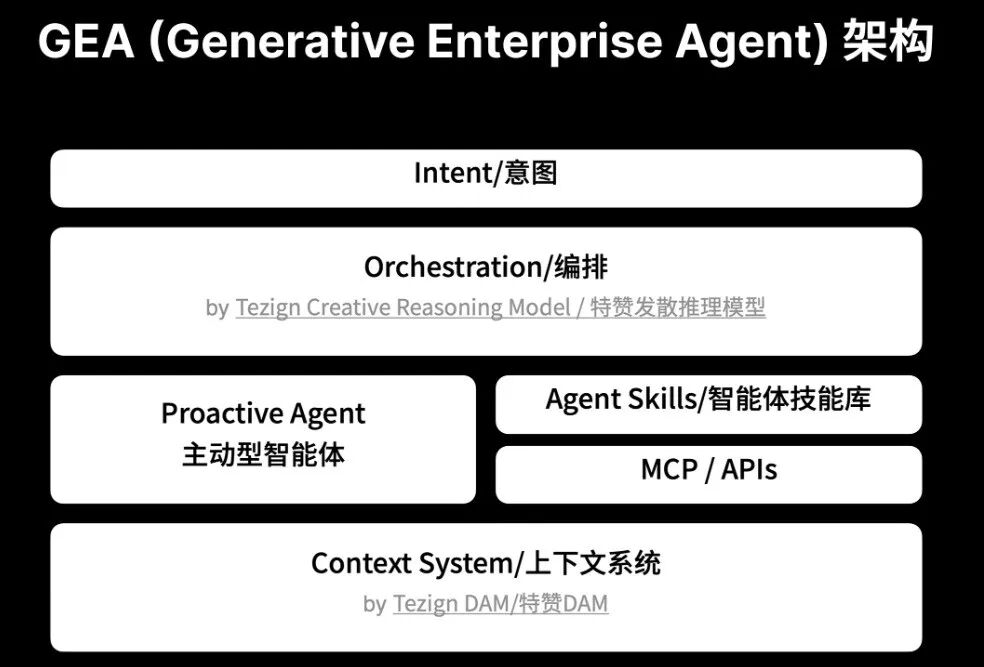
It is no longer a simple "execution tool," but a "business partner" that can deeply integrate into the enterprise business system, proactively discovering business opportunities, optimizing business decisions, and driving business innovation based on a comprehensive understanding of the enterprise's organization, processes, data, and industry trends.
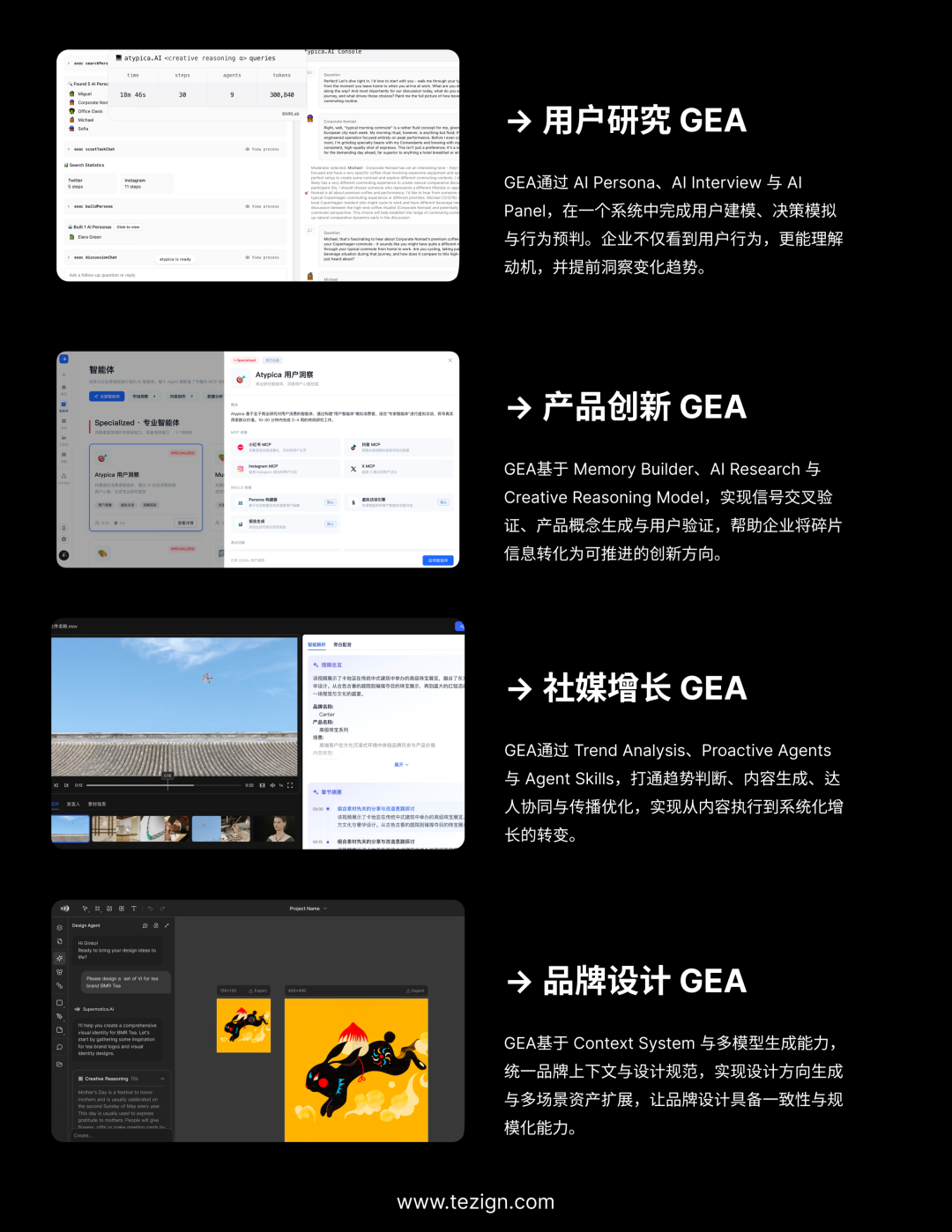
For example, in marketing scenarios, GEA can not only generate marketing copy and design promotional materials according to instructions but can also analyze market data, user preferences, and competitor dynamics to proactively propose marketing planning directions;
In product innovation scenarios, it can integrate user feedback, industry technology trends, and enterprise R&D capabilities to provide actionable innovative ideas for product iteration.
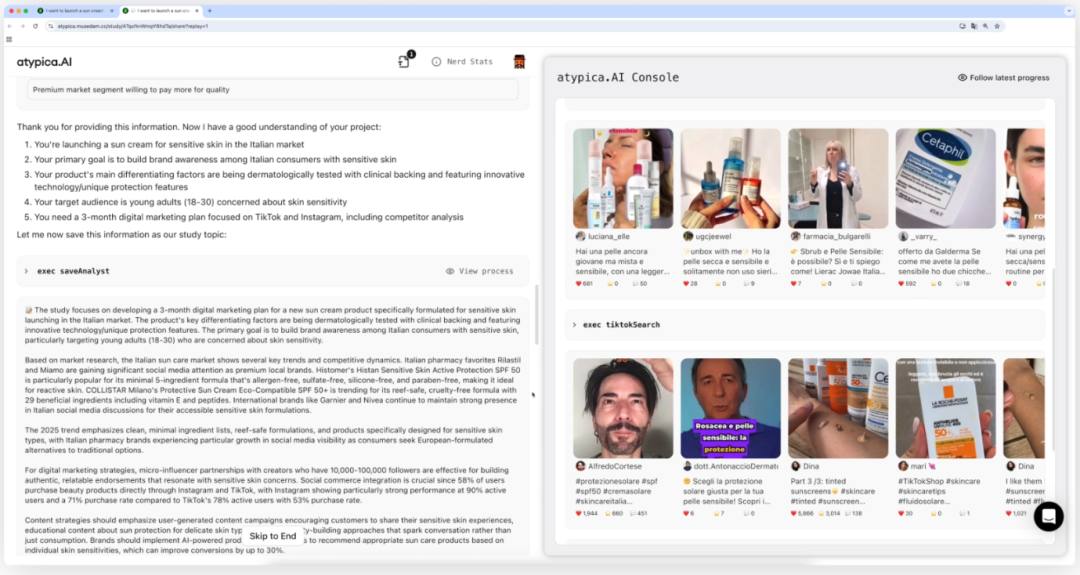
This ability to "actively drive" makes GEA a true driving force for enterprise growth, product innovation, and user experience enhancement, breaking through the capability ceiling of traditional intelligent agents.
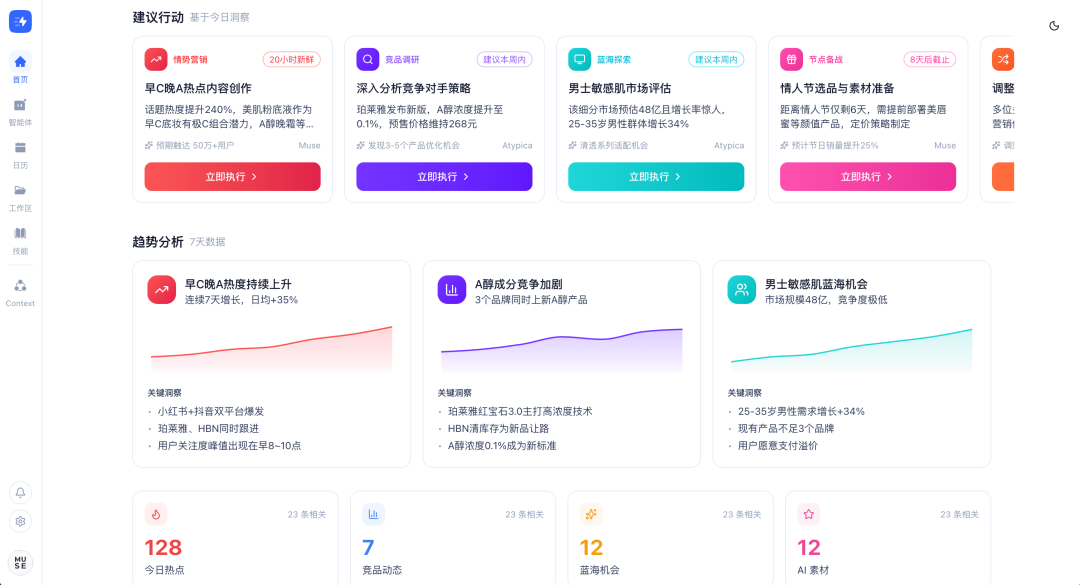
Three Core Technical Capabilities: Building a Full-Link Technical Closed Loop of "Understanding → Reasoning → Execution → Evolution"
Tezign has built three core technical capabilities for GEA: enterprise context management, divergent reasoning models, and enterprise skill libraries. These three support each other, forming a complete technical closed loop from "understanding scenarios → reasoning → executing → actively evolving", directly addressing the core pain points of enterprise AI implementation.
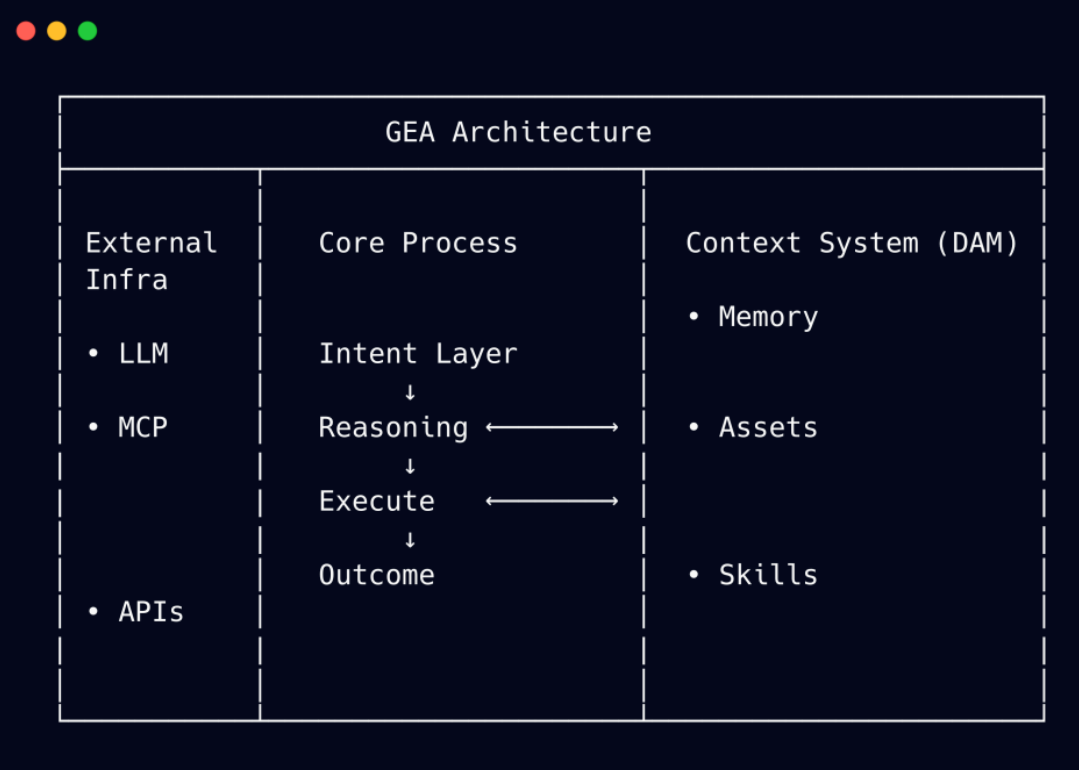
Enterprise Context Management: Making AI Truly "Understand Enterprises"
Ordinary AI context management mostly stays at the level of "remembering conversation content," while Tezign provides comprehensive, dynamic digital modeling of enterprises.

It can sort and integrate all key information such as organizational structure, job responsibilities, project processes, core knowledge, and resource reserves of the enterprise, establishing a complete enterprise knowledge graph that achieves precise matching of scenarios, information, and resources.
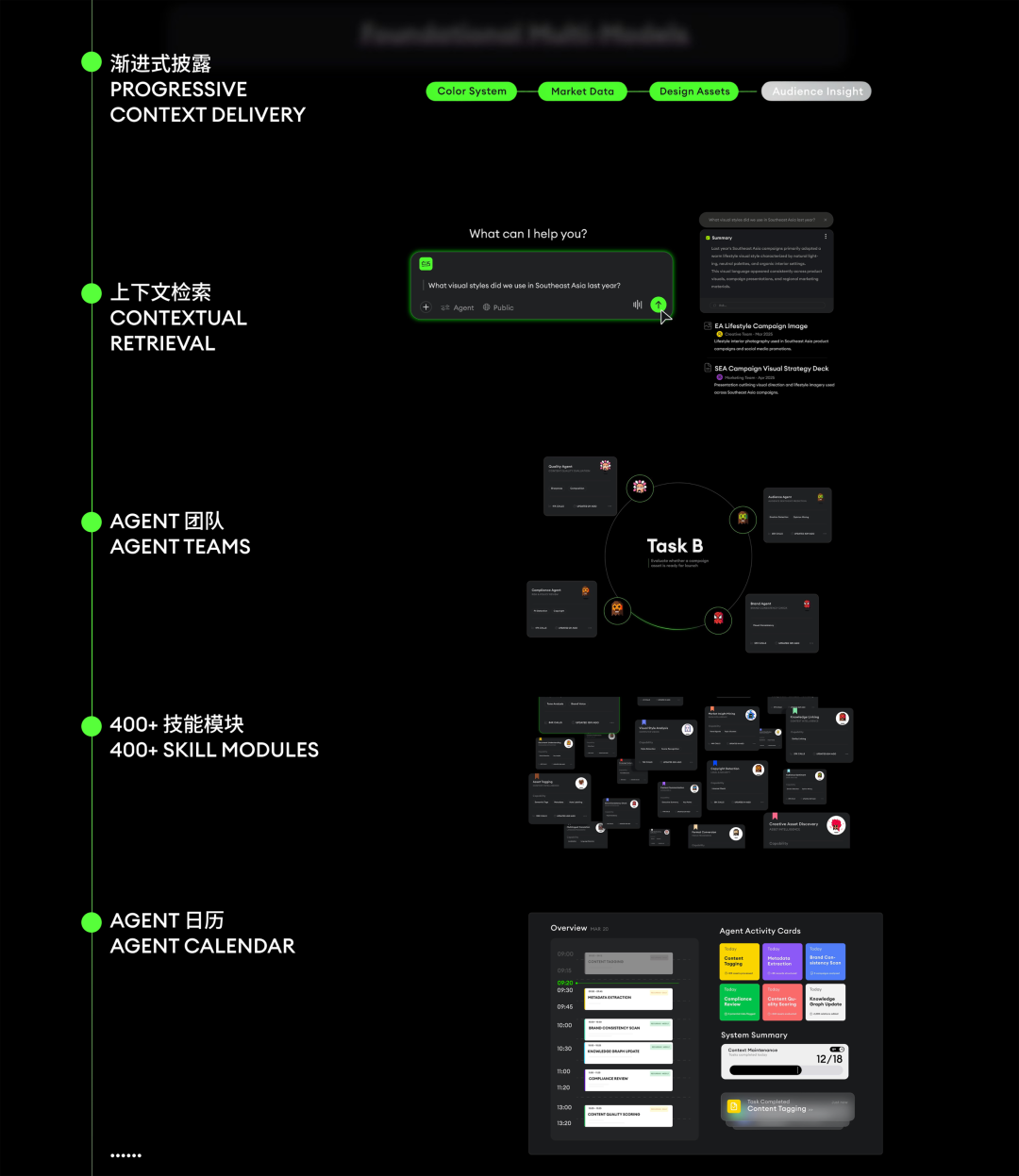
More importantly, this system can be updated in real-time, capturing dynamic changes in enterprise operations and external markets, ensuring that AI's cognition always aligns with actual enterprise needs, which is the foundation for AI to actively drive business.
Divergent Reasoning Models: Enabling AI to "Think"
Core growth tasks such as enterprise marketing planning and product innovation require creative thinking and rational decision-making.
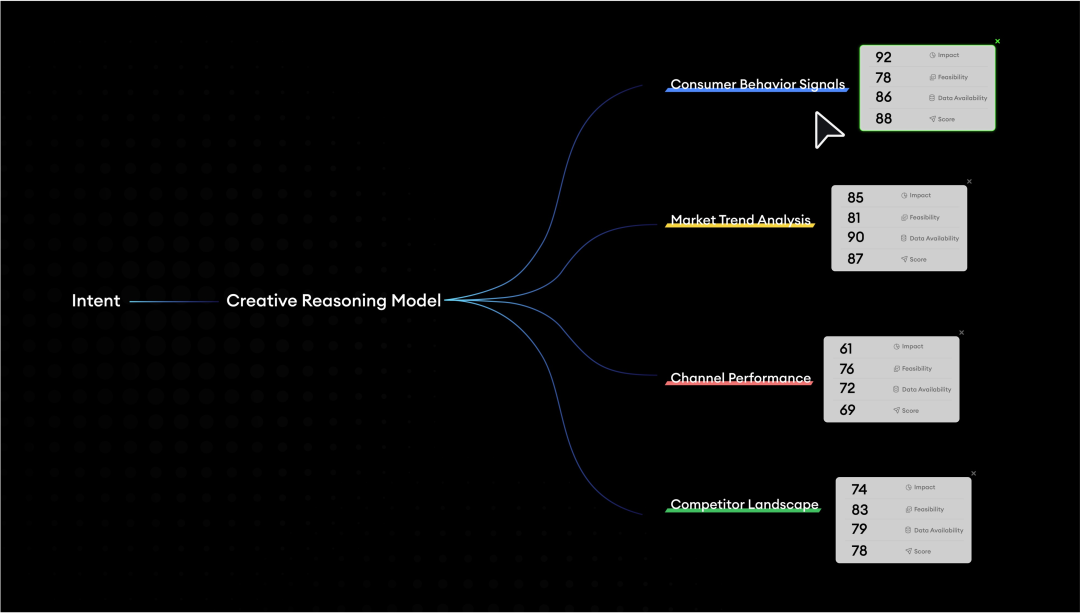
Tezign's self-developed models differ from ordinary AI's simple reasoning, deeply integrating business scenarios, industry characteristics, and market trends to provide diversified innovative solutions while supporting decision-making with data, adapting to core growth scenarios such as marketing and creativity.
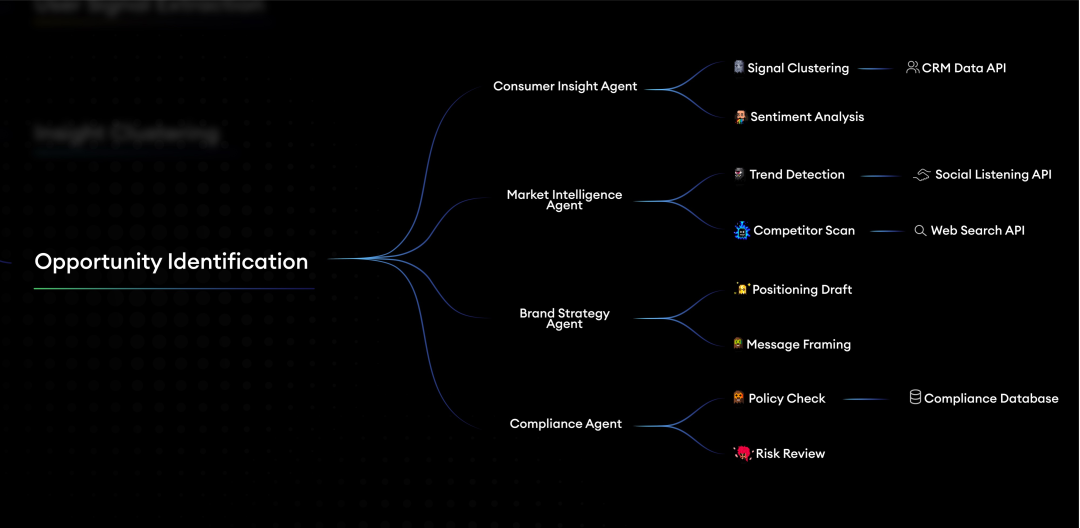
Enterprise Skill Library: Enabling AI to Efficiently "Execute"
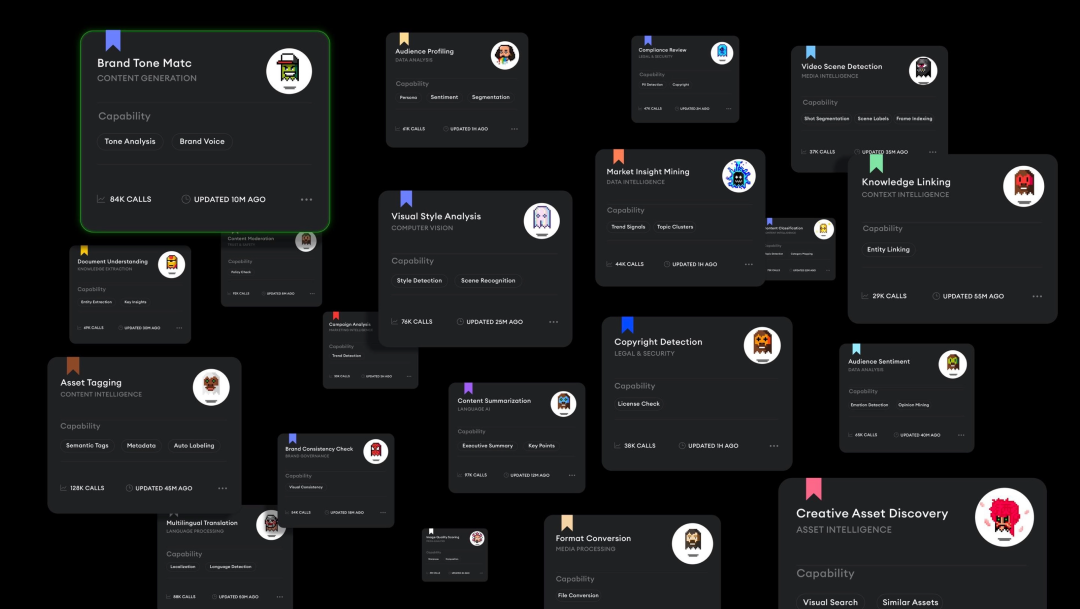
Based on a deep understanding of enterprises and professional decision-making capabilities, Tezign has transformed core capabilities such as design, copywriting, and data analysis into reusable standardized skill modules, which enterprises can combine and call as needed, assisting AI in efficiently completing the entire process from planning to execution.
The skill library continues to optimize with business development, achieving digital reuse of enterprise capabilities and efficiency improvement.
From a global perspective, enterprise AI agents are becoming the next core trend in enterprise services, and will continue to disrupt the underlying logic of professional services and enterprise services.
In the domestic market, however, most players remain at the "efficiency tool" stage, failing to break through the boundaries of "passive execution" capabilities.
A Shui: It seems that the domestic enterprise AI agent track still has a long way to go~
Tezign GEA's exploration has shown us the core development direction of domestic enterprise AI agents—it's never just about simple "function stacking," but about building an intelligent agent foundation from underlying technologies that can "understand enterprises, think, execute, and promote evolution."
Ultimately, the core value of enterprise AI agents must return to the business itself.
In future track competitions, it won't be about whose application is flashier, but about who can truly understand enterprise needs and create tangible value for long-term development.
This industry upgrade from "efficiency tools" to "growth engines" has just begun, and the path for domestic players to break through is gradually becoming clearer. (Source: WeChat Official Account "Tech A Shui")
Category
Media & Press
Date
2026-03-27
Read Time
8 min read
Related Recommendations

Improve the Compliance System for Multimodal Generative AI, with a Total of 7 Deep Synthesis Algorithm Filings

Self-developed Creative Reasoning Model awarded in Xuhui District, Shanghai, selected for the "Mosu Shencheng" model service provider whitelist