Media & Press
How Tezign Structures Enterprise-Level Agentic AI When Models Become Public Infrastructure?
After models become public infrastructure, Tezign's GEA architecture centers on the enterprise context, reconstructing the competitive logic of Agentic AI, allowing agents to participate in ongoing decision-making and business value creation.
Category
Media & Press
Date
2026-03-27
Read Time
11 min read
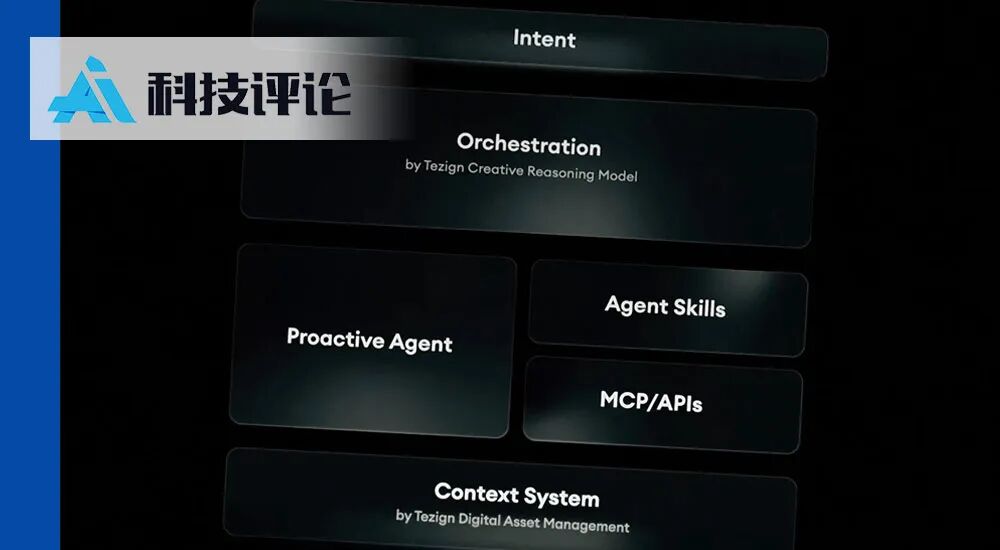
In the past two years, the leap in large model capabilities has far outpaced changes in enterprise organizational structures. Capabilities like text generation, image generation, data analysis, and code writing have quickly become resources that can be called upon, yet the actual working methods of enterprises have not undergone corresponding changes. The reason is not complex: the core activities of enterprises have never been about completing single tasks, but rather about continuously making judgments in a constantly changing environment. Understanding the market, identifying opportunities, defining products, building brands, and driving growth—these activities constitute a continuous decision-making chain, rather than a one-time reasoning process.
This is precisely why large models have not directly changed enterprises.
From a longer historical perspective on technology, enterprise software has roughly undergone three structural migrations in the past twenty years.
The earliest enterprise systems, such as ERP and CRM, were essentially process systems that reorganized enterprise resources through standardized processes, enabling enterprises to operate at scale. Subsequently, data systems such as recommendation systems and business analytics systems began to introduce algorithms into the enterprise decision-making process, making data a new factor of production. However, even so, algorithms remained merely as decision-support tools, rather than participating in the decision-making structure itself.
The emergence of large models changed this for the first time. But the truly important change is not the enhancement of generative capabilities, but rather that models began to become a form of public infrastructure. What enterprises truly need to build is no longer a single model application, but a system architecture that organizes intelligent capabilities around their own business structure.
This means that the competition of Agentic AI is shifting from competition in model capabilities to competition in contextual structures.
This change is also altering the way enterprise software is delivered. Sequoia partner Julien Bek proposed in his article “Service is the new software” that the next trillion-dollar company will be “software companies disguised as service providers,” because they no longer just provide tools but directly participate in the generation of enterprise outcomes. The value of software is no longer reflected in the list of functions but in whether it can continuously influence business outcomes.
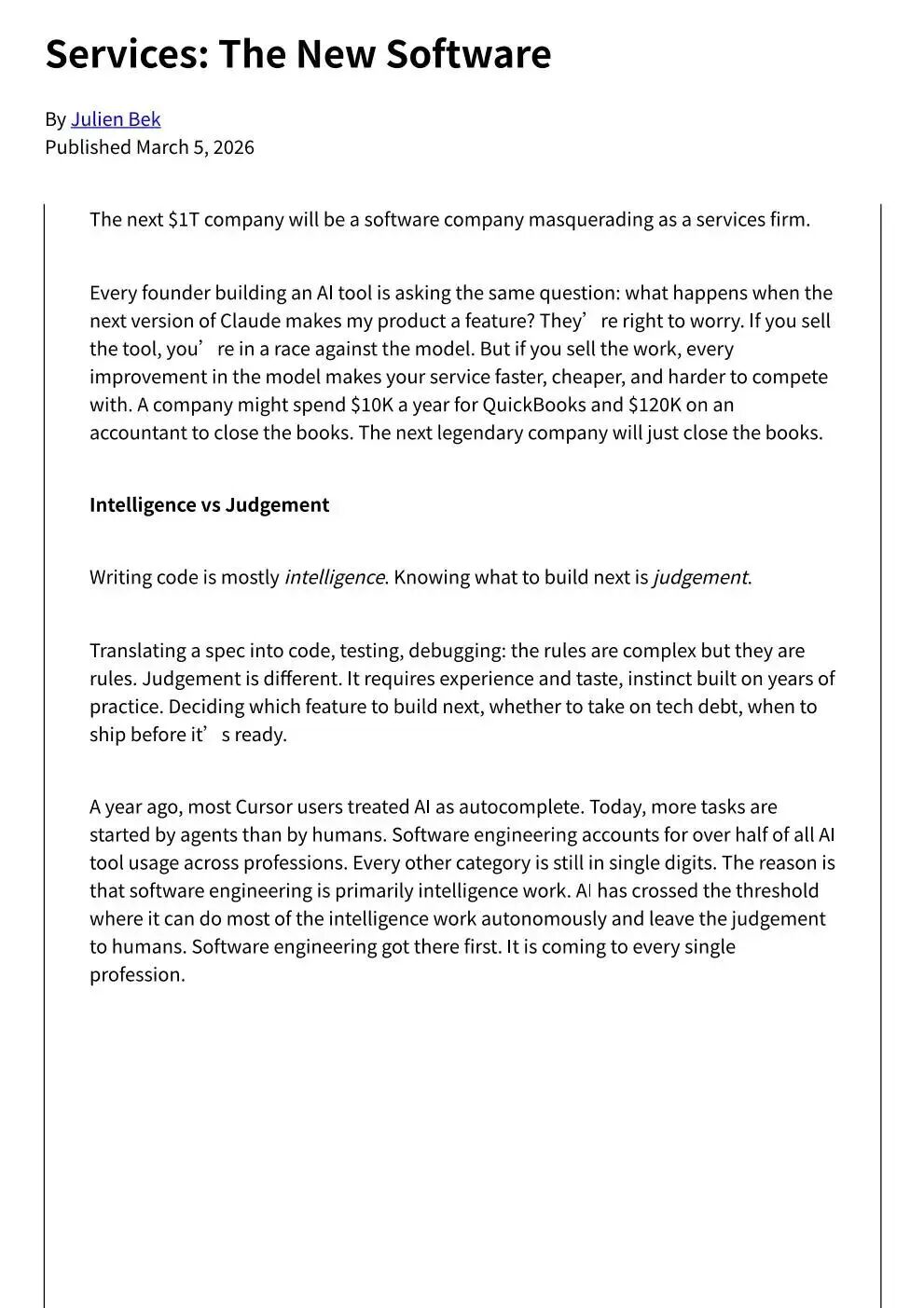
This judgment is becoming a reality within the Agentic AI system. When agents begin to operate continuously around business objectives, what enterprises deploy is no longer just a system, but a capability structure that can participate in the operational process.
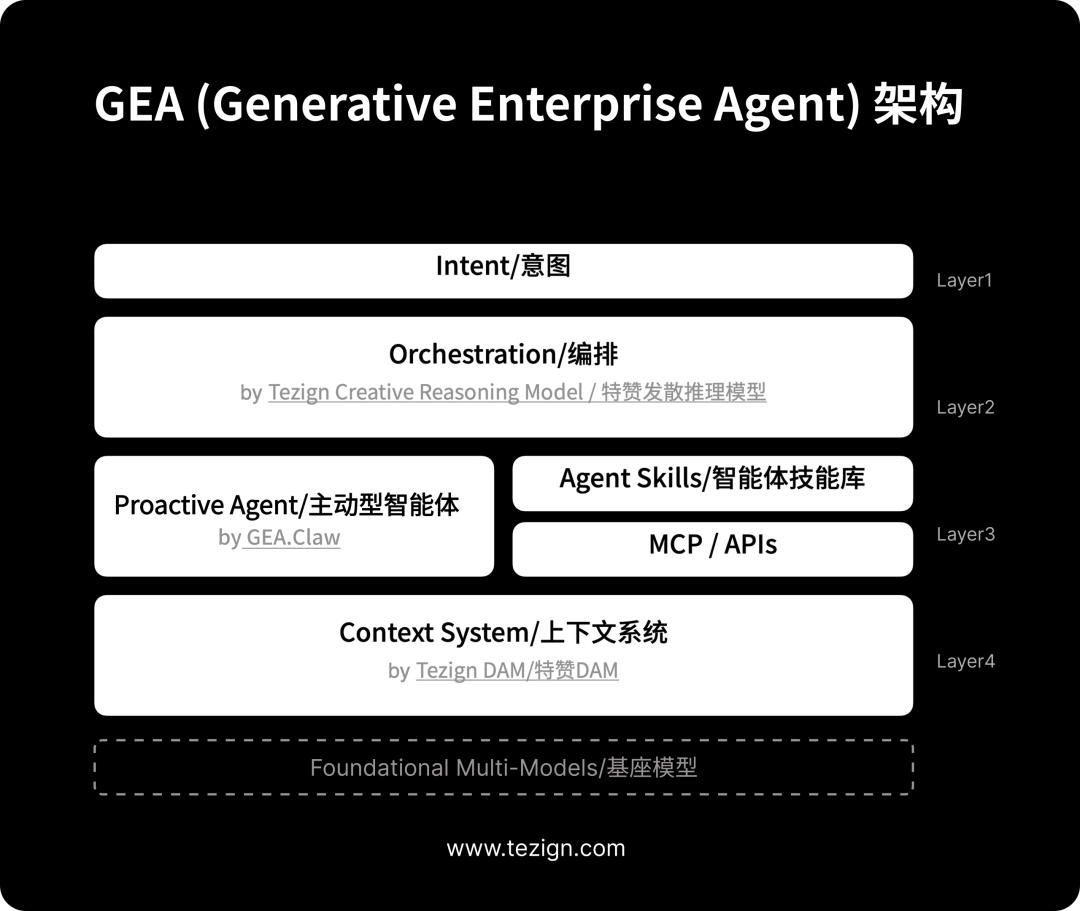
It is in this context that Tezign proposed the Tezign GEA, the Enterprise Agentic AI System architecture system for enterprise-level agents.
GEA is not built around a single model capability, but rather is a systematic paradigm designed around the actual operational structure of enterprises. It seeks to answer not “what can models do,” but “how do models enter enterprise processes.” This question may seem technical, but it is essentially an organizational issue.
1. From DAM to Context System: Tezign's Historical Path into Agentic AI
To understand why GEA was proposed by Tezign, we need to go back to Tezign's technological path over the past decade.
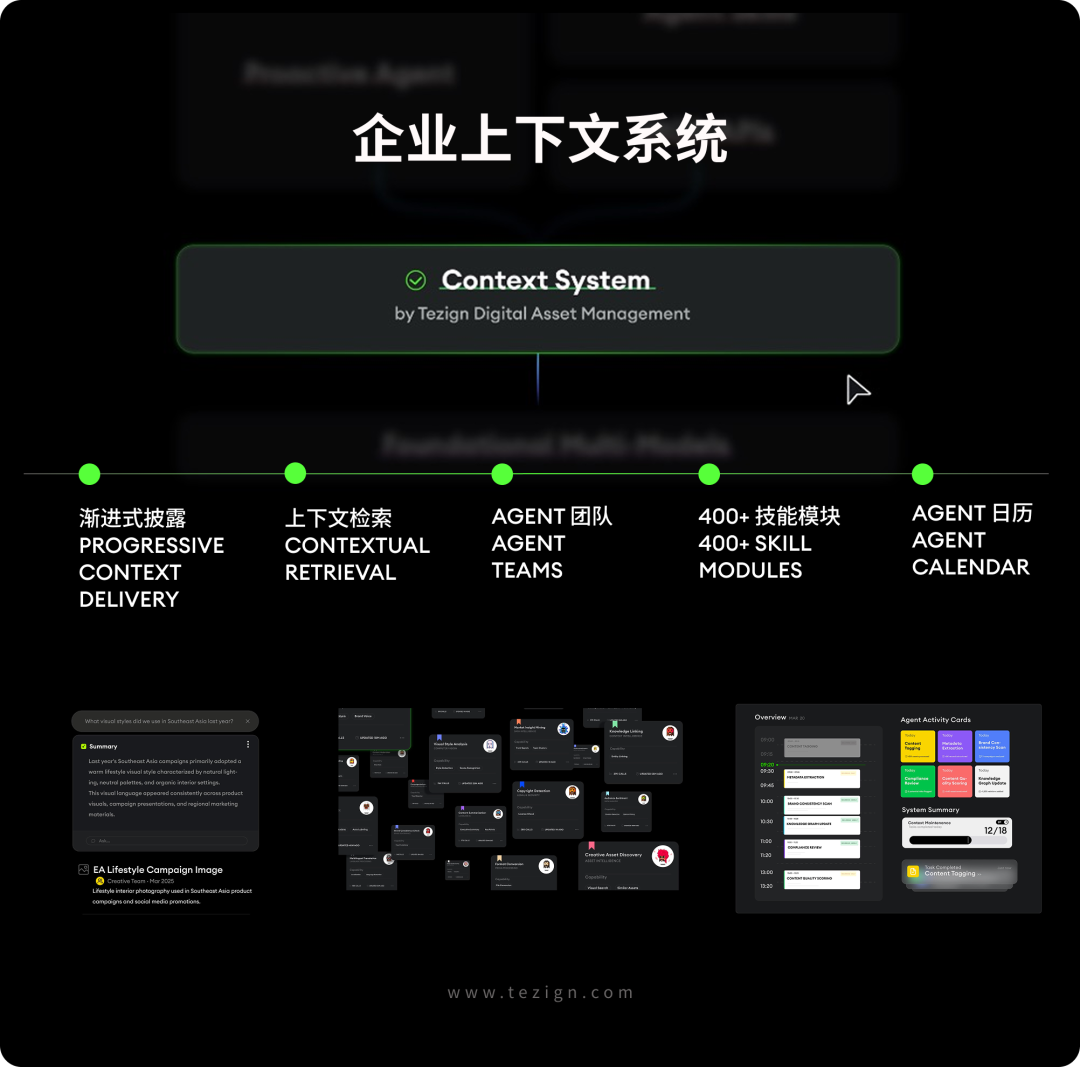
Unlike most companies that enter the enterprise agent field from the perspective of model capabilities, Tezign initially built an enterprise Digital Asset Management (DAM) system. This system originally addressed the unified management of brand assets, design assets, and marketing assets, but over the long-term practice, the team gradually discovered that what enterprises truly lacked was not document management capabilities, but contextual structural capabilities.
A large number of enterprise decisions are based not on structured databases but are embedded in design drafts, communication materials, user research reports, brand guidelines, event review records, and project processes. This information constitutes the real basis for enterprise judgments but has long been unable to be called upon by systems. Therefore, the evolution direction of DAM within the Tezign system is not a traditional content management platform, but gradually developed into an enterprise Context System.
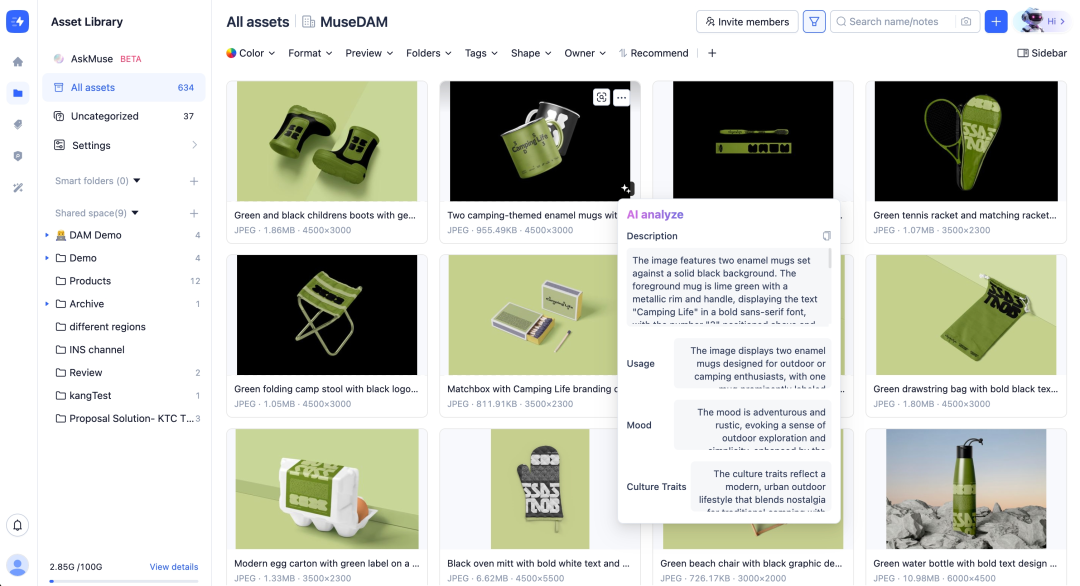
The core capability of this system is not to store files but to continuously build an enterprise context graph, making brand assets, project experiences, user perceptions, and strategic paths into a structured knowledge network that machines can understand and call upon. This change provides a key premise for enterprise-level agent systems: for the first time, models can operate based on the enterprise's own knowledge rather than just on internet knowledge.
GEA is proposed on this infrastructure.
2. When Models Converge, Context Becomes the New Power Structure of Enterprises
As model capabilities rapidly converge, a new question begins to emerge: how can enterprises establish their own machine decision-making capabilities.
If models become public resources, then the real differences between enterprises can only come from two aspects: context density and contextual structural methods.
The significance of Tezign's Context System lies in transforming the implicit knowledge originally scattered within the organization into a unified source of context, allowing agent systems to operate based on the enterprise's historical decision logic rather than on general knowledge. In this system, context includes not only brand guidelines and material assets but also project trajectories, user profiles, product structures, and strategic experiences, which together constitute a cognitive infrastructure that enterprises can continuously accumulate.
This means that enterprise-level agent systems for the first time have the ability to inherit organizational experiences. The architecture of GEA is essentially centered around this capability.
Similar structural changes have already occurred in another type of enterprise software system. For example, the data operating system built by Palantir is not a traditional analytical tool but a data infrastructure that can participate in decision-making processes. It organizes internal data relationships within enterprises, allowing algorithms to continuously work around real business objectives rather than around single query response inputs.
Agentic AI is further expanding this capability. It extends from data context to business context, from analytical structures to execution structures, enabling agents to participate in the continuous judgment processes of enterprises for the first time.
GEA is a further evolution along this technological path, advancing contextual capabilities from the data layer into brand, product, and growth structures, allowing agent systems to enter the most complex business decision-making processes of enterprises.
3. From Prompt to Intent: The True Entry Point of Enterprise Agent Systems Changes
Traditional generative AI systems operate based on prompts, while enterprise work operates based on goals. The difference between these two determines why the Copilot system struggles to directly enter complex business processes.
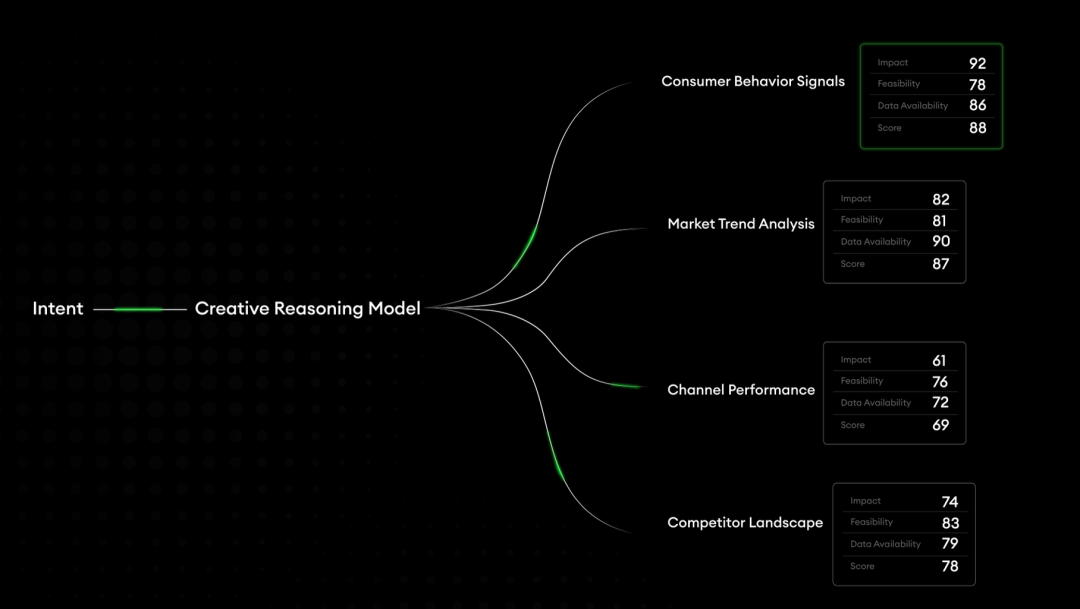
The GEA architecture takes business intent as the starting point for system operation, converting high-level goals such as growth judgments, product exploration, or communication strategies into executable paths through the Intent Layer, enabling agent systems to reason around real business structures rather than generating around language inputs.
This change may seem subtle, but it means that enterprise-level agent systems can understand organizational language for the first time, rather than just understanding user language.
It is also on this layer that Tezign further proposed the Creative Reasoning Model, allowing the system to explore possible path spaces before converging, thus participating in innovation judgments and strategy formulation processes, rather than merely providing answer generation capabilities.
4. Multi-Model Orchestration Capability is Becoming the Core Structural Capability of Enterprise Agent Systems
As the number of foundational models continues to increase, different models are beginning to form clear divisions of labor in visual understanding, reasoning capabilities, and data processing. Single model systems are increasingly unable to cover the entire business chain, and multi-model collaboration has become a new system capability requirement.
The Orchestration Layer of GEA is proposed in this context, orchestrating different model capabilities so that enterprise users can obtain stable output structures without needing to understand model differences. The significance of this capability lies not only in improving efficiency but also in allowing model capabilities to enter enterprise processes in a systematic form for the first time.
Models are no longer called upon as tools but are scheduled as resources.
This is one of the most important distinctions between enterprise-level agent systems and traditional generative AI systems.
5. Proactive Agent: Enterprises Have Their First Continuously Operating Intelligent Execution Structure
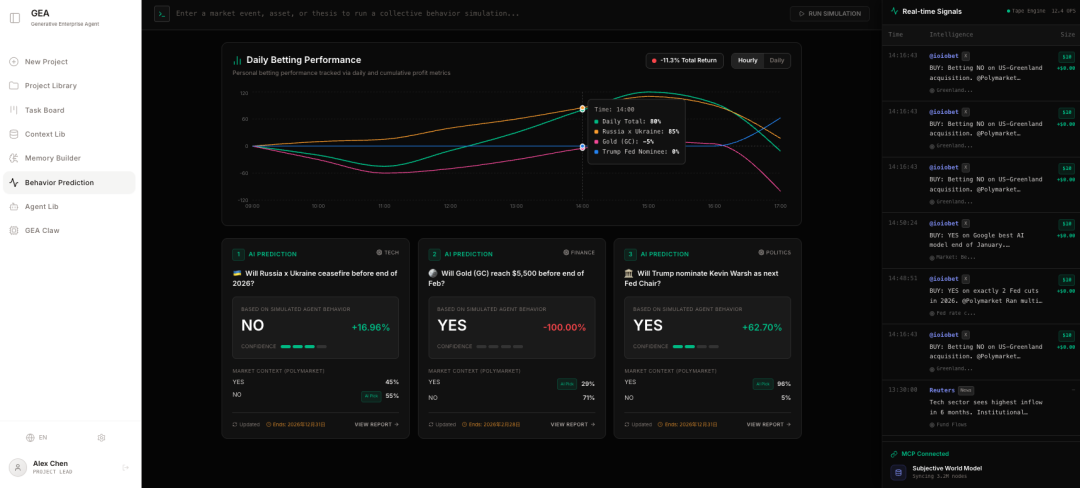
The GEA architecture further introduces proactive agents, enabling the system to continuously monitor environmental changes and automatically advance business processes. For example, during the preparation phase for a new product launch, the system can complete material consistency checks in advance; during the communication phase, it can continuously track competitor actions; and during the review phase, it can automatically generate strategy summary reports, all without relying on manual triggers but running continuously under established goal structures.
This means that enterprises have for the first time a continuously operating intelligent execution structure, rather than a generative tool that is called upon repeatedly.
6. For Brand and Product-Oriented Enterprises, GEA Changes Not Efficiency, but Judgment Structure
If the emergence of Agentic AI marks a new architectural phase for enterprise software, then what it first changes is not all industries, but those types of organizations that have long relied on complex judgment chains to operate.
The enterprises served by Tezign mostly belong to this category: brand-driven enterprises, product innovation enterprises, and growth-oriented organizations that highly rely on market response speed. The core competitiveness of these enterprises comes not from process standardization but from continuous judgment capabilities.
Traditional enterprise software excels at solving process issues, such as inventory management, customer records, or financial accounting, but brand expression, product direction, and growth strategies have long relied on team experience to operate. Enterprises do not lack data; they lack cognitive structures that can organize this data. User comments, competitor actions, communication feedback, historical project experiences, brand asset standards—this information often exists simultaneously but rarely enters the same decision-making system. Therefore, many key business judgments remain in a state of “fragmented information + experiential intuition.”
What the GEA architecture seeks to change is precisely this.
Through the Context System, brand assets, user understanding structures, project trajectories, and strategic paths are organized into a unified source of context, allowing this information, originally scattered in different corners of the organization, to become a continuous knowledge structure that can be called upon by agents for the first time. The materials entering the system are no longer just files but become nodes in the enterprise cognitive network, continuously updating their semantic relationships throughout the usage process, indicating that the enterprise's judgment capabilities begin to possess accumulability.
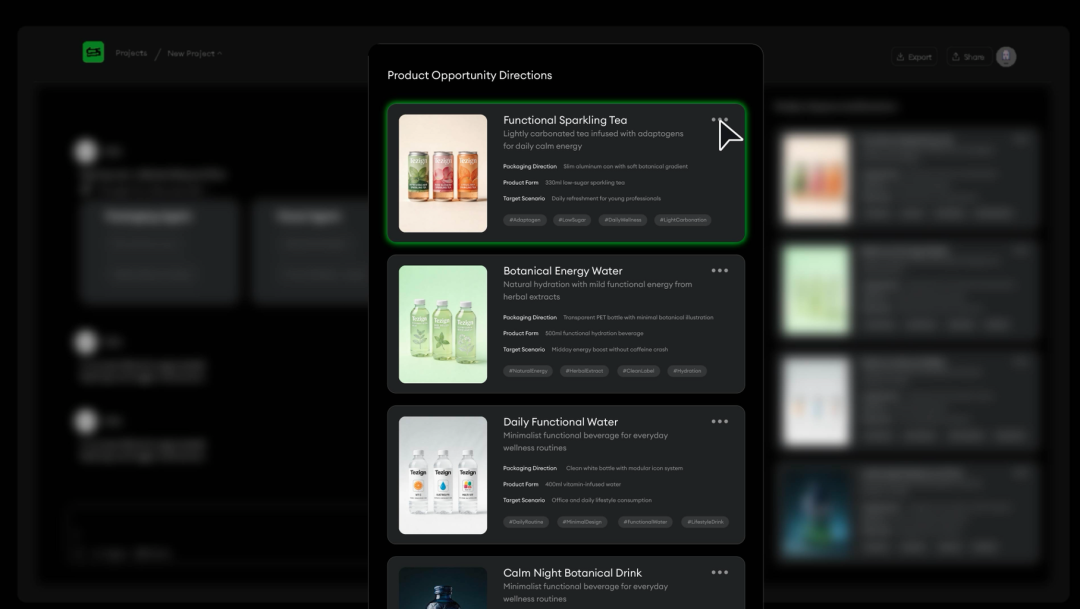
The most direct change this capability brings is in the way products are innovated. In traditional processes, innovation typically relies on single surveys or phase analyses, but after the participation of agent systems, industry change signals, user feedback structures, and competitor strategy paths can continuously cross-validate, making product direction no longer dependent on phase judgments but becoming a continuous exploratory process. For the first time, enterprises can validate paths before forming directions rather than correcting mistakes after investing resources.
Similar changes are also appearing in brand expression systems. In the past, brand guidelines typically existed in document form, which could constrain design outcomes but could not participate in the design process. However, when brand genes are structured into the context system, the brand is no longer just a style guide but becomes a cognitive structure that can be called upon, allowing different teams to maintain consistency in expression across different scenarios while also evolving continuously.
In the field of growth operations, this change is reflected in the alteration of strategy generation methods. Communication paths no longer rely on repeated campaign designs but can continuously adjust execution structures based on historical communication effects, user response patterns, and platform change signals, transforming growth from project-based advancement to systematic operation.
These changes collectively point to a deeper issue: what enterprises have long lacked is not data but the structure to organize data; what they lack is not model capabilities but the paths to invoke model capabilities.
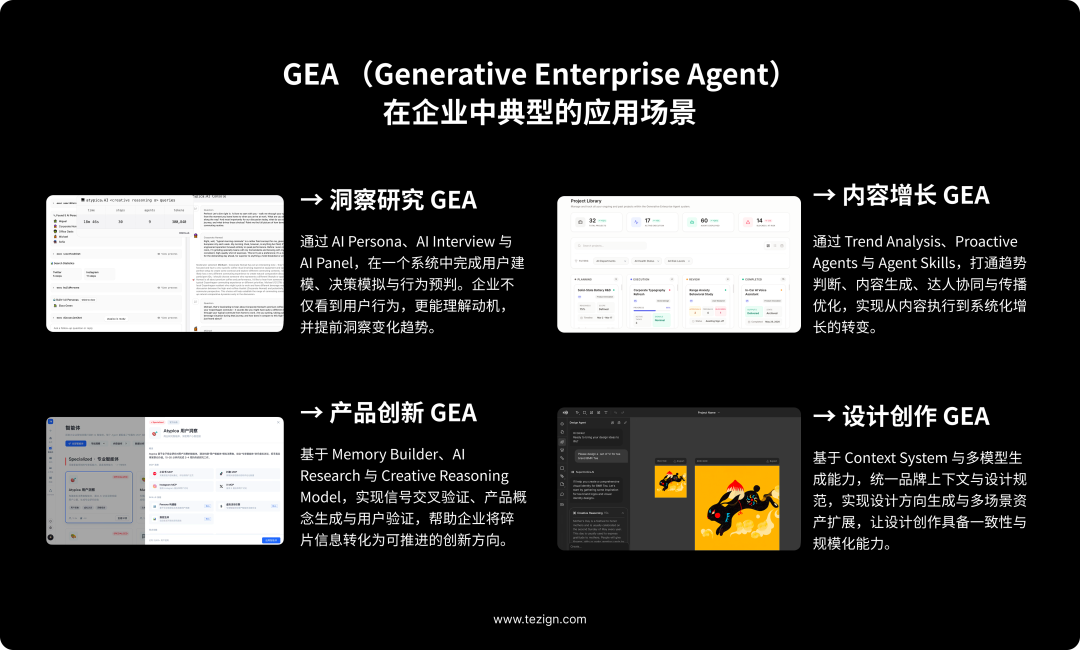
The value of GEA lies in providing such a path, allowing agents to operate continuously around real business objectives for the first time, rather than responding to single task inputs.
7. Enterprise Agentic AI System Marks the Entry of Enterprise Software into the Stage of Architectural Competition
From a broader historical perspective on technology, ERP addresses how resources are organized, CRM addresses how customers are understood, BI addresses how data is interpreted, and Agentic AI is beginning to address a deeper issue—how enterprises form judgments.
This is also why the significance of deploying agent systems today for enterprises lies not in how many positions are replaced or how many processes are automated, but in whether they can establish their own machine decision-making capabilities. When models become public infrastructure, what truly determines enterprise differences is no longer model scale but contextual structure; no longer generation speed but judgment quality; no longer single-point capabilities but how systems continuously operate.
From this perspective, the proposal of the Enterprise Agentic AI System is not just a product upgrade but a shift in the paradigm of enterprise software. It means that for the first time, enterprises can organize intelligent capabilities around business intent, sediment cognitive structures around context, and drive real business outcomes through continuously operating agent systems.
In the past decade, enterprises purchased software systems; in the past three years, enterprises experimented with model capabilities; and in the coming decade, what enterprises will truly deploy is a set of intelligent systems that can participate in operational judgments.
When intelligence begins to enter the decision-making structure of enterprises themselves, AI is no longer just a tool but becomes a new cognitive infrastructure for enterprises.
This is the historical position of the emergence of the Enterprise Agentic AI System.
Visit the official website to book a free experience of GEA and conduct a system diagnosis for your enterprise.
(Source: WeChat public account "AI Technology Review")
Category
Media & Press
Date
2026-03-27
Read Time
11 min read
Related Recommendations

Improve the Compliance System for Multimodal Generative AI, with a Total of 7 Deep Synthesis Algorithm Filings

Self-developed Creative Reasoning Model awarded in Xuhui District, Shanghai, selected for the "Mosu Shencheng" model service provider whitelist