Media & Press
Mosu Space Member Releases Enterprise-Level Intelligent Agent GEA, Serving Over 180 Global Enterprises
In the AI era, the core of corporate competition shifts to contextual density. The enterprise-level intelligent agent, with a four-layer architecture, helps organizations achieve AI-native transformation, driving business growth and efficient innovation while seizing future development opportunities.
Category
Media & Press
Date
2026-03-27
Read Time
3 min read
Is AI Transitioning from Assistant to Executor?
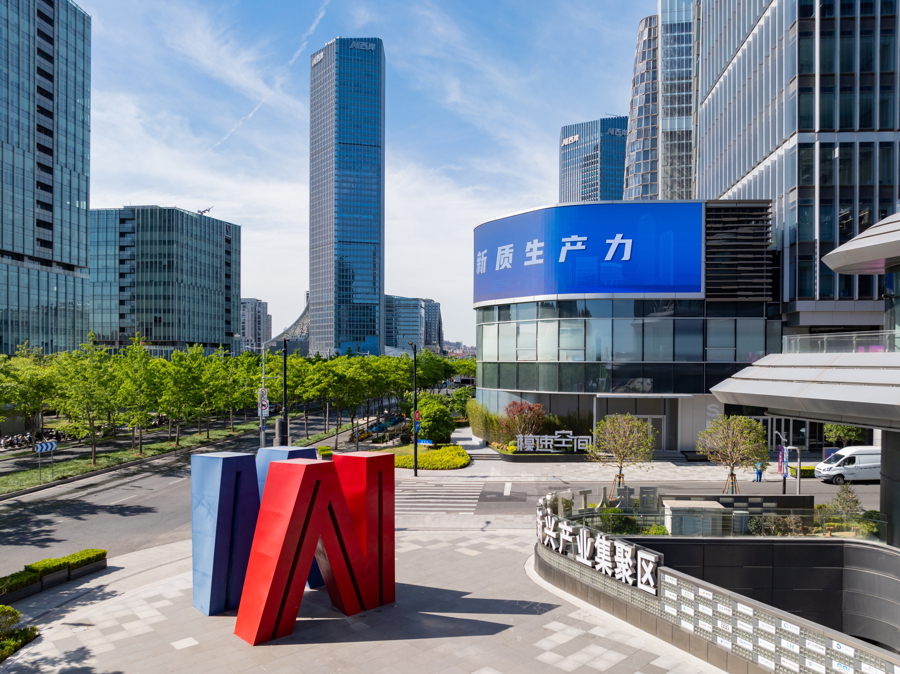
On March 27, Mosu Space's ecological enterprise, Tezan Technology, officially launched the enterprise-level intelligent agent system GEA 企业级智能体系统, which has now been deployed in over 180 enterprises globally, including more than 60 Fortune 500 companies. At the launch event, the industry focused on the technological iteration between the "enterprise-level intelligent agent system" and existing AI agents. Tezan stated that the enterprise-level intelligent agent system will upgrade AI from a "single-response generation capability" to a "proactive enterprise execution system" aimed at real business processes.
As one of the first enterprises to settle in Mosu Space, Tezan Technology, founded in 2015, is an "AI + content" unicorn that brings systematic upgrades to enterprise content digital infrastructure across industries such as pharmaceuticals, industrial manufacturing, automotive, and finance through generative artificial intelligence technology, helping enterprises achieve more efficient, high-quality content management, accumulation, production, and analysis links.
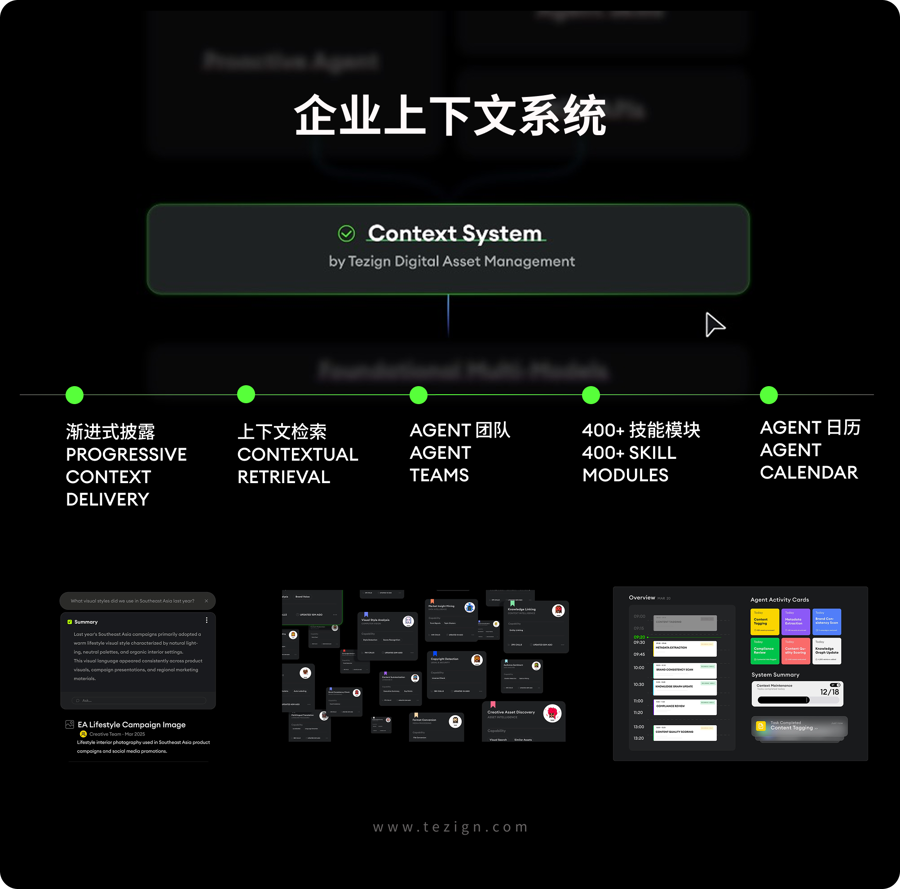
The newly released enterprise-level intelligent agent system GEA differs from traditional generative AI that relies on model prompts to drive task execution. Instead, it uses the "context" generated during enterprise operations as the basis for reasoning, allowing AI to understand brand standards, historical decision logic, user data, and business processes, thereby participating in the cross-departmental and cross-scenario operational processes of the enterprise.
Tezan's founder and CEO Fan Ling stated that currently, discussions in the industry regarding enterprise-level AI mostly focus on model parameters, generation capabilities, or whether "AI agents will replace certain jobs." Through collaboration with over 200 global brands, Tezan has discovered that the focus of enterprise-level AI development is not on what to generate or what to answer, but on whether it can truly understand the unique business context of the enterprise, enter complex operational processes, and make judgments under constrained conditions, ultimately being accountable for its own decisions.
“As enterprise software transitions from workflow systems to reasoning systems, the competitive focus of AI is shifting from the ability to build models to the ability to understand context,” Fan Ling said.
How can AI participate in enterprise operations and even decision-making? The reporter learned that on a technical level, GEA's technical foundation comes from Tezan's self-developed four-layer enterprise-level intelligent agent architecture, which includes the "Intent Layer," "Orchestration Layer," "Agent Skills Layer," and "Context Layer."
Among them, the "Intent Layer" is responsible for converting the enterprise's operational goals into structured task paths, allowing the AI intelligent agent system to directly use the enterprise's real operational goals rather than manually converted prompts as the entry point for work. The "Orchestration Layer" is driven by Tezan's self-developed divergent reasoning model, which undertakes task decomposition, multi-path reasoning, and model scheduling functions, dynamically selecting the optimal execution path among over 30 basic models. The "Agent Skills Layer" provides over 400 callable skill modules, capable of crystallizing real enterprise workflows into reusable execution capabilities.
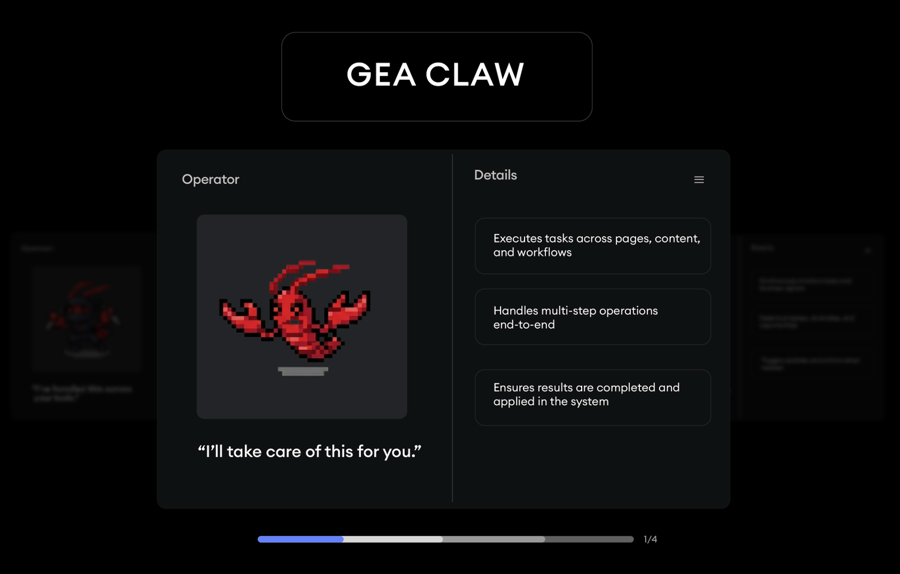
With enterprise-level adaptability, how does the agent provide "enterprise-level feedback"? Tezan's personalized intelligent agent "GEA Claw" plays a role here, serving as the execution engine that enables the agent to continuously monitor internal and external signal changes within established business boundaries and automatically trigger the next execution path. In practice, GEA Claw can call upon the enterprise's context system, user research assets, and skill modules to continuously advance strategy generation, content production, and decision optimization within the enterprise's real business processes, allowing the enterprise to have an intelligent agent execution network that can operate 24/7 for the first time.
Based on the GEA architecture, Tezan has also formed a four-category enterprise-level intelligent agent product system, covering key operational processes of enterprises, including insight research agents, content growth agents, design creation agents, and product innovation agents, which support core business scenarios such as consumer insights, content production and distribution, brand design system construction, and product innovation decision-making, upgrading the agent from a single tool to a cross-departmental collaborative system, ultimately moving towards the development vision of enterprise-level intelligent agents—becoming a new generation of AI infrastructure that connects organizational knowledge, business processes, and execution capabilities.
Category
Media & Press
Date
2026-03-27
Read Time
3 min read
Related Recommendations

Improve the Compliance System for Multimodal Generative AI, with a Total of 7 Deep Synthesis Algorithm Filings

Self-developed Creative Reasoning Model awarded in Xuhui District, Shanghai, selected for the "Mosu Shencheng" model service provider whitelist