Automotive
What to Replace the Next Car With? GEA Connects Automakers and Car Owners' Two Decision Logics
Tezign GEA relies on the Subjective World Model and other tools to produce differentiated automotive marketing content based on the decision paths of car owners, continuously iterating and solidifying brand intelligence through a data loop to enhance conversion.
Category
Automotive
Date
2026-10-29
Read Time
5 min read
The sales logic for automobiles is different from that for fast-moving consumer goods.
On average, a car shopper will view 8 to 10 pieces of content across 2 to 3 channels, with a decision cycle measured in months. Distinct groups of prospective car buyers — young tech enthusiasts, families upgrading their vehicles, and devotees of traditional luxury brands — have entirely different focus points, emotional triggers and trust anchors for the same vehicle.
The conventional approach involves conducting several rounds of consumer research, producing user insight reports, and then having creative teams develop different scripts based on these reports. However, research cycles take quarters to complete, and the user personas in the reports lack fine granularity. Even with the reports, creative teams still need to rely on experience to fill in missing details. This method was barely viable in an era with fewer car models and less segmented buyer groups. Yet as vehicle iteration accelerates and buyer segmentation intensifies, the traditional “research – insight – creative” pipeline can no longer keep up.
The brand decided to rerun this entire process with Tezign GEA.
Shift the subject of content production from “vehicle models” to “car buyers”.
The system is built around Tezign’s Subjective World Model (SWM). It is not a simple “user persona tag library”, but a structured model of end consumers’ cognitive preferences, decision journeys and trust anchors.
Step 1: Instead of creating content around vehicle models, generate decision journeys for different car buyers.
Within the project, the Subjective World Model (SWM) divides the brand’s prospective car buyers into 5 to 7 clearly identifiable groups. These segments are defined not merely by demographic traits, but by structured decision-oriented descriptions: their motivations for buying, core priorities, persuasive triggers, and concerns. These groups are not arbitrarily conceived by the marketing team; they are built jointly on the brand’s actual lead data, past research materials, and frontline feedback from sales teams.
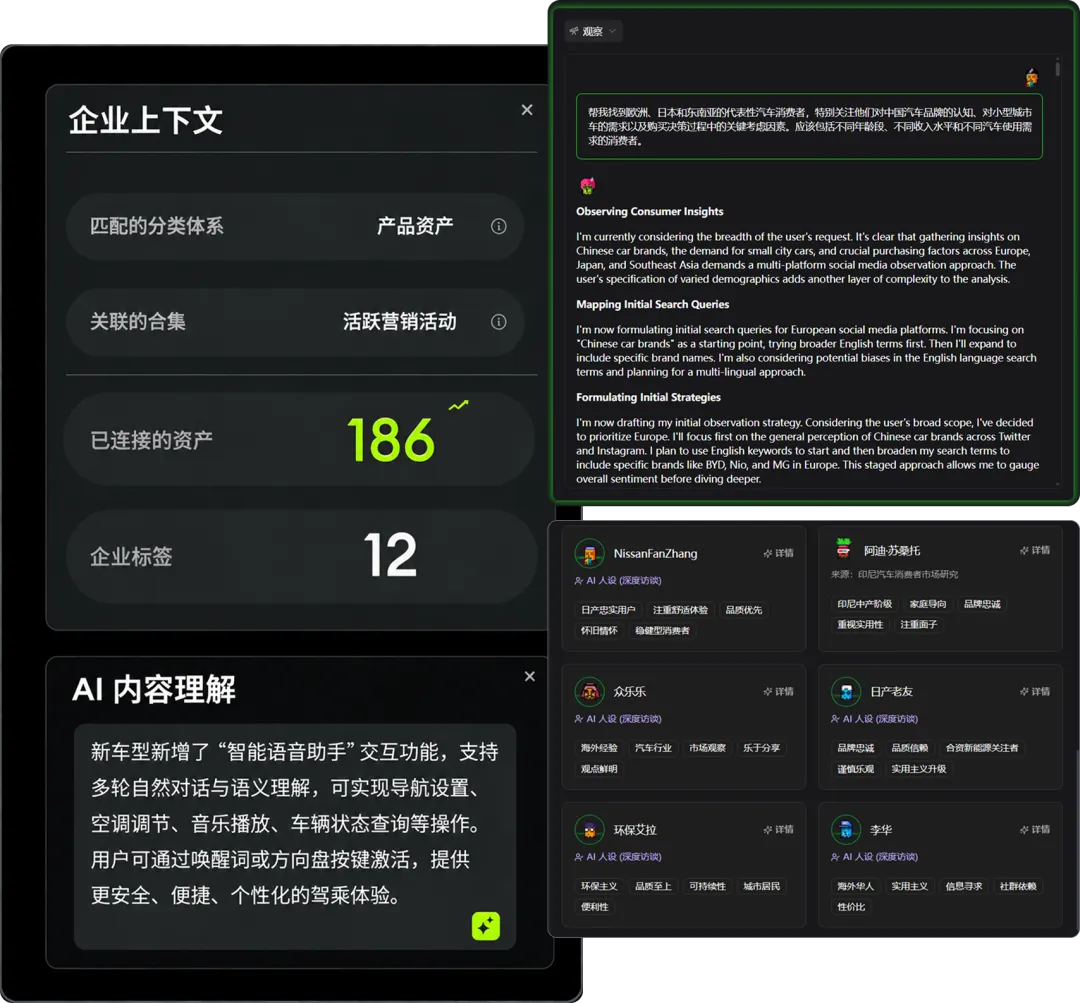
Step 2: From differentiated content generation to data writeback, GEA enables content to become more targeted with every delivery.
Differentiated content creation is powered by the Creative Reasoning Model (CRM). When receiving the request to “generate content for this vehicle model targeting Group X car buyers”, the CRM leverages the cognitive structure of this segment defined in the Subjective World Model (SWM) to produce multiple distinct content angles. For instance, young tech enthusiasts care about intelligent driving and futuristic design; families upgrading their vehicles focus on space, safety and real-life usage scenarios; devotees of traditional luxury brands value craftsmanship heritage and brand storytelling. Each angle is expanded into 2–3 candidate content pieces.
The critical component is GEA’s Loop mechanism. Once each piece of content goes live, user signals such as dwell time, engagement and follow-up clicks are captured by GEA. GEA then infers why the content performed well or poorly, and whether the cognitive structure of the corresponding buyer segment needs adjustment. The updated cognitive structure is fed as input for the next round of content generation. Finally, the validated structure from this cycle is written back to the Subjective World Model (SWM) and the Context System.
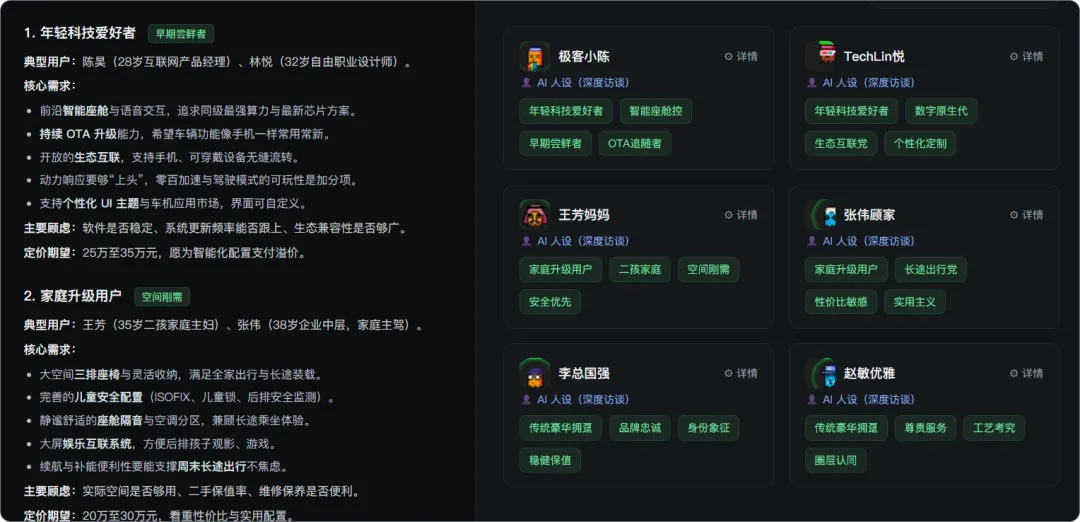
This iterative loop means every new batch of published content helps the system gain deeper insights into both the vehicle and the target buyer segment. By the midpoint of the launch cycle, the team could clearly identify actionable patterns: for young tech enthusiasts, an opening focused on intelligent driving and futuristic appeal delivers the best results; for families upgrading their vehicles, a sequence of scenario-based demonstration and reassurance around safety works most effectively; for devotees of traditional luxury brands, narratives about craftsmanship heritage should come before brand history context. These insights do not come from one-off research, but from continuous accumulation throughout the content creation process.
Step 3: Turn learnings from every round of content delivery into proprietary enterprise intelligence.
This is reflected more directly in live campaigns: for the same launch video, the version tailored to young tech enthusiasts puts intelligent driving features in the opening three seconds, while the variant for upgrading families leads with space presentation and child safety seat details. Such distinctions are not guessed by the team based on experience. Instead, they are structural conclusions derived from real engagement data after multiple rounds of content iteration — revealing what truly matters to buyers, which messages should be prioritized, and which ones should follow.
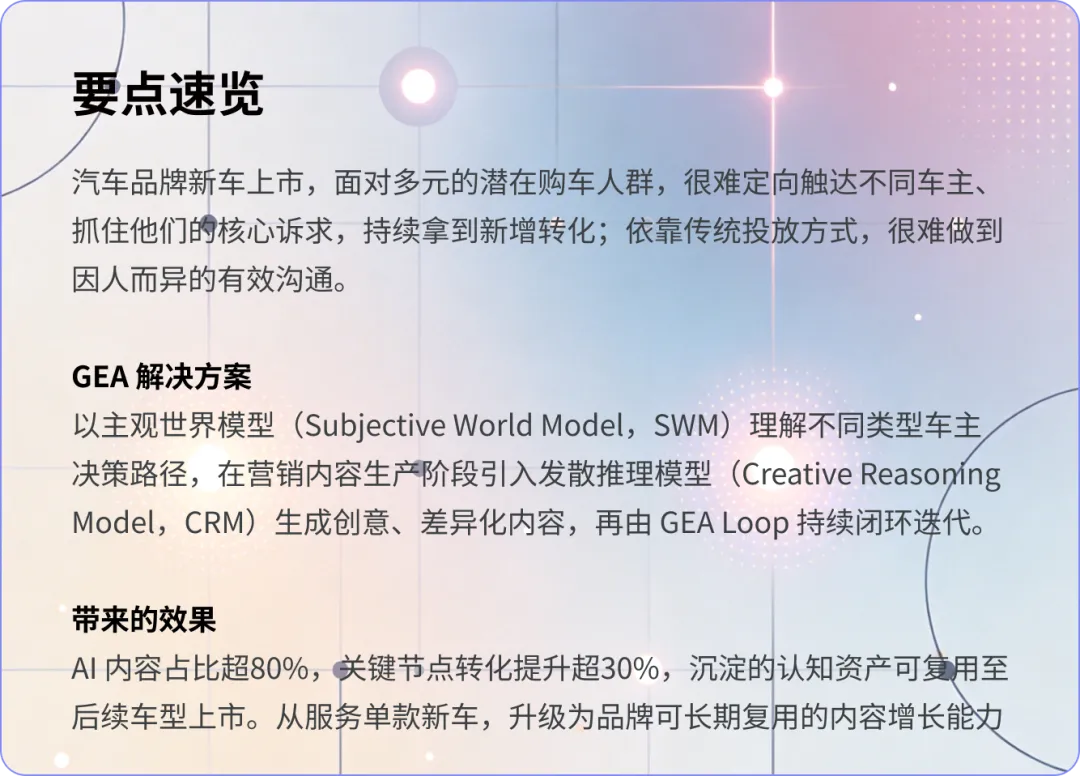
By the end of the launch cycle, AI-generated content accounted for over 80% of all assets, and conversion efficiency at key touchpoints improved by more than 30%. More importantly, the system was built not for this single vehicle, but for the brand itself. When the next model launches, buyer cognitive structures stored in the Subjective World Model (SWM), brand content assets within the Context System, and the divergent reasoning learnings of the Creative Reasoning Model (CRM) are all retained as the starting point.
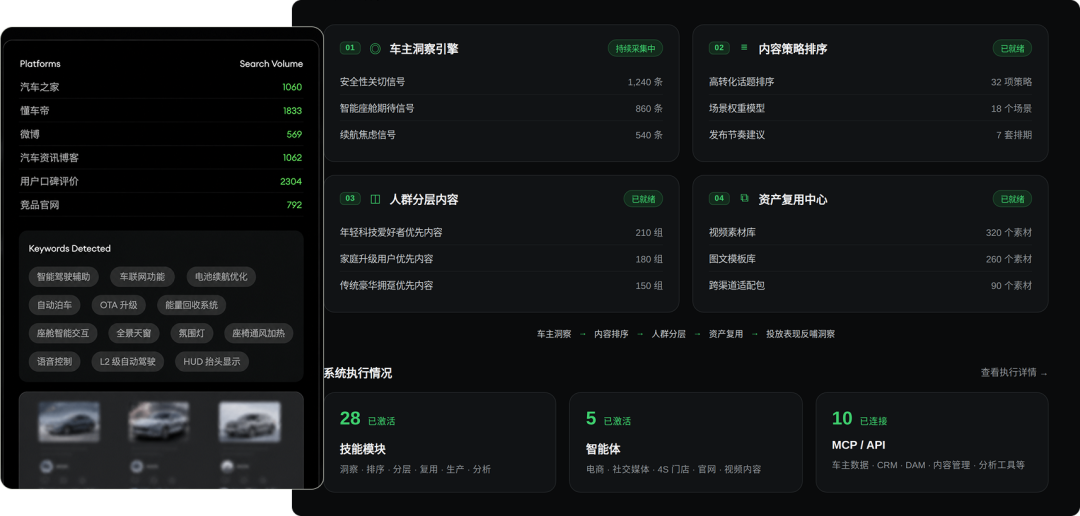
What Tezign delivers here is not content for just one vehicle, but a content production capability that the brand can leverage for every future model.
The Proposition Behind a Vehicle
Content competition among automotive brands is fundamentally not about “who produces more content”, but “whose content better understands each group of car buyers”. Traditional approaches treat buyers as “statistical groups”. In the AI era, we can understand buyers as “individuals with well-defined cognitive structures”. Tezign transforms this practice from “marketing teams relying on experience” to “continuous learning by the system”.
Proprietary intelligence grows increasingly attuned to the brand itself — this is more than a content upgrade for a single vehicle; it marks a shift in how brand assets are accumulated.
Category
Automotive
Date
2026-10-29
Read Time
5 min read
Related Recommendations
Automotive Aftermarket Membership Operations: Reaching Car Owners with the Right Content at the Right Time

Manufacturing Industry Overseas Marketing, GEA Reduces Content Localization Cycle by 80%