Beauty & Personal Care
Consumer Goods New Product R&D No Longer Needs “Checkpoint Resume”: From Insight to Packaging Innovation, How Can Agents Drive Long-Horizon, Proactive Progress
Consumer goods new product innovation can shift its model by connecting insight, packaging research, and packaging innovation, building continuous collaboration based on audience understanding, accumulating reusable assets, and improving iteration efficiency.
Category
Beauty & Personal Care
Date
2026-11-11
Read Time
5 min read
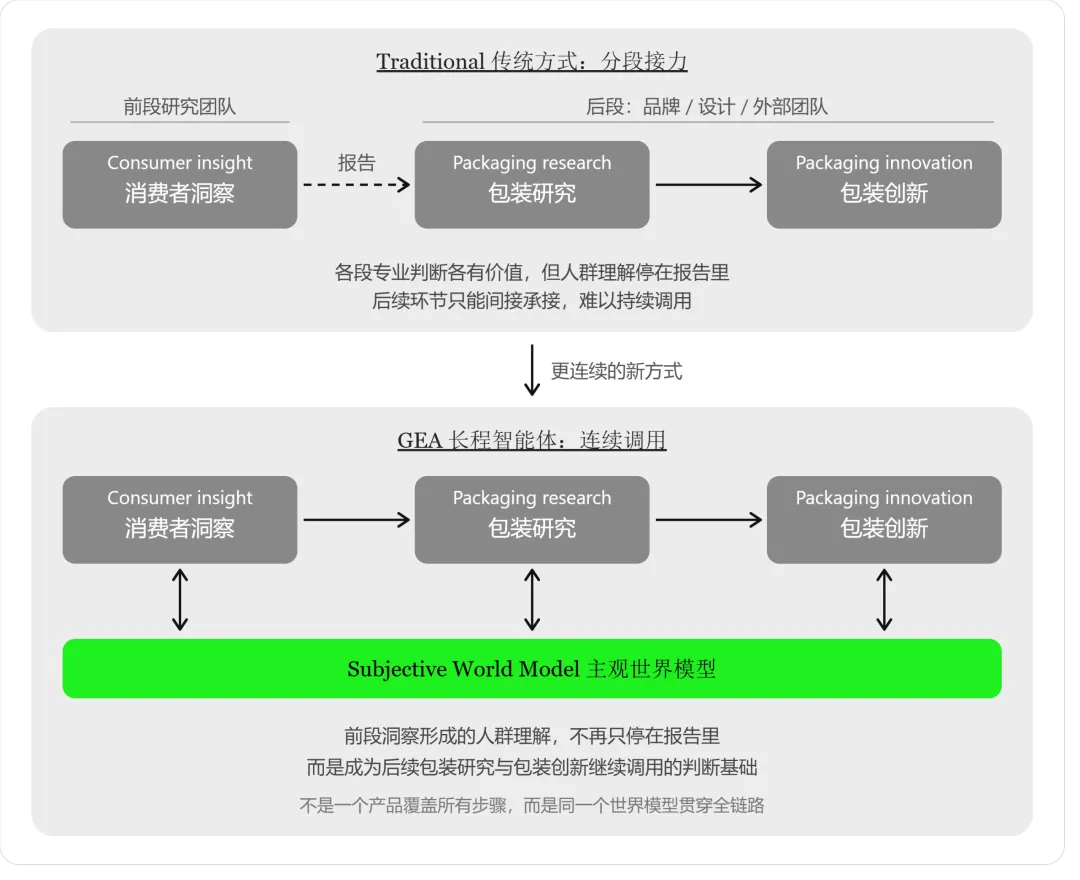
In consumer goods new product innovation, insight, packaging research, and packaging innovation are inherently a continuous and related workflow. The traditional approach usually advances by stage: the front-end research team conducts consumer insight work, while the back-end brand, design, and external teams continue with packaging research and packaging innovation. There is nothing wrong with this division of labor; each stage has its own professional judgment and methodological value.
But against the backdrop of rapid new product iteration, more and more teams are beginning to care about another thing: can the audience understanding formed in the front end do more than just stay in a report, and continue to inform subsequent decisions? So this use case is not about whether the traditional approach is right or wrong, but about whether a more continuous new approach can be formed from insight to packaging research, and then to packaging innovation. The key point here also needs to be made clear: we are not saying that one product covers all steps; rather, we are asking whether the subjective world model formed in front-end insight can become the judgment basis that subsequent packaging research and packaging innovation continue to draw on.
Let’s first look at a real business scenario: after insight, what questions still need to be answered in packaging research and packaging innovation?
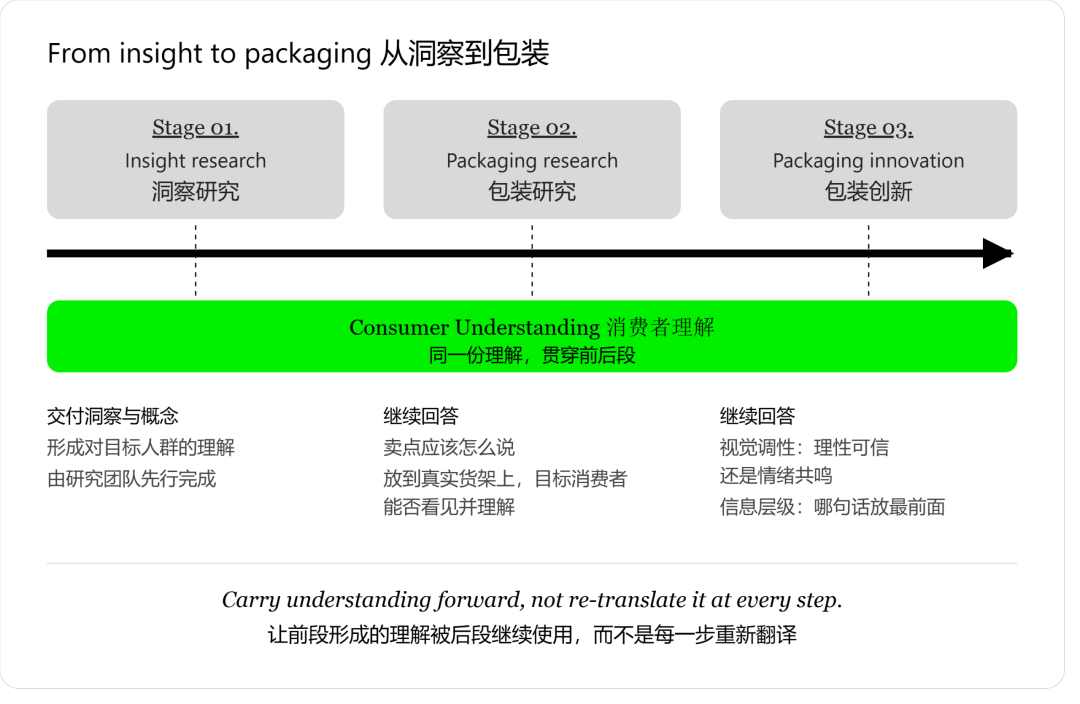
After a food and beverage new product completes its insight work, the job is far from over. The team still has many follow-up questions to answer: how should the selling point be communicated, should the visual tone be more rational and credible or emotionally resonant, which sentence should be placed first in the packaging information hierarchy, and whether these expressions will actually be seen and understood by the target consumer in a real shelf environment.
In more common practice, these questions are handled sequentially by different stages and different teams. The research team first delivers insight and concepts, and then the brand and design teams move into packaging research and packaging innovation. This approach has clear division of labor and has accumulated a lot of mature experience. However, as new product pace accelerates and iteration frequency increases, teams naturally begin to raise a new expectation: can the understanding formed in the front end continue to be used in the back end, instead of being translated again at every next step?
How does the new approach intervene? Let front-end audience understanding continue into back-end judgment
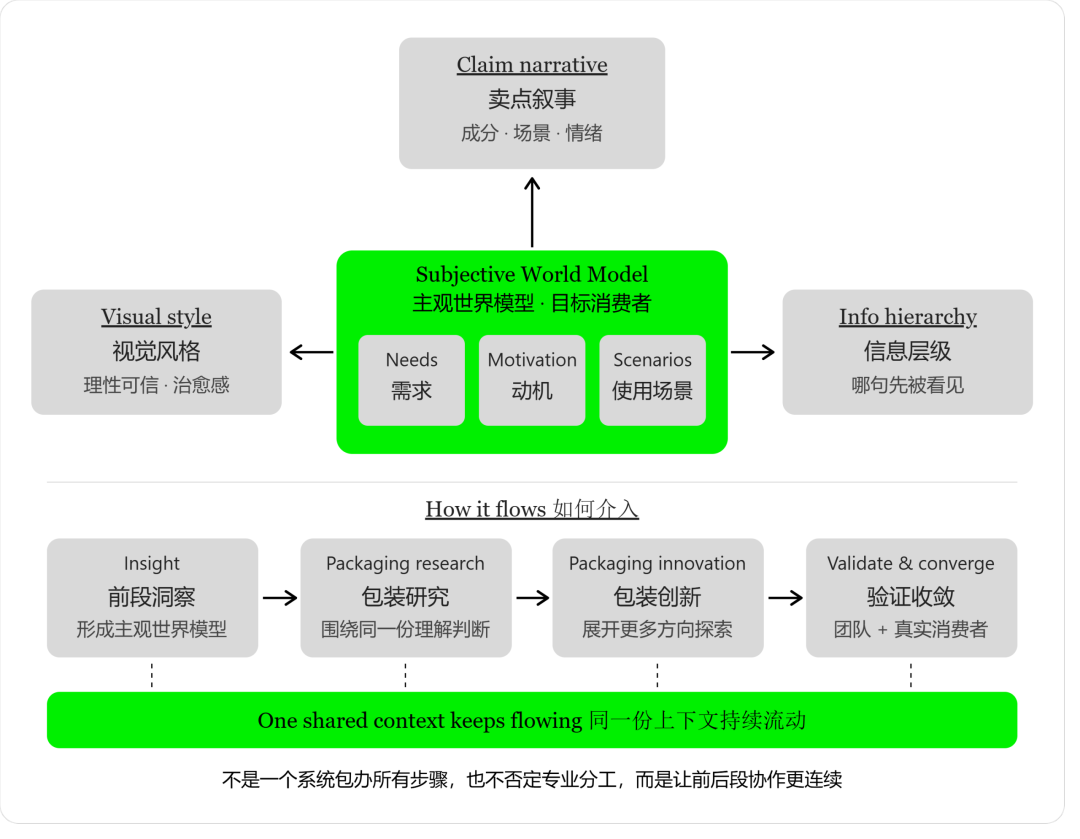
The new approach is first not about letting one system handle all steps, but about allowing the same context to keep flowing across different stages. What matters more here is not a single product name, but the output of the front-end insight stage based on the subjective world model: it helps the team understand the target audience, concept hypotheses, and usage scenarios, and turns the question of “why this type of consumer would be moved” into a judgment basis that can be reused later.
After that, packaging research and packaging innovation are no longer just about receiving a report and then proceeding independently; instead, they can continue making judgments around the same audience understanding. Whether the selling-point narrative should emphasize ingredients, scenarios, or emotions; whether the visual style should be more rational and credible or more healing; and which piece of information should be seen first in the hierarchy can all be explored in more directions in subsequent research and innovation stages based on this front-end understanding, and then narrowed down through validation by professional teams and real consumers.
In other words, the new approach does not negate the original professional division of labor; rather, it creates a more continuous collaborative relationship between front-end insight and back-end packaging research and packaging innovation.
Changes in the way of working: from stage handoff to continuous collaboration
The most obvious change is not that the team has fewer steps, but that the relationship between each step has changed. In the past, it was more like stage-by-stage handoff: insight was completed in one phase, packaging research picked up in the next, and packaging innovation continued further down the line. Now it is more like continuous collaboration along the same line: the audience understanding formed in the front end is continuously referenced, compared, refined, and validated in the back end.
This also means that the team is not starting from zero in the back end, but is continuing to move forward based on existing understanding. Packaging research is not just about verifying whether a certain visual solution looks good, and packaging innovation is not just about producing a few more design versions; rather, it is about continuing to make more evidence-based judgments around “what this type of person will truly be moved by.” The role of people therefore becomes more focused: the research team is responsible for making the front-end understanding solid, the brand and design teams are responsible for making the back-end expression accurate, and consumer validation continues to retain its necessary place.
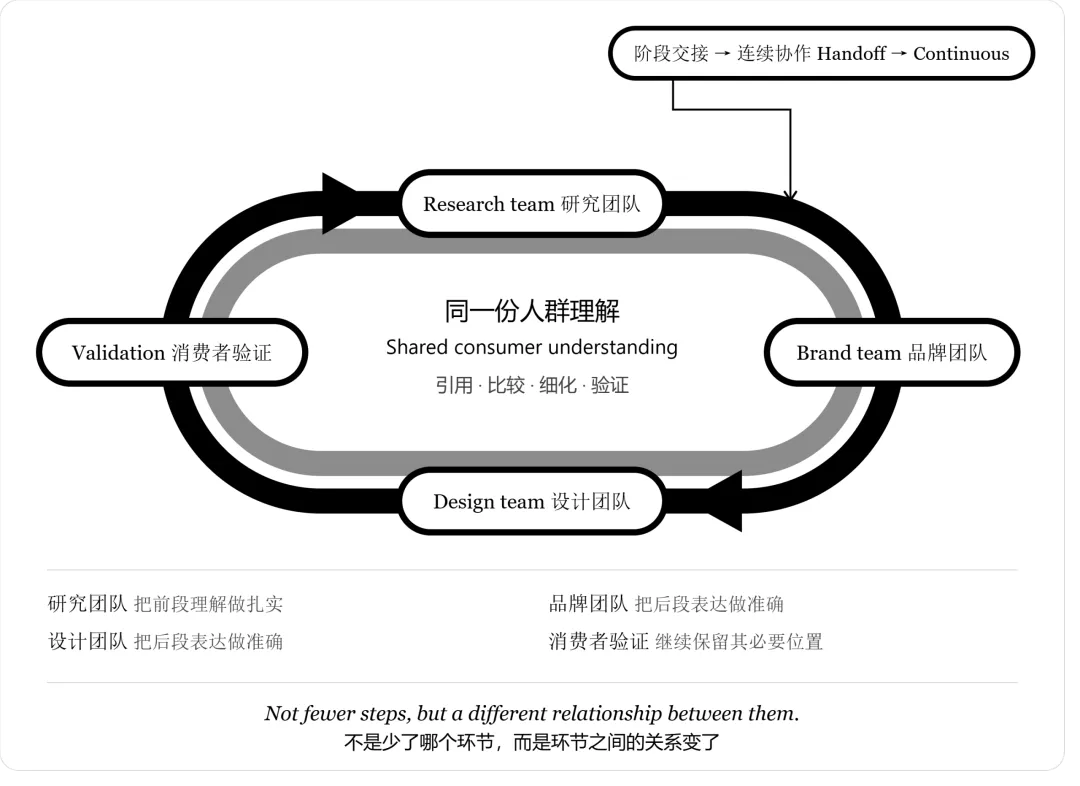
Under this new approach, front-end insight no longer only produces a conclusive report; it can continue to become the starting point for packaging research and packaging innovation. When the team discusses selling-point narratives, visual directions, and information hierarchy in the back end, it becomes easier to return to the same audience understanding, rather than re-aligning every time around “who exactly are we trying to move?”
Even more valuable, new product innovation begins to accumulate a more continuous working asset. One insight is not just for one presentation; it can continue into subsequent research and innovation. One packaging study is not just for one solution; it can feed the feedback obtained from validation back into the next round of innovation. For consumer goods teams iterating at high speed, this continuity itself is a new kind of efficiency and a new organizational model.
So it is not that the traditional approach has failed, but that from insight to packaging research, and then to packaging innovation, consumer goods new products can have a more continuous new approach. The front end keeps enriching the construction of the “subjective world model,” responsible for building understanding of consumers; the subsequent packaging research and packaging innovation continue to advance on top of that understanding. In this way, insight does not just stop in research, packaging does not just stop at aesthetics, and both together serve the same new product innovation chain.
Category
Beauty & Personal Care
Date
2026-11-11
Read Time
5 min read
Related Recommendations

How to Achieve Personalized Production for Thousands of Products Online? GEA Enters the Footwear and Apparel Brand Worksite

When AI Starts to 'Call' Designers: This Beauty Brand Uses GEA to Solve the New Product Launch Challenge for 80 SKUs