All
How Can Enterprises Identify the First AI Scenarios to Implement? Here’s How to Choose the First Roadmap
Enterprises should prioritize high-frequency, high-judgment-density, and accumulable business scenarios for AI implementation, starting from business pain points and focusing on user research and two other directions to build a minimal closed loop for organizational capability upgrades.
Category
All
Date
2026-10-20
Read Time
9 min read
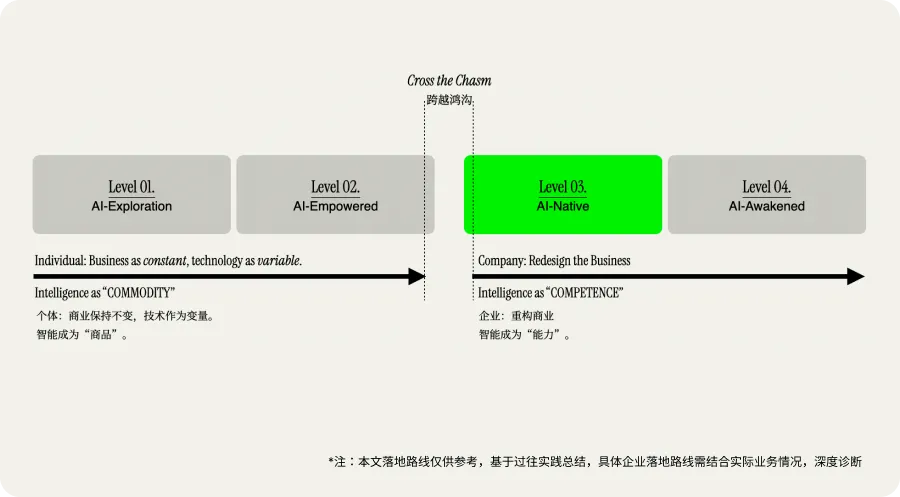
Many enterprises today are genuinely anxious about AI, not about whether to implement it, but about where to start. There are already many tools, models are becoming stronger, and almost everyone on the team has tried AI to varying degrees. However, the truly difficult step is often not the usage, but the judgment: which scenario should the first roadmap focus on?
The difficulty of this question lies not in the inability of enterprises to see opportunities, but in the abundance of opportunities. Content production can be done, user research can be done, knowledge management can be done, customer response can be done, sales support can be done, product definition can be done. Each option seems valid, and each seems too important to miss. The result is often that many initiatives are tried simultaneously, but very few truly solidify; tools are increasing, but organizations have not genuinely entered the next stage.
Therefore, what the first roadmap truly lacks is not a list of technologies, but a set of methods for prioritizing judgments.
Why Do Many Enterprises Get Stuck at This Step?
Most enterprises today have already gone through an “AI exploration phase”: encouraging employees to use AI, letting more people get hands-on, and trying to improve efficiency a bit. This step is not difficult; it even happens naturally. The challenge arises when enterprises begin to seriously ask: “If AI is really going to enter my business, where should it start?” That’s when the real questions begin to emerge.
Because the second and third phases do not naturally connect. The focus of the previous phase is the existing work of everyone; the focus of the latter phase is how the enterprise redesigns business, collaboration, and the generation of judgments. For this reason, the first roadmap is never just about “doing a project first,” but about where the enterprise is prepared to start rewriting its operational methods.
The First Roadmap Should Start from Problems, Not Technology
One of the most common mistakes enterprises make when planning an AI roadmap is starting with technical terms like models, agents, platforms, and automation capabilities. It seems that as long as capabilities are listed by their level of advancement, the roadmap will naturally be established.
However, truly effective first roadmaps almost never start this way. They must begin with business problems: What are the core bottlenecks for the enterprise today? Are these bottlenecks sporadic or recurring? If this problem is solved, will it not only speed up a project but also bring about long-term changes in organizational capability?
In other words, the first AI roadmap should not answer “What technology do we want to use?” but should first answer: What type of problems should we prioritize for reconstruction?
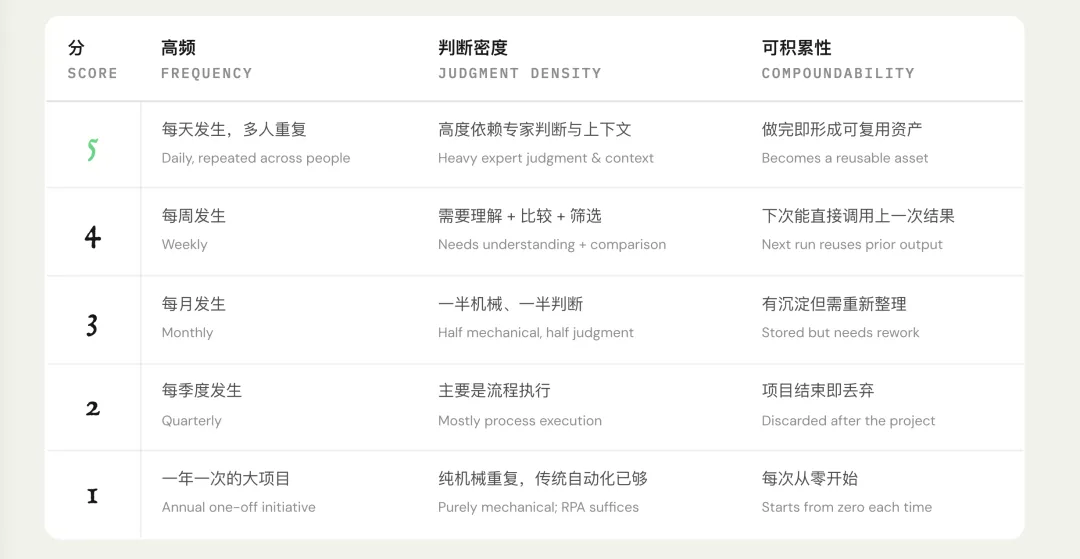
From the perspective of enterprise implementation, what types of scenarios are most suitable for priority implementation? Based on past experiences and collaborations with over 200 large enterprises, we found that suitable scenarios usually need to meet three conditions simultaneously: high frequency, high judgment density, and the ability to accumulate.
1. High Frequency, Not One-Time Projects
The scenarios most suitable for priority implementation are often not large projects done once a year, but tasks that occur weekly, repeat monthly, and require significant manpower investment each time. Only with high frequency can AI integration truly become part of the organization’s daily operations, rather than remaining a one-time experiment.
2. Not Simple Repetition, But Involving Judgment
If a task is merely mechanically repetitive, traditional automation may already be sufficient. What truly deserves to be prioritized for AI are tasks that involve information understanding, context invocation, comparison, filtering, reasoning, and collaboration. Their complexity lies not in the number of steps but in the cognitive burden carried by each step.
3. Once Done, It Can Accumulate as Long-Term Capability
The most important point of the first roadmap is not to “first do the easiest project to succeed,” but to “first do a scenario that can continuously accumulate after success.” Only in this way can enterprises avoid falling into a cycle of doing a project, delivering a result, and then returning to the starting point.
A Practical Judgment Framework
If we were to compress “where to start the first roadmap” into a more user-friendly tool, we could use three dimensions for judgment:
High Frequency: Is this something that continuously occurs, rather than an occasional event?
Judgment Density: Does it require understanding, reasoning, comparison, filtering, rather than just mechanical execution?
Accumulation: Will the results of this matter accumulate into the starting point for the next time?
Scenarios that meet all three dimensions are usually the most worthy AI scenarios to implement first. Conversely, if a task is not high frequency, does not require judgment, and cannot accumulate, then even if it is done, it is likely just a one-time experiment, not the starting point of the enterprise roadmap.
How Can the First Roadmap Be Built?
A truly executable first roadmap does not need to start from a “big and comprehensive” plan. A more reasonable approach is to first focus on a clear scenario and complete the minimal closed loop from problem identification to capability validation. Typically, it needs to clearly answer the following questions:
Step One: Define the Problem First, Not the Tool
First ask “What should we prioritize reconstructing?” then ask “What technology is needed?” Otherwise, the roadmap can easily become a technology procurement list rather than a business transformation path.
Step Two: Find a High-Frequency and Accumulating Starting Scenario
Do not attempt to cover multiple departments and all tasks in the first step. First, find the most representative scenario that allows the organization to see for the first time: AI entering the business is not just faster, but begins to change how work is organized.
Step Three: Retain Human in the Loop, Rather Than Pursuing Full Automation
One of the most common misjudgments enterprises make in the early stages is thinking that implementation means end-to-end automation. However, truly effective early implementations often retain human in the loop. This is not for compromise, but because feedback from people at this stage helps the system form more reliable judgment capabilities.
Step Four: Validate Not Just the Results, But Whether the Process Can Be Accumulated
The success of the first roadmap should not only look at whether the output results are faster but also whether it begins to accumulate context, solidify judgments, and form reuse. What determines whether the enterprise can enter the next stage is not whether a beautiful project is completed, but whether it has formed a capability structure of “becoming stronger with each iteration” for the first time.
From the Most Easily Implementable Directions, Which Types of Scenarios Can Be Prioritized?
From practical scenarios, the first roadmap is most commonly and worth prioritizing not the grandest scenarios, but those that are directly related to core business and most easily form capability accumulation. Based on Tezign's experience in collaborating with enterprises, we have distilled three easily approachable angles for enterprises to consider:
Direction One: User Research
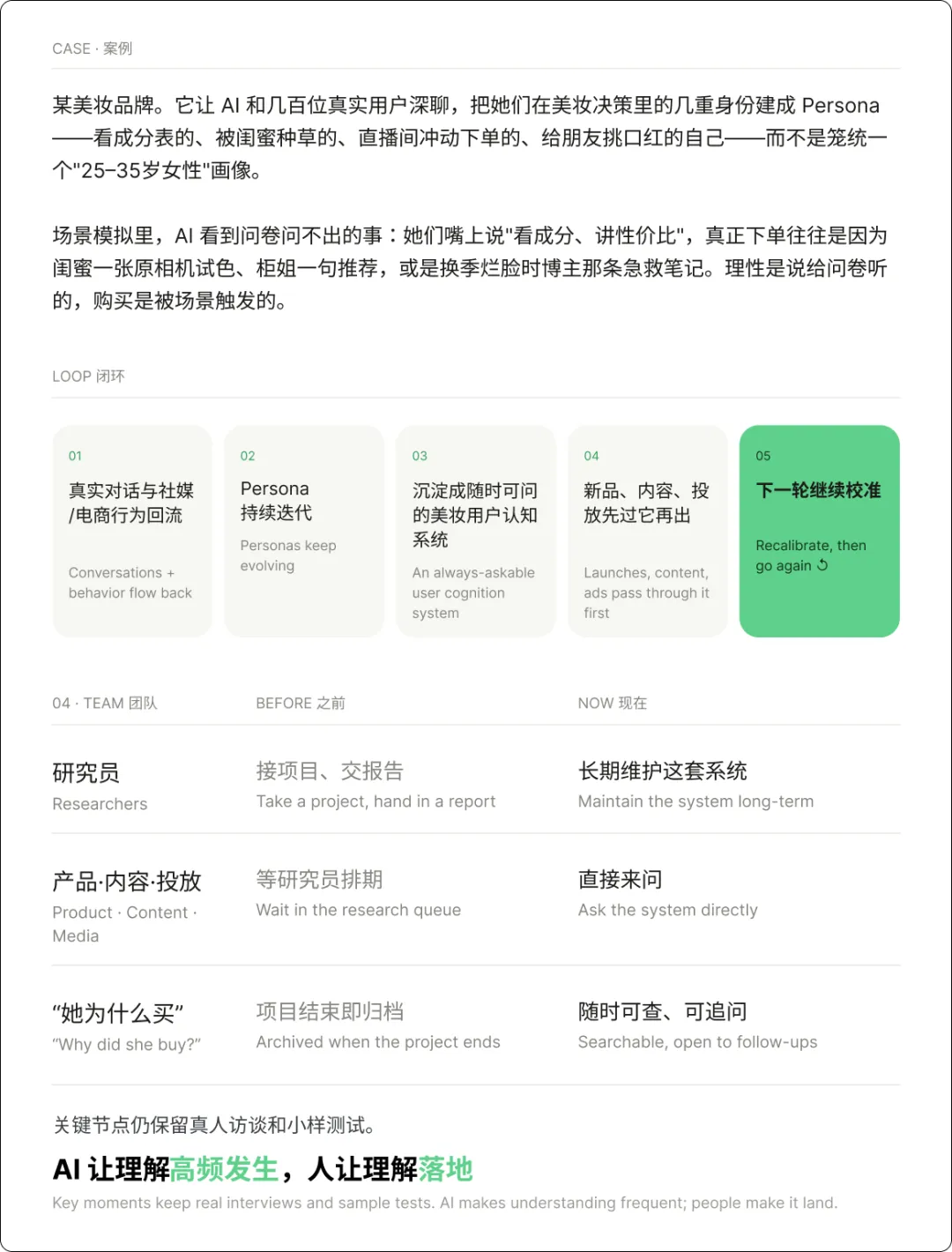
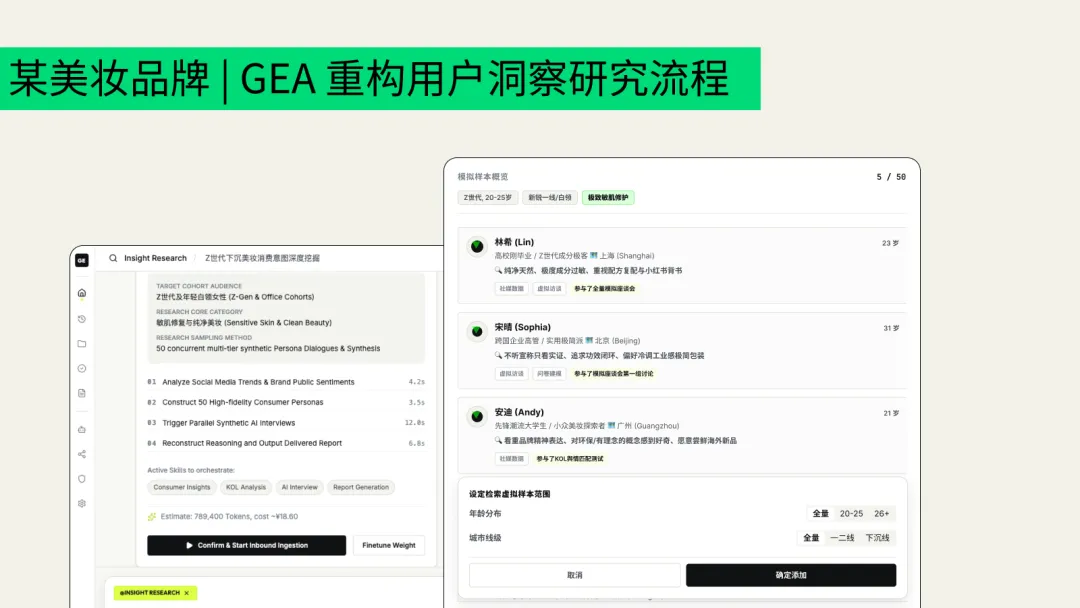
Almost no enterprise would say it does not need to better understand its users, but in reality, understanding users is often treated as individual projects rather than a continuous capability. The problem with traditional research is not that it is unimportant, but that it has long cycles, high costs, and heavy initiation, and each time feels like starting over. When a project ends, the report is delivered, and the understanding stops at that point.
This is also why user research is often very suitable to become the starting point of the first roadmap. Because it is inherently high frequency, has high judgment density, and once initiated, it is easiest to accumulate into a long-term user understanding system for the enterprise.
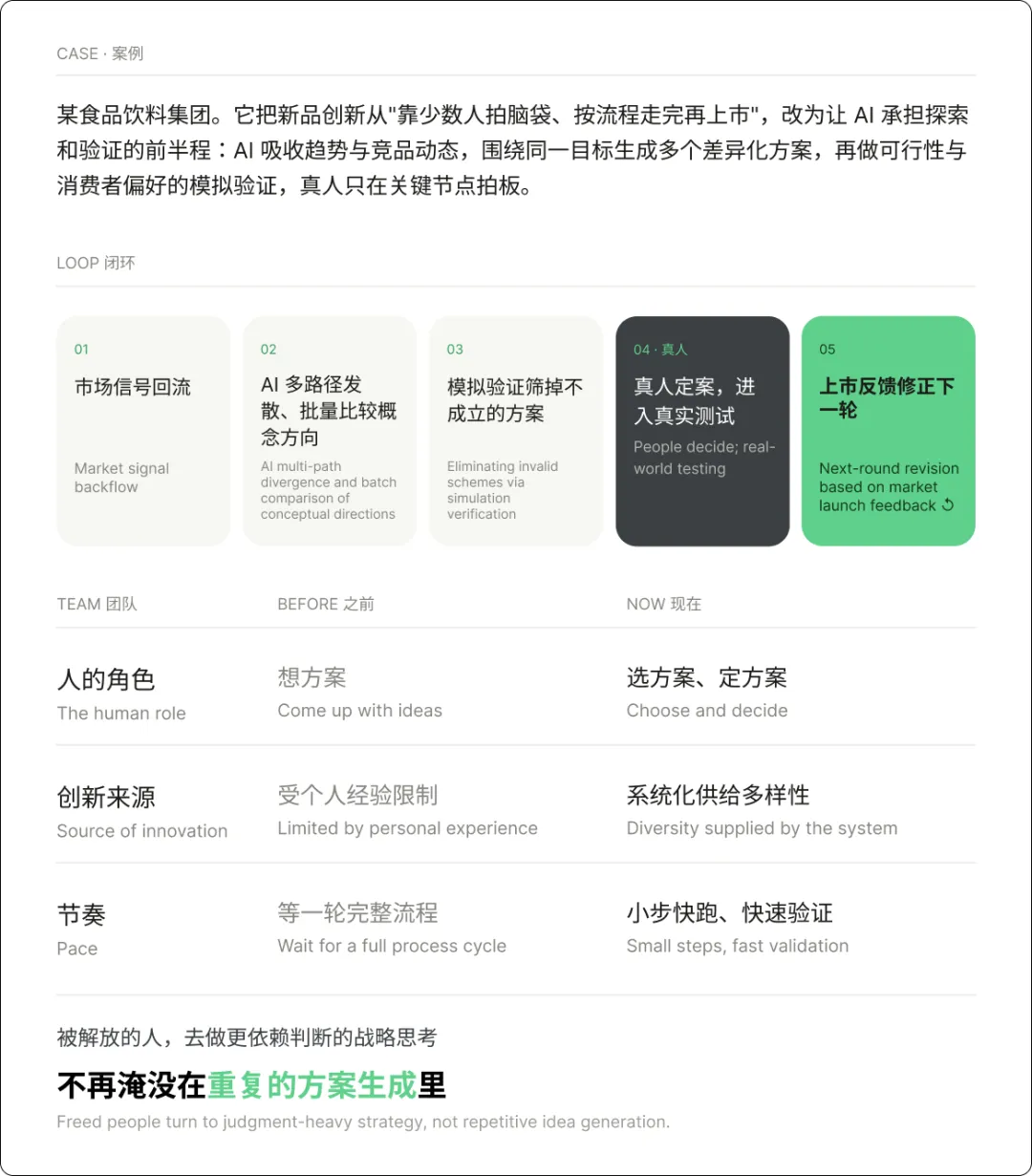
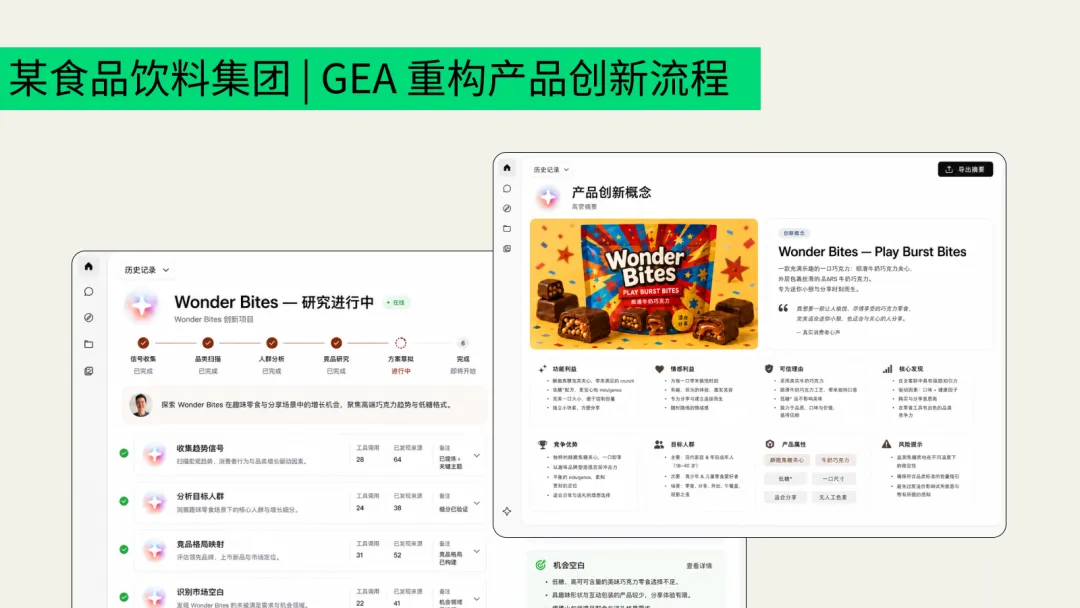
Direction Two: Product Innovation
Today, many enterprises face the biggest challenge in product innovation, not due to a lack of creativity, but because the paths for defining products, filtering directions, and testing concepts are too long, feedback is too slow, and validation is too heavy. Especially in fast-changing industries, by the time you complete a round of research using the original methods, the market and demographics have already changed.
Therefore, product innovation is also very suitable as a direction for the first roadmap. It directly impacts business growth, relies heavily on understanding, testing, judgment, and rapid calibration, and once a mechanism is formed, it will continuously enhance the enterprise's ability to define new opportunities.
Direction Three: Organizational Context
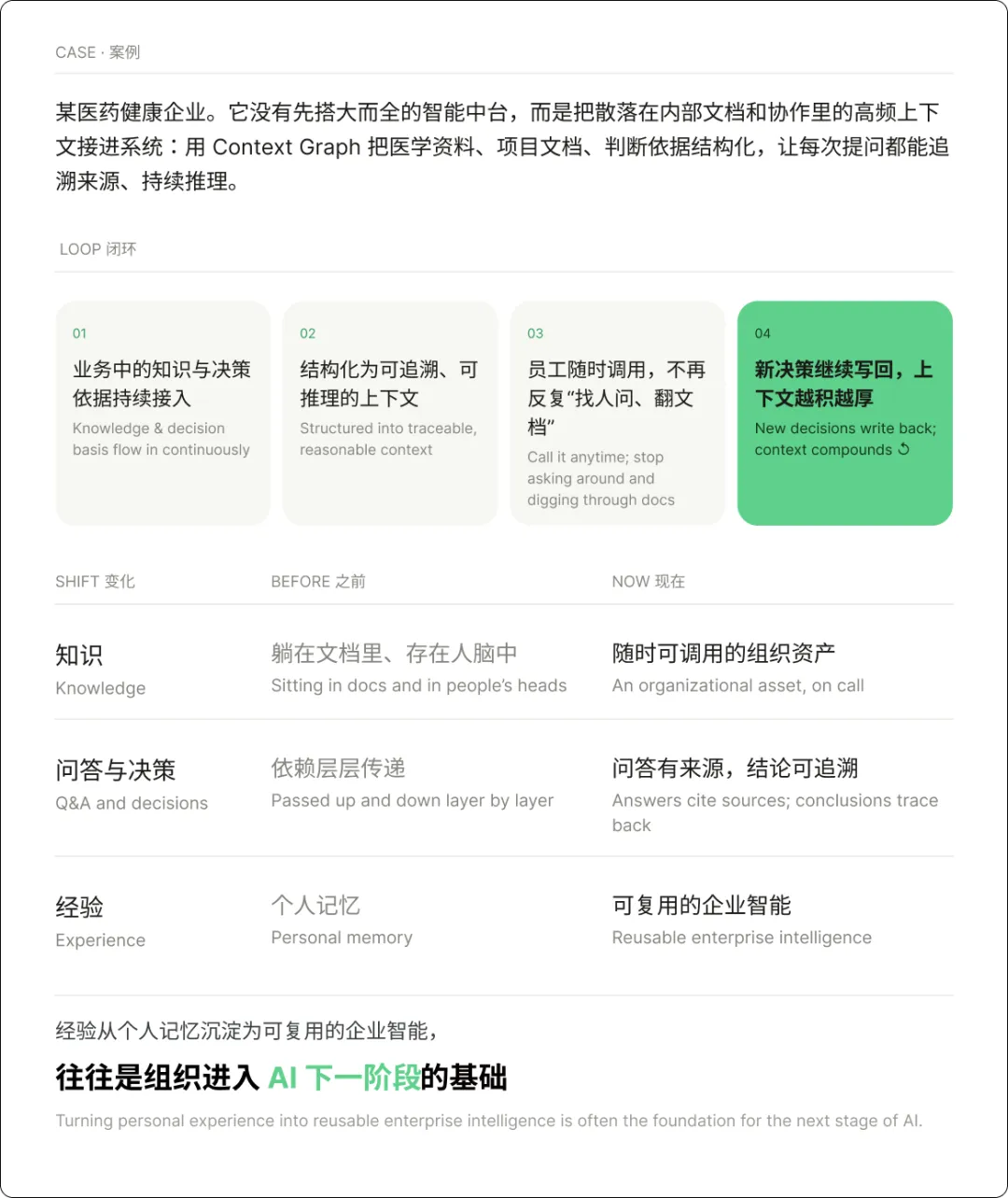
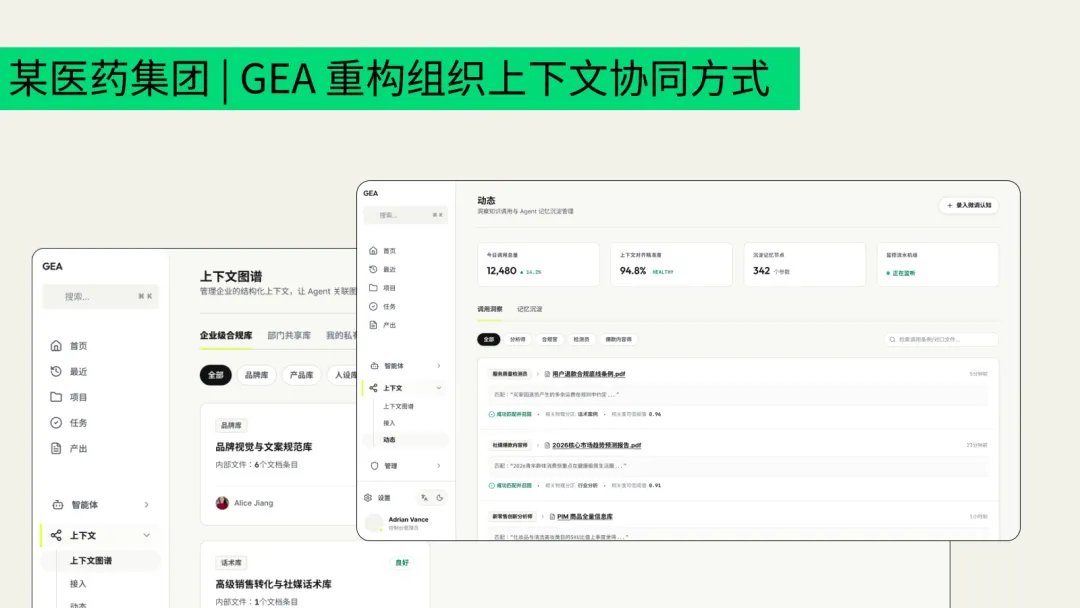
“Organizational collaboration” sounds like a matter of processes, departmental walls, and efficiency tools, but what AI changes here is actually something more fundamental—context. A company's context is never centrally stored: it is scattered across countless meeting minutes, group chat records, project documents, and the minds of a few long-time employees. Newcomers need to spend two weeks aligning backgrounds before taking on projects; cross-department meetings often have different contexts for everyone involved; the reasons for decisions made three months ago can only be explained by those who were present at the time. Information is not lacking; what is lacking is having the right people access the right context at the right decision-making moments.
Therefore, what is worth addressing is not just to digitize existing collaboration processes, but to make context a first-time asset that can be accumulated, linked, and called upon by anyone as needed.
The AI roadmap is not just an efficiency roadmap: which links are a bit faster, cheaper, or require less manpower. Rather, it helps enterprises identify whether and where to start entering a deeper AI phase. The key is not just efficiency improvement, but whether it has begun to reorganize work, context, and judgment using AI.
This is also where Agentic Transformation becomes truly important. It is not about adding a layer of AI on top of existing business but about re-answering: which tasks should continue to be done by humans, which judgments can be inherited by the system, and which contexts should not just circulate within organizational levels but should become enterprise intelligence that can be called upon at any time.
The hardest part for enterprises is not understanding the trends of AI but deciding where to take the first step, and this step will become the true entry point for enterprises to become AI Native.
Where should your enterprise start? Redesigning itself? Scan the QR code to download the transformation roadmap self-checklist for free.

*Note: This checklist is for reference only; the specific implementation roadmap for enterprises should be based on actual business situations and in-depth diagnostics.
Category
All
Date
2026-10-20
Read Time
9 min read
Related Recommendations

What Does the C-end Start to Roll Out Personal Agent Mean? Companies Need to Discuss AI Differently

The Most Comprehensive Interpretation: Can AI Simulate Consumers in Businesses?