In-depth Report
Is Your Enterprise AI Still 'Single-Use'? How Loop Engineering Makes It Smarter Over Time
The use of prompts suffers from memory gaps and difficulties in knowledge retention. By leveraging Loop and GEA architecture, a self-learning AI system can be built, upgrading enterprise AI from a tool to an autonomous system.
Category
In-depth Report
Date
2026-07-28
Read Time
9 min read
From 'Single-Use' to 'Smarter with Use'
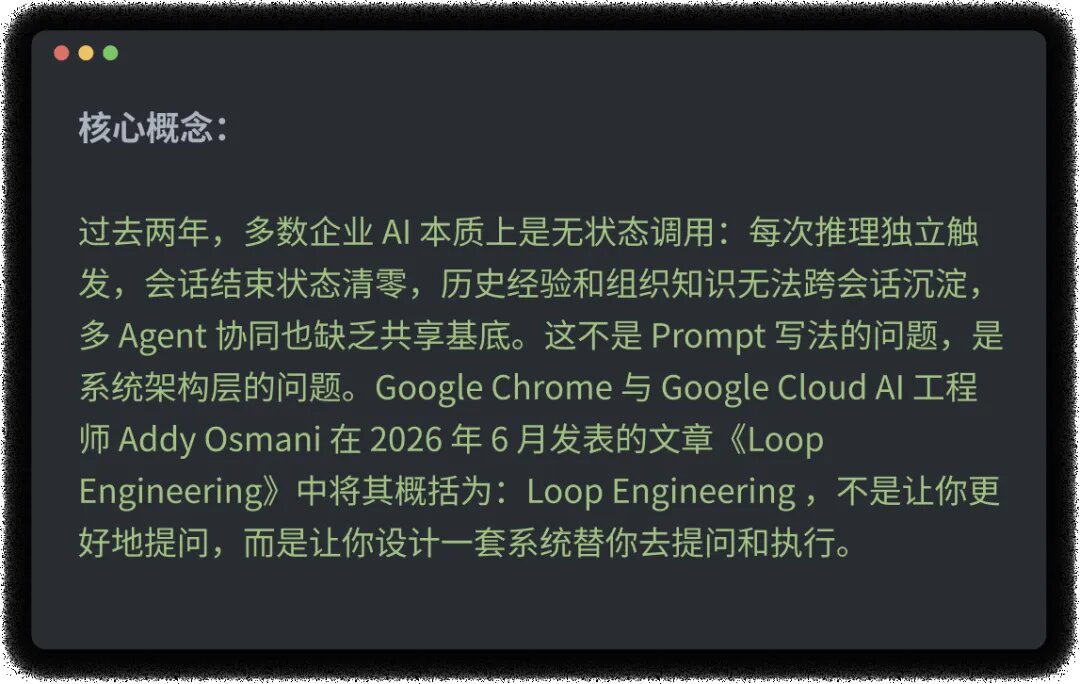
In the past two years, there has been a counterintuitive phenomenon in enterprise AI applications: teams that invest the most effort in writing prompts often find themselves trapped in a cycle of 'repetitive work' after six months.
The marketing department of a retail company once spent three months refining a 'perfect content generation prompt'—covering brand tone, target audience, and platform characteristics. But three months later, when market strategies changed, new products launched, and competitor actions shifted, this prompt needed to be adjusted again. Each adjustment started from scratch, with no accumulation.
The same scenario has been repeated in customer service, content operations, consumer insights, and other fields. Companies find themselves caught in a loop: write prompt → get results → scenario changes → rewrite prompt.
The ceiling of prompt engineering lies in its essence as 'linear work'. You make a request, and the AI gives a response, ending the conversation. Even if you write the prompt exquisitely, it only optimizes the output quality for 'this time'.
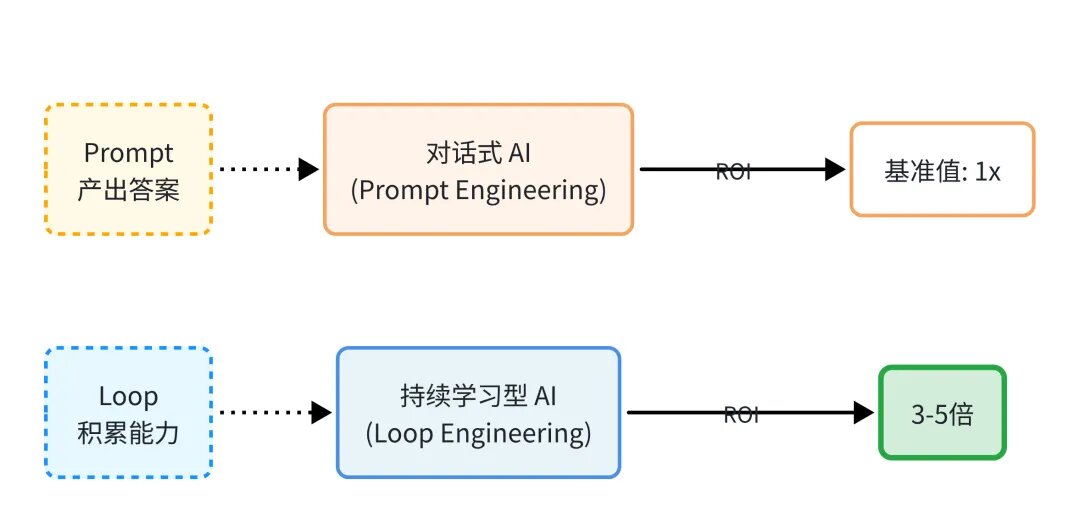
Meanwhile, another type of enterprise has begun to explore different paths. They no longer focus on 'how to ask better questions', but instead start building 'AI work systems that can operate continuously'. These systems do not require background information to be re-entered each time, nor do they need parameters to be adjusted repeatedly—they learn while running and optimize through learning.
Underlying Reasons: Memory Loss and Context Reset
Why can't prompts accumulate? The fundamental reason is that each conversation is independent, with context reset.
The core idea of organizational learning theory is that the value of knowledge lies not in 'what you know', but in 'what you can continuously update'. Peter Senge emphasizes in 'The Fifth Discipline' that the essence of a learning organization is to establish 'systemic thinking'—the ability to transform each experience into organizational memory, rather than letting knowledge remain at the individual level.
The problem with prompt engineering lies here: each conversation is an isolated event. Even if you teach the AI what your brand tone is and what the real needs of your target users are in this conversation, it starts as a blank slate next time.
An AI without memory is like an employee who forgets every day. Their abilities are not lacking, but they are constantly re-learning your company, re-understanding your business logic, and re-learning your judgment criteria.
This 'memory loss' brings three levels of loss in enterprise scenarios:
First, decision-making experience cannot be retained. Why didn't last week's content perform? Which assumptions from last month's insight report were validated, and which were overturned? All these valuable 'trial and error records' are lost.
Second, business knowledge cannot accumulate. In which scenarios are your users more easily persuaded? What is the most effective way to express your brand on which channel? These 'business intuitions' that require long-term observation cannot be carried by prompts.
Third, team collaboration cannot align. Colleague A's user profile summarized using prompts cannot be accessed by colleague B; the content strategy accumulated by the marketing department cannot be reused by the product department. Knowledge is trapped in isolated conversations, with no flow.
Behavioral economist Daniel Kahneman once pointed out: the quality of human decision-making largely depends on 'available relevant experiences'. The same goes for AI. Without callable historical experience, each decision is a 'cold start'.
Practical Application: Making Loop a 'Continuous Learning System' for Enterprises
The core of Loop Engineering is to build a self-driven, continuously accumulating AI work structure.
A complete Loop consists of four stages: Sensing (Sense) → Reasoning (Reason) → Acting (Act) → Writing Back (Write Back). After each cycle, the Loop writes back the judgments, results, and feedback into the system, becoming 'callable experience' for the next round.
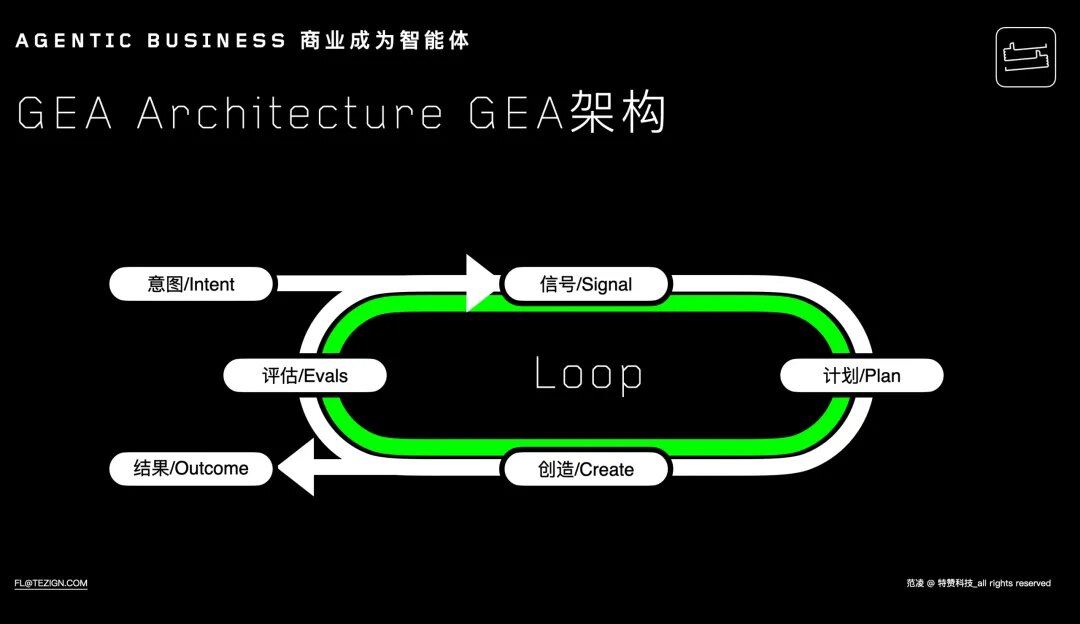
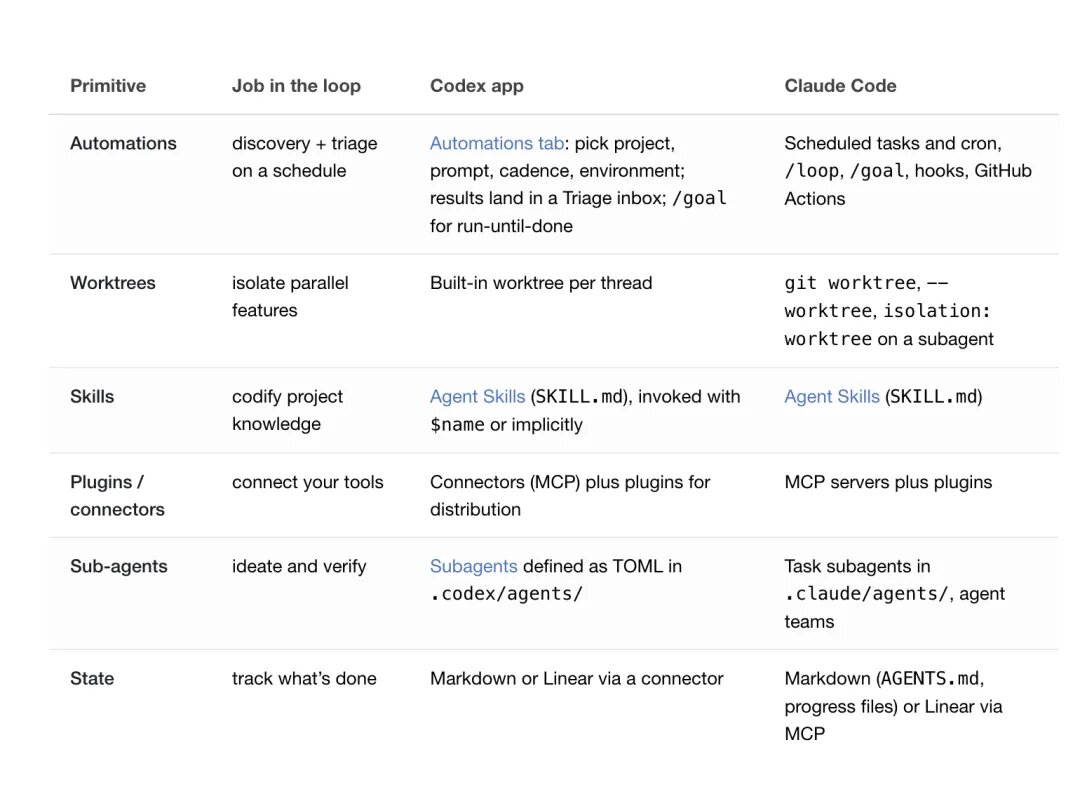
From an engineering implementation perspective, a reliable Loop system requires five core components:
Automated Trigger. The system autonomously starts according to a schedule, checks for new problems and tasks, and determines what needs to be addressed. It does not wait for people to ask questions but actively scans business signals.
Independent Workspace (Worktree). Each agent works in an independent space to avoid interference when multiple agents modify the same resource simultaneously.
Knowledge Base (Skills). Document project knowledge, business rules, and execution standards to avoid agents relying solely on guessing. This is the 'domain knowledge layer' of Loop.
Tool Connections (Plugins). Connect agents to existing systems and tools within the enterprise, enabling them to call upon real business capabilities.
Collaboration Mechanism (Sub-agents). One agent proposes a solution, while another agent is responsible for checking it. Division of labor prevents single-point failures.
Finally, an external memory system is needed—this could be a Markdown file, task board, or database. The key is that these records remain outside of single conversations, allowing the Loop to know what has been done previously and what needs to be done next.
https://addyosmani.com/blog/loop-engineering/
A fast-moving consumer goods brand built a system based on the Loop architecture for content growth scenarios.
- Every morning, the system automatically scans hot signals and user discussion trends across platforms (sensing);
- Combining the effectiveness data of historical brand content and user profiles, it infers which directions are worth following up (reasoning);
- Generates 3-5 content proposals and checks them against brand compliance (acting);
- Writes all proposals, post-release performance data, and user feedback into the content knowledge base (writing back).
Three months later, the content hit rate of this system increased from an initial 15% to 48%—not because the prompts were written better, but because the system updates its understanding of 'what content is more effective in what scenarios' with each cycle.
The underlying mechanism of this operation relies on a context layer native to AI within the enterprise—which not only stores content libraries, user profiles, and historical data but, more importantly, stores 'judgment logic': why was this direction chosen last time? Which assumptions were validated, and which were overturned? What types of content perform better on which channels?
The construction of such a continuous learning AI system is referred to in enterprise practice as the Tezign GEA, the Enterprise Agentic AI System architecture. The core of GEA is not the capability of a single AI model, but rather enabling multiple specialized capabilities to operate collaboratively on a unified context layer—the content growth engine is responsible for hot signal perception and topic production, the consumer insight engine is responsible for user understanding and trend judgment, and the product innovation engine is responsible for demand validation and rapid iteration. They share the same set of enterprise knowledge, judgment criteria, and historical experience, forming a system capability that becomes 'smarter with use'.
The Context System is the memory layer of GEA and the source of the Loop's 'smarter with use' mechanism. It stores not just document libraries and user profiles, but structured business judgment logic:
- Which content directions have higher conversion rates on which channels (historical experience)
- Which assumptions from the last round of reasoning were validated, and which were overturned (judgment correction records)
- Brand standards, compliance red lines, and professional terminology standards (organizational explicit knowledge)
- Execution logs and output quality scores of each agent (system self-evaluation data)
The Context System is not a static knowledge base but a continuously written and actively indexed reasoning foundation. Each time the Loop completes a Write Back, the starting point for the next round of reasoning is higher—this is precisely the 'skills compound' effect that Osmani refers to: externalizing intent once allows the agent to call upon it in every run, no longer deducing from scratch.
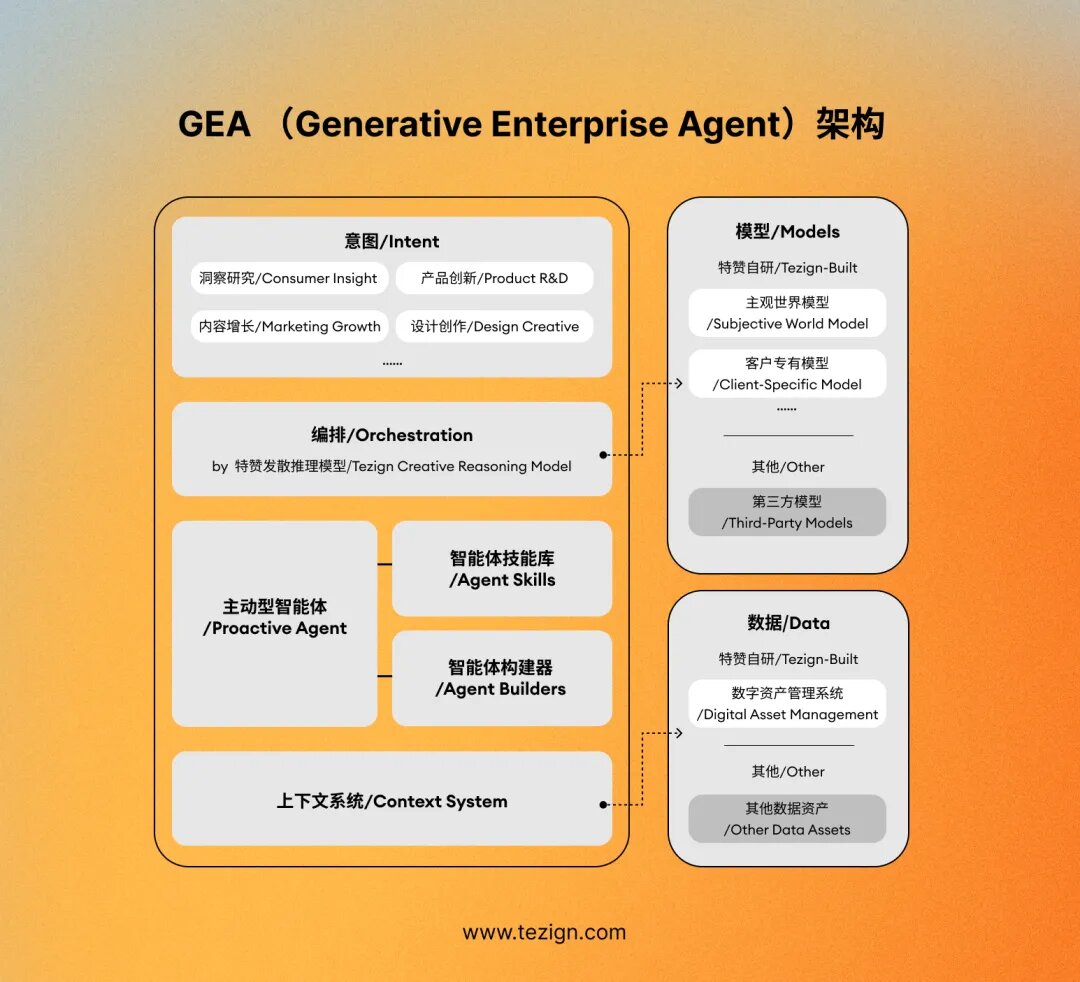
This context layer gives the Loop 'memory'—each time it starts, the AI does not begin from scratch but enters work with the accumulated judgment experience, business understanding, and execution standards of the enterprise.
Loop transfers the business knowledge of the enterprise from 'human brains' to 'systems', shifting from reliance on individual experience to organizational capability. When the judgment experience of the marketing department, user insights of the product department, and content strategies of the brand department can all be systematically recorded, called upon, and updated, the enterprise possesses a 'learning AI infrastructure'.
Furthermore, when enterprises build multiple Loops in different scenarios (content growth, consumer insights, product innovation), these Loops can share the same context layer—user preferences discovered by the content growth Loop can be called upon by the consumer insights Loop; market feedback from the product innovation Loop can inform the content growth topic strategy. Loops begin to collaborate, and the AI capabilities of the enterprise start to form a network effect.
Where Can Enterprises Start?
Two years ago, those who could write prompts had an advantage over those who could not. Today, teams that can build Loops and those that can only use prompts are no longer in the same league.
Running a Loop once is not much faster than doing it manually. Running a Loop a thousand times will achieve things that you could never do manually.
Where to start? There is no need to build a perfect Loop all at once; start with the most familiar work scenario:
- Content operations team: build a Loop for 'hot signal perception → topic inference → content generation → effect writing back'
- Consumer insights team: build a Loop for 'user feedback collection → trend judgment → insight updating'
- Product team: build a Loop for 'market signals → demand inference → validation feedback'
No need for perfection, just need to get it running. Once it is running, the Loop will tell you what it needs—what steps require human intervention, what data needs to be supplemented, and what judgment logic needs adjustment.
The construction of such systems does not start from scratch. Some enterprises have quickly built their Loop capabilities for their business scenarios through the GEA framework—without needing to redesign the context layer, coordination mechanisms, and governance rules, focusing their efforts on the business logic itself. The key is not the technical complexity, but whether you truly start to let AI transition from a 'tool' to a 'continuously working system'.
Now, schedule a diagnostic session for Loop Engineering

The watershed moment for enterprise AI is not whether you can 'use AI', but whether 'AI is a tool or a system in your enterprise'.
Prompts make AI a tool—you use it once, it responds once. Loops make AI a system—it operates autonomously within boundaries, accumulating capabilities with each round.
Is your enterprise ready to evolve from 'using AI' to 'having AI work continuously for you'?
Category
In-depth Report
Date
2026-07-28
Read Time
9 min read
Related Recommendations

Where to Start for an AI Native Organization?

The Choice of an AI Native CEO: Hire a GEA to Manage the Team and Seize Opportunities