Media & Press
AI Technology Review | Stop Creating Agents for Enterprises, They Don't Need Them
Enterprise AI generally only achieves partial efficiency improvements. It is necessary to build a dual-world model, relying on long-range intelligent agents to consolidate business judgments and complete the upgrade from tools to management systems.
Category
Media & Press
Date
2026-10-22
Read Time
9 min read
The popularity of AI in enterprises no longer needs further proof.
The real question worth asking is another matter: the models have been integrated, the tools have been deployed, so why have enterprises not yet seen the expected leap in management?
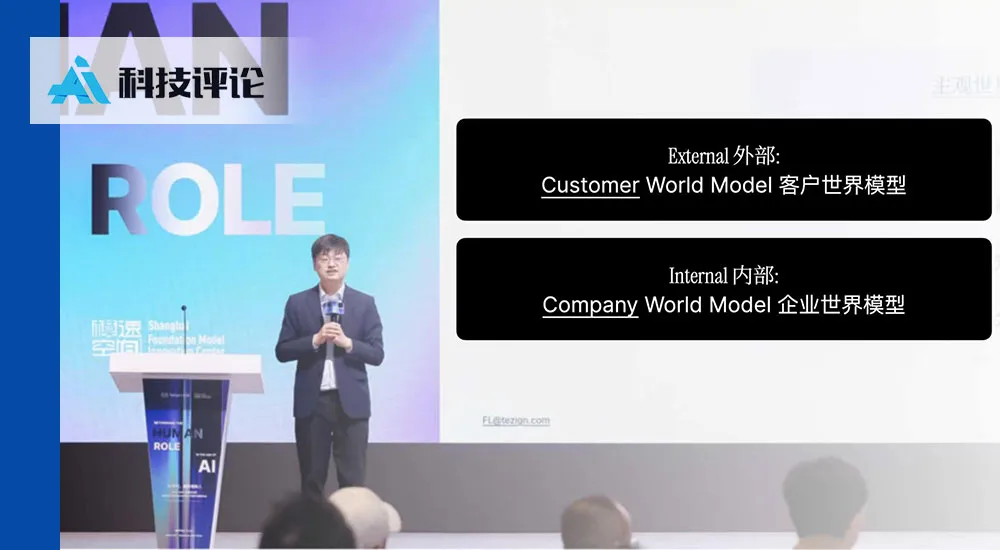
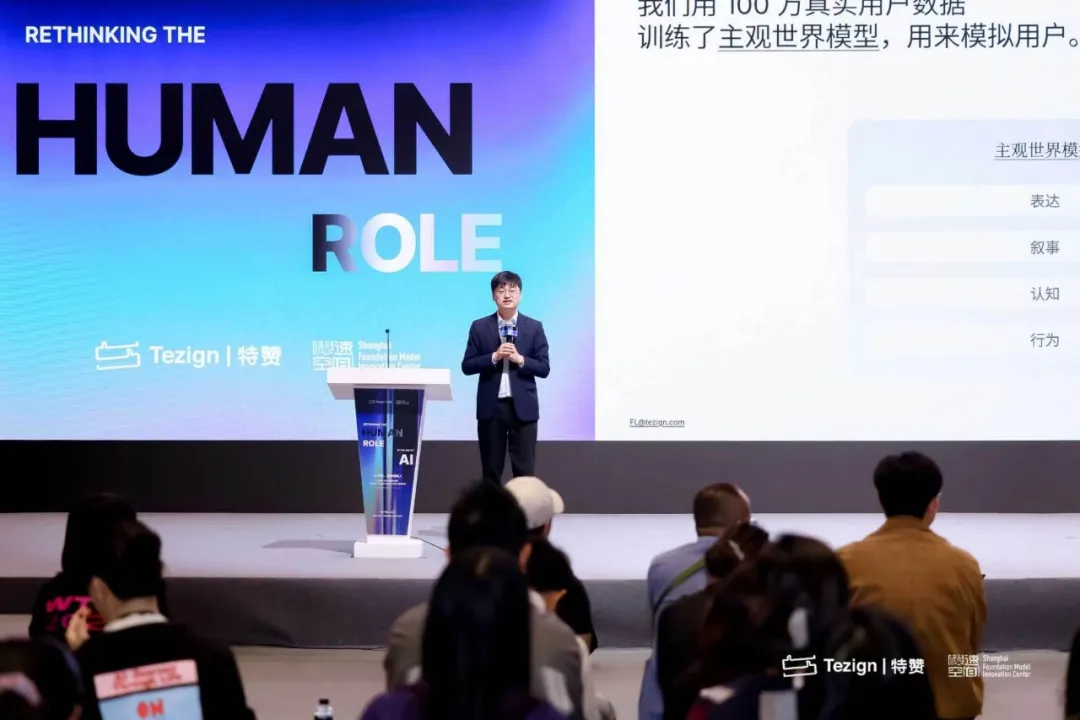
This is also the core issue that Tizhan Technology, an enterprise-level intelligent agent company, attempted to address at the Shanghai WTCC Forum. Instead of asking whether enterprises should use AI, founder Fan Ling proposed a more specific proposition: What exactly do enterprises still lack to ensure that AI moves beyond being merely an auxiliary tool and truly enters the management chain?
The McKinsey 2025 Global AI Status Survey provided a striking contrast: 88% of enterprises have normalized the use of AI in at least one function, but only about one-third have truly entered the scaling stage, and only 7% have completed full deployment; even among those already using it, only 39% of respondents believe that AI has had a substantial impact on operating profit (EBIT). When looking at this set of data together, the problem is not complicated—AI has indeed entered enterprises, but it mainly remains at the level of partial efficiency improvement and pilot exploration, and has not truly entered the enterprise management system.
As personal agents emerge like mushrooms after rain, how will the second half of enterprise-level AI unfold?
01 "The current problem is not that the models are not strong enough, but that the systems do not resemble enterprises enough"
The bottleneck for enterprises today lies not in the availability of models, but in the lack of cognitive structures in the systems that are sufficiently close to real management processes.
This is not difficult to understand.
General models can already perform a large number of tasks such as summarization, generation, rewriting, and analysis very well; for individuals, they have become high-frequency tools. However, enterprise management has never been a series of discrete Q&A; rather, it is a complex system that operates continuously, with external customers, channels, markets, and competitive signals, and internal processes, assets, role divisions, authority systems, and historical decision logic. If models cannot enter this system, even if their local capabilities are strong, it is difficult to stably map to management results.
Fan Ling mentioned in discussions that what enterprises truly lack is not AI that "can do things," but rather AI that "understands why to do, whether to do, and how to continue after doing."
This is also why many enterprises have a consistent feeling about generative AI: it is used everywhere, but it never feels truly integrated into the business. The reason lies not entirely in the models, nor is it solely due to insufficient system integration, but rather that AI has not yet acquired a structure that is sufficiently close to real decision-making.
02 More critical than generative capability is understanding "why people make choices"
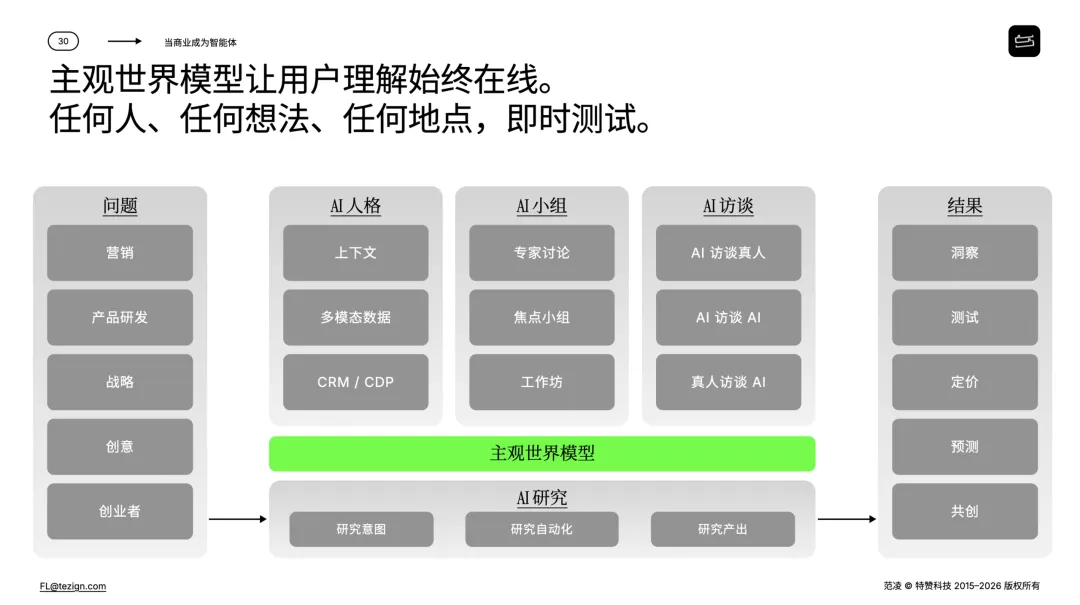
In enterprise management, many key issues are not process issues, but rather issues of preferences, judgments, motivations, and contexts. Why do users stay, why do they convert, why do they churn; the same content, product expression, or communication method may be effective for one group of people but ineffective for another—these questions determine the direction of management actions, not just the efficiency of action execution.
Fan Ling's judgment is that if enterprise AI only progresses at the level of "generating content faster," then what it brings is mostly just efficiency improvements, not an upgrade of the management system. Because the system has not yet answered the more fundamental question: What is worth doing?
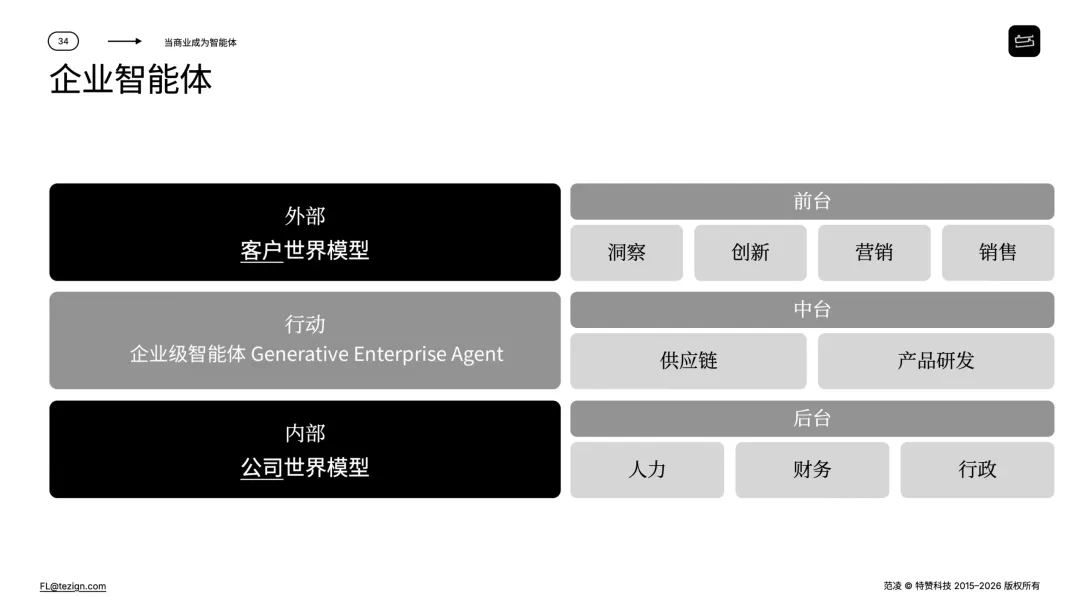
Fan Ling summarized this line of thought into a more complete formulation: "two-world model." One is the subjective world model, which understands who the users are, what they want, and why they do it; the other is the enterprise world model, which understands who the enterprise itself is, what capabilities it has, and what knowledge it has accumulated. Only when the two worlds intersect within the same system can enterprise AI truly move from "understanding users" to "driving management."
Therefore, the truly important aspect of the subjective world model is not that it labels users more, but that it attempts to approach a more difficult question: how do people form judgments in specific contexts, and under what conditions do they change their judgments? For enterprises, this means that the system no longer merely performs superficial matching against historical data, but begins to understand: what kind of information triggers reactions, what kind of rhythm is more likely to lead to decisions, and what kind of expressions are more likely to yield management results.
If traditional generative AI addresses the question of "can it be done," then the subjective world model points to the question of "why it is worth doing." Once this layer is established, the position of AI within enterprises will change: it will no longer just be an accelerator, but will begin to serve as a preemptive system for management judgments.
03 Moving from "generator" to "scenario system" is the true threshold for enterprise AI
However, understanding users does not equate to entering enterprises.
The importance of the subjective world model lies not only in its deeper understanding of customers but also in its enabling enterprise AI to truly enter scenarios.
The reason pure generative capability quickly hits a ceiling in enterprises is not complicated: the problems in real management scenarios are almost never solvable by a single round of output. Every real business action is accompanied by several layers of continuous judgments: is this direction worth pursuing, is this expression suitable for the current users, what kind of feedback will this action generate once it enters the market, and if the feedback falls short of expectations, how should adjustments be made subsequently? "What enterprises need is not a smarter one-time response, but whether a task can be continuously advanced."
Fan Ling mentioned a crucial distinction: many AI products today resemble Copilots; they excel at partial efficiency improvements, but the underlying assumption remains that humans continue to dominate the entire process, with the system providing support only at specific nodes. However, management activities themselves are not a series of isolated nodes, but a continuous process that spans time, roles, and systems. As long as the system cannot retain goals, invoke context, receive feedback, and adjust actions throughout this process, it resembles a high-level tool rather than the intelligent agent that enterprises truly need.
In other words, what enterprises truly need is not a system that only generates answers, but one that can continuously operate closely with scenarios and constantly adjust paths around goals.
This may sound like a subtle difference, but it almost determines the upper limit of enterprise AI.
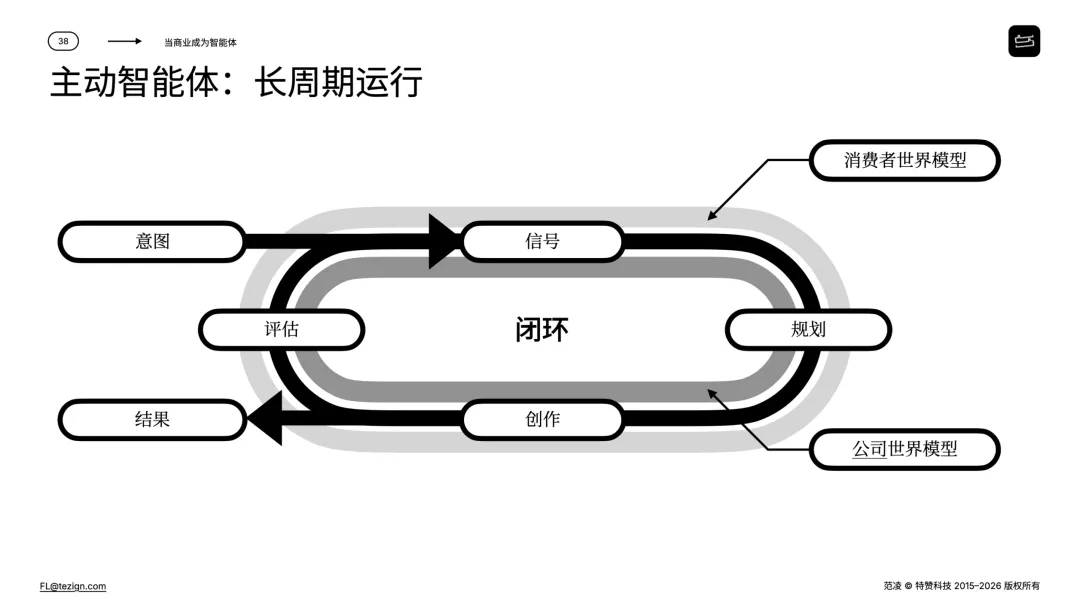
If we follow this logic further, the value of long-range intelligent agents becomes clear. They do not merely provide a single answer but retain state during execution, correct judgments based on feedback, allocate resources across multiple systems, and return results to humans at critical nodes for more densely packed decision-making. At the WTCC Forum, Fan Ling demonstrated how Tizhan's GEA long-range intelligent agent runs through the closed loop of Signal, Plan, Create, and Evaluate: first identifying market and user signals, then forming action plans, subsequently generating content and actions, and finally continuously evaluating and calibrating based on feedback from results. This is also the biggest difference between Tizhan Technology's GEA long-range intelligent agent product and general intelligent agents.
Its importance lies not in introducing a new term, but in advancing the enterprise intelligent system from "passive answering" to "continuous operation" for the first time.
04 Whether enterprises can develop long-range intelligent agents depends on whether their own accumulations can enter the system
Of course, enterprises will not automatically acquire long-range intelligent agents just by having long-context models. There is still a gap between the enterprise's own scenario accumulation, judgment accumulation, and system accumulation.
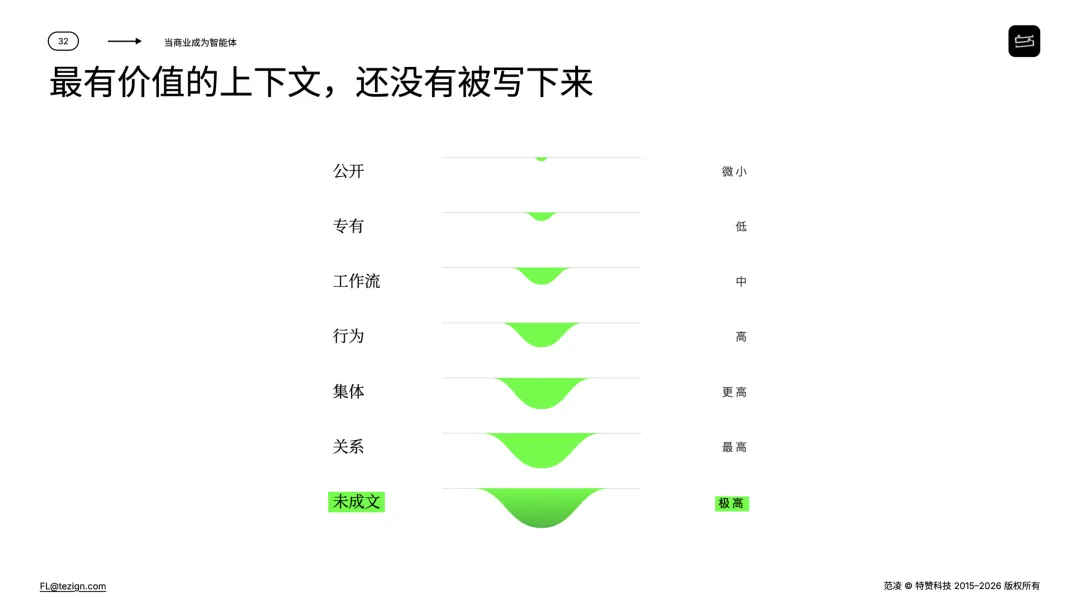
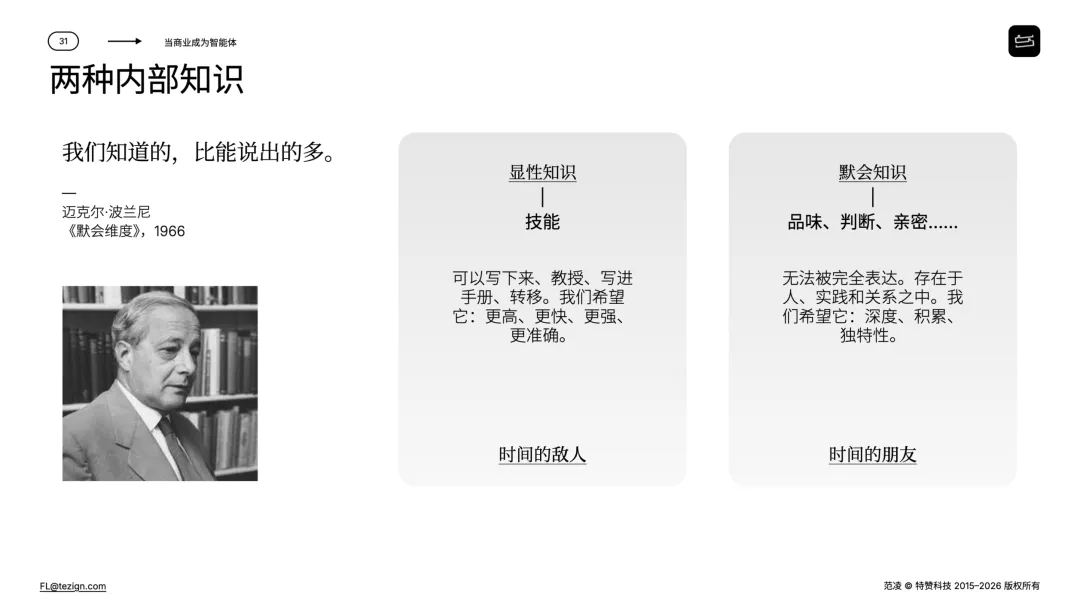
For the system to truly enter management, it cannot rely solely on basic models. It also needs to gradually absorb the enterprise's own content assets, brand boundaries, process rules, channel feedback, historical experiences, and most critically, that portion of expert judgment. Because the most valuable knowledge in real management is often not documented but exists within the decision-making logic of seasoned practitioners: what is worth doing, what should not be done, what expressions, although fluent, deviate from the brand, what feedback is merely noise, and what changes must be responded to immediately.
These correspond precisely to the other half of the "two-world model"—the enterprise world model: understanding from the inside out who the enterprise is, what capabilities it has, and what knowledge it has accumulated. Only when the enterprise's own understanding of scenarios, judgment logic, and task links are continuously embedded into the system can the users understood by the subjective world model truly translate into the enterprise's own management actions.
If these judgments cannot gradually be embedded as system assets, then enterprise AI is likely to remain at the level of "general intelligence" but struggle to grow into "business reliability."
To some extent, this is also where the ultimate competitive point of enterprise-level AI lies. The real competition will not just be about model capabilities themselves, but about who can more quickly embed their own understanding of scenarios, expert judgments, and task logic into a callable, calibratable, and reusable system capability. In this sense, so-called sovereign intelligence is not an empty slogan, but a very specific evolutionary path.
05 The Path of Agentic Transformation
Looking down the line of the subjective world model, scenario capabilities, and long-range intelligent agents, we find that the development of enterprise intelligent agents is still far from being defined. How the subjective world model enters scenarios, how long-range intelligent agents collaborate with existing systems, and how management feedback reverses into model calibration—these questions do not have ready-made standard answers.
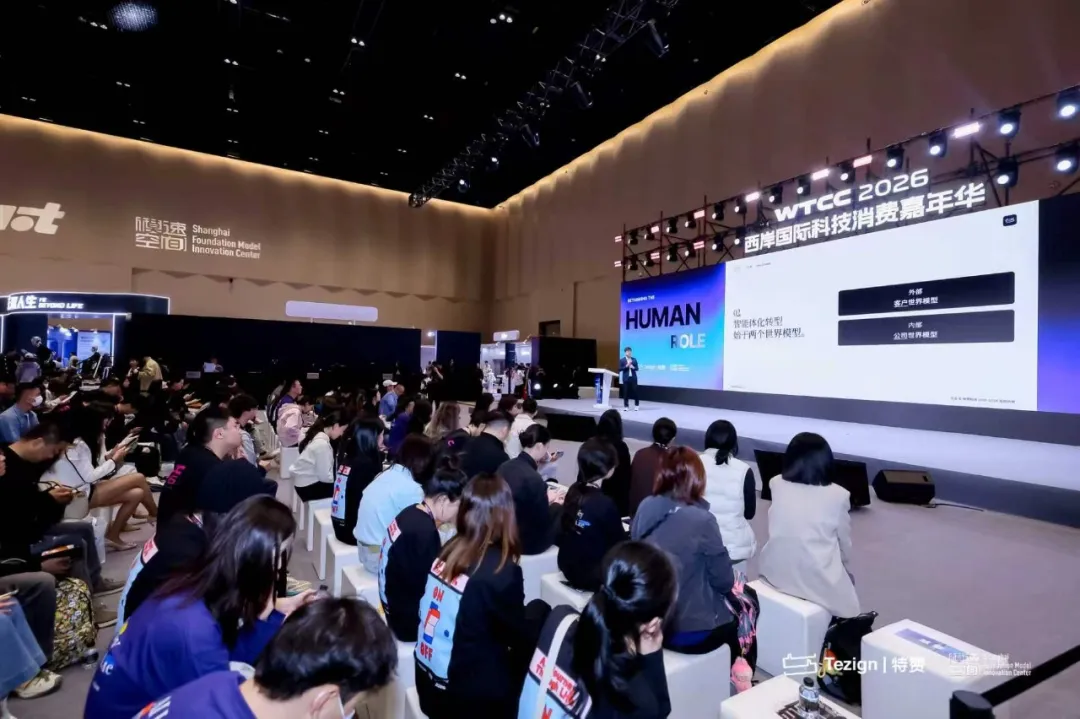
This is also why, when Tizhan proposed the Agentic Transformation Co-construction Plan at the WTCC Forum, the focus should not just be on the words "co-construction" themselves, but on the more realistic judgment behind them: this route still needs to be validated, calibrated, and consolidated little by little in real environments.
From this position, Tizhan's approach is more about starting from its own ecological niche, first running through the route of the subjective world model, scenario capabilities, and long-range intelligent agents in the complex knowledge work scenarios that are most densely packed with brand, content, creativity, and management collaboration, and then gradually forming methods through cases, cooperation, and validation.
If Personal Agents have led the market to begin accepting the idea that "a system can continuously work around goals," then the true challenge that enterprise-level Agentic Transformation must address is another, more difficult question:
Can enterprises truly consolidate their judgments, scenarios, and task links into a system that can continuously advance management?
(Source: WeChat Official Account AI Tech Review)
Category
Media & Press
Date
2026-10-22
Read Time
9 min read
Related Recommendations

Quantum Bit | Enterprises Need Two World Models for AI

Wenhui Daily | Breaking the 'Solow Paradox' in the AI Era, Tezign Technology Launches Smart Transformation Co-construction Plan